Archive for the Uncategorized Category

Taking Risks

Posted in Uncategorized on January 16, 2014 by thecrossingchicago

Fr Alec ReidFather Alec Reid was a voice for peace in a time when it was best to keep your mouth shut.  During the fighting between the Catholic Irish Republican Army of Northern Ireland and the Protestant British Forces, Father Reid worked going back between the parties and trying to bring peace in a conflict that would claim over 3500 lives.  It would have been much safer if he would have kept to himself and just stayed in the monastery that he lived in for 40 years, but he chose to risk his life for what he believed in.

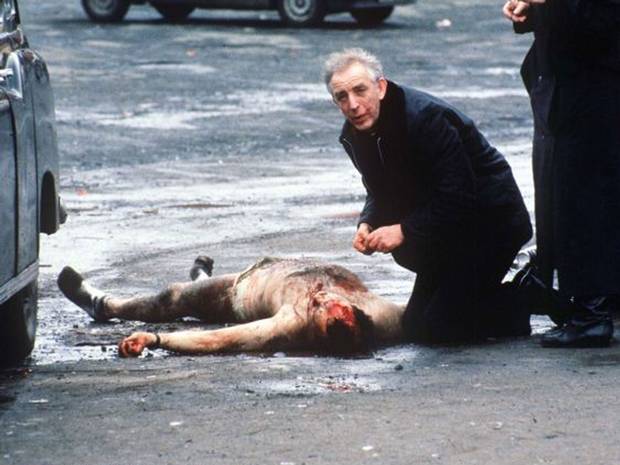
One time, in fact, during a funeral for an IRA soldier in Northern Ireland, father Reid was walking by with documents that were being exchanged between Sinn Fein and the British government to broker a peace deal when two British undercover officers were discovered by IRA security people.  Although Father Reid pleaded for the IRA to stop, they dragged the officers from their car, stripped them, and beat them.  One of the security people pulled out a gun and Father Reid laid on the ground with the two men who were lying face down on the street and put his arms over them.  The IRA member said, “Get up, or I’ll f@#%ing shoot you as well.”  They grabbed Father Reid and pulled him away and then shot the two British officers.  Father Reid ran back to the men, turned them over, and tried to do CPR on them.  It was too late.  Father Reid got down on one knee, administered last rites, and then picked up his bloodied envelope to take back to the monastery and exchange it for a clean one.  Lucky for him he wasn’t killed, but he risked his life regardless of the possible danger to him so that humans would be able to live together at peace.

John the Baptist was a social prophet and revolutionary in a time and place when, again, it was much better to keep your mouth shut.  Anyone associated with him was marked by the Roman government and deemed an outcast by the temple Jews.  The Jews and the Roman government had a deal.  As long as the Jews behaved themselves and paid their taxes on time, the Romans would let them conducted their religious business.  As often happens under such a system, the Jewish leaders took extra liberties in exercising power and turned the purity system into a money-making, power grabbing exercise.

It was this system and denigration of his religion that John came to speak out against.  He called for people to repent – meaning to change their minds and ways – and go back to seeking righteousness for the sake of one another.  Needless to say, the Jewish authorities had a good thing going and didn’t appreciate John flapping his jaws.  Being associated with him was extremely dangerous.  To be baptized by John was akin to making a public announcement that you were joining the cause and joining the resistance.  In Judaism, baptism was a purification ritual that occurred when one committed to living a life of righteousness for the sake of oneself and those around you.

It was on to just such a scene that Jesus entered.  Jesus goes to John and says, “I’m in.  I’m joining this movement.”  John gave him an out.  He said that it should be Jesus that was baptizing John and not the other way around.  We often hear this as a theological statement, but we could also hear this as John saying, “You don’t have to do this.  I’m already a marked man but they’re not after you yet.”  Jesus knew what he was getting himself into and he insisted that John go through with the ritual.  And so he did.  It was then that it is said that a dove descended upon Jesus as a sign that God “was well pleased” that Jesus had made the decision to stand up for what was right, even if it meant that his life would be in danger.

If we were baptized, what were we baptized into?  A specific belief system?  I don’t think so.  I think our baptisms are supposed to be an outward and visible commitment to a new way of life rooted in that which is the essence of all being.  I think baptism is a commitment to the things that Jesus taught and lived by – namely, justice, freedom, love, and peace.  We were baptized into a revolution with risks.  How are we doing on that?  Are we sticking our proverbial necks out for someone in need or are we just playing it safe?  Just wondering.

The Three Wise Guys

Posted in Uncategorized with tags , , , on January 3, 2014 by thecrossingchicago

ImageThe three wise men.  That’s what we call them, although it says nowhere in Matthew that there were actually three.  Perhaps they would be better labeled as the “the three wise guys.”  Herod was the Kim Jong Un of his time.  This was Herod Antipas, not to be confused with his father, Herod the Great.  He was paranoid and realized that he was no more than a puppet at the hands of those more powerful than he.  He killed his own family members out of paranoia that they would try to dethrone him and even divorced his own wife to marry his brother’s.  When John the Baptist spoke out against this marriage arrangement, Herod had John’s head served up on a silver platter – literally.

It must have been a great slap in the face then, for these three wise guys to show up at Herod’s doorstep saying, “We understand that a new king has been born.  Someone who will be greater than you.  We want to go pay him homage, so can you tell us where he might be?”  That would be like going to Kim Jong Un and saying, “We hear that a new leader over all of unified Korea has been born, can you show us where he is?”  You can imagine how Herod would have flown into a rage and ordered every child two and under to be killed.

The question that has to nag at us though, is, who were these wise men and why did they go to Jesus?  It might be helpful to take a look at who they likely were.  The magi were called wise men, but they were also mystics and astrologers.   Magi is the plural of magus which was the name for a Zoroastrian practitioner.   Looking back on history and connecting the dots, we can determine that these Zoroastrians were from either Persia or Babylon.  A good number of Jews never came back from the exile to Babylon and it is a distinct possibility that, if these Zoroastrians were Babylonian, they could be familiar with the Jewish concept of a messiah.  Likewise, if they were Persians, they would be very familiar with the Jews as it was Cyrus, the founder of Persia, that defeated the Babylonians and allowed the Jews to return home and even helped them rebuild their temple.  From 1500 BCE, Zoroastrianism was the primary religion in that area in terms of monotheistic religions.  In fact, it is said to have been the first monotheistic religion followed soon thereafter by Judaism.

Zoroaster, or Zarathustra was a religious figure who got tired of the class/purity systems of his area in what is today northeast Iran.  There was a pantheon of deities and people were expected to please the Gods or face the consequences leading to strict purity rules that developed into a caste system.  Zoroaster found this to be very oppressive and was reported to, during one of the purification rituals, had an experience in which he encountered Mazda – the one true God.  This God, Zoroaster said, is all good and is the creator of the universe.  Mazda dwells within humans and every bit of good in people is a manifestation of Mazda, where all evil is from Angra Mainyu.  It was supposedly revealed to Zoroaster that Mazda wanted for humans to focus on practicing good words, good thoughts, and good deeds.  In doing so, the goodness would be spread to others and eventually evil would be defeated and a new kingdom would be established here on the earth while those who embraced evil ended up in hell with Angra.  Sound familiar?  Yeah, I thought it might.  It was into such a system of Jewish purity laws and class division between the pure and the untouchables that Jesus was born into.

King Cyrus had been a Zoroastrian and proselytizing was against the core of the religion.  More important than converting people to certain beliefs was teaching people to show compassion and love to one another, thereby bringing about heaven on earth.  It is no wonder then that King Cyrus has a special place in the hearts of many Jews, especially since he sent Sheshbazzar along with Zerubbabel back to Jerusalem to rebuild the temple and then commissioned Ezra to go back and teach God’s law to the newly returned Jews.

Fast forward about 500 years and here we find a group of Zoroastrian mystics, those who believe fully in the immanence of God within human beings, going to pay homage to one who was to be the ultimate incarnation of God.  These men were signifying the end of the old order and the beginning of the new.  This was not to replace Judaism, but to embrace it while casting off the man-made oppressive aspects of it that only served to make God seem farther away.  We humans are good at building systems and structures that are supposed to get us closer to God that only serve as barriers that prevent us from seeing God.

If God indwells all humans, and those who are open to the awareness of the presence of God can experience that connectivity, then it should be no surprise that these Zoroastrian mystics would have experienced something like a cosmic earthquake at the core of their being when a God-man like Jesus entered the scene.  Someone who wanted exactly what they wanted – the redemption of all creation – had come and they just had to meet him.  It’s not known how long these men stayed and who knows, could they have even had some influence on Jesus’ spiritual development?

We can learn from these men that it’s not always wise to turn to the powers that be for wisdom and direction.  Just because it’s “The way we’ve always done it” doesn’t mean it’s the best way.  Herod and the religious leaders represented the old ways that just led to death.  Fear leads to an irrational and dangerous attempt at grasping and holding on to save some semblance of familiarity.  Let’s be open to new revelation no matter where it comes from.  Let’s see that God is still speaking, and in this New Year, let’s put the fear, complacency, trepidation aside and dare to do something different.

Make Them Hear You

Posted in Uncategorized on November 30, 2013 by thecrossingchicago

make them hear youAdvent.  The season of longing and hope for a brighter tomorrow.  The celebration of the light of the world entering creation to save humankind from itself.  At the same time that we experience this glimmer of anticipation, we are also hit with a healthy dose of reality.  We realize that things don’t seem to change very much and that the world is in this constant cycle as history repeats itself again and again never really coming to redemption.  I wonder why.  Einstein said that the definition of insanity was to do something over and over again expecting different results.

Let’s take economics for instance.  This is a perfect time to talk about it with Black Friday just behind us.  The financial sector says spend, spend, spend.  Let’s spend as much as we can and show that consumer confidence is up.  Let’s maximize revenues and do what we need to in order to make sure the bottom line is as fat as possible.  This way companies will be able to hire more people and unemployment will drop and the economy will improve.  The social sectors says, “Are you kidding me?”  This mentality is what has been costing us all along.  You’re telling me that it’s good for the economy for people to go out and buy things that they don’t need at prices that defy logic and have them go deeper in debt as they put it on their credit cards?  So now they will have to pay the interest on those cards on top of the debt they already had and will decrease their disposable income.  Yeah, that makes sense.  As long as nobody reverses this cycle, it will continue to repeat itself from generation to generation as it always has.  Somebody has to take a stand and start teaching a better way.

What about foreign policy?  If the leader(s) of a nation or people group do something that we disagree with, we should threaten force and the taking of lives.  If they do not obey us, we have to carry through with our threats lest we be deemed as weak.  It doesn’t matter what the ideology is behind their actions, either way they are wrong and we are right and such should be asserted.  What the heck?  If we spend some dough on these campaigns it will just improve the economy anyway.  This cycle has been in place ever since humans discovered fire.  2500 years ago Isaiah said that a day would come when war is taught no more.  He said that nations “shall beat their swords into ploughshares and their spears into pruning hooks.”  I guess we just keep waiting.  Or is there another way?

Jesus entered the world as our hope.  He was the one that came to teach a better way.  We Christians want him to hurry up and do something to make the world a better pace.  We want him to eradicate all of the foolishness and bring peace, but unfortunately we keep waiting.  In the meantime, we need to tell the world that there is a better way than the one that we have been following.  We need to bring to fruition this idea of teaching war no more.  How do we make them hear us?  How can we get them to listen?  If actions speak louder than words . . . .  Perhaps we have missed the point and Jesus didn’t come to do things for us, but instead came to show us how we were supposed to do them.  If that’s the case, then let’s start living out what we have been taught.  Make your actions speak loudly and make them hear you.

Because They Said So

Posted in Uncategorized on August 23, 2013 by thecrossingchicago

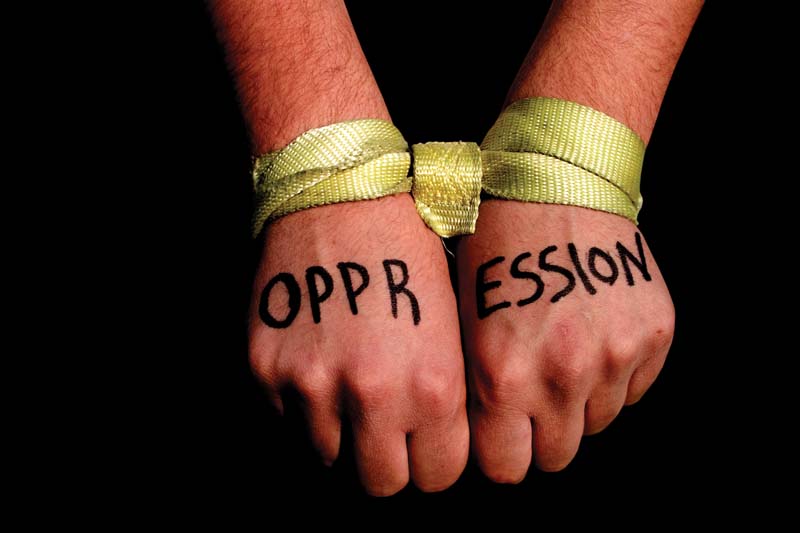
oppression-fists“They.”  The purveyors of great wisdom to the masses.  What would we ever do without them?  A good portion of what we know we got from them, so I guess I shouldn’t be too hard on them.  They say that this will be a hot summer in the first half and cool in the latter half.  They say that the Bears only have a four percent chance of going to the Super Bowl.  (They’re probably right on this one.)  They said that the world is flat and that you can tell a person’s personality by the shape of their head and that sheep grow out of the ground and that rats are spontaneously generated in dirty areas and that the sun is a habitable planet.  Yep, these are all things that “they” really said and that people have actually believed over the years.  Well, on Tuesday, “they” broke my heart.


It was almost the end of football practice and the boys were coming back to our side of the field after practicing field goals.  Right next to me I could see two boys bantering – one black and the other white – and I thought they were just playing around.  I realized they were quite serious, however, when the African-American one got on top of the Caucasian one and started punching him.  Lucky for him he still had his helmet and gear on so he just took a few shots to the side.  I was standing right there so I grabbed the one on top and pulled him off.  He ran back and went at it again.  I pulled him off again and he threw his helmet across the field and with tears streaming down his face yelled, “F*%# football!”  My initial reaction was that this kid had no right to get violent and I still think as much, but now I have the rest of the story to go with it.

The day before at practice, the Caucasian had apparently been taunting the African-American player and spitting at him.  He went to his mother and she told the coach.  When the proverbial schtuff hit the fan, the Caucasian was apparently spitting at the African-American again as they were practicing field goals and then began to call him a nigger.  The one being pestered told him to stop and so he did it more.  By the time they got back over to us, he just kept saying it over and over again, “Nigger, nigger, nigger.”  And so the boy snapped and yelled something to the effect of “I’ve had enough of this bullshit!” and laid into the one making the remarks.

So who is the victim here?  Sadly, some would think that it’s the white boy who got punched by a black boy.  Those darn black folk and their violent ways.  Others would think that the victim is the one who was taunted by racial slurs and spit at.  The reality, though, is that they are BOTH victims.  They are victims of “they” and their diabolically vociferous claims that it’s ok to oppress people and as a result of that oppression, violence is a natural outcome.  As human beings we have been led to believe by the ancient wisdom of “they” who have oppressed people throughout the ages that it is acceptable to assign one people to inferiority and another as their superiors.  “They” only have a voice if WE listen and give them credence!  Without someone to listen and act like what they say is true, they can never subvert justice and make the world believe that it is normal to oppress people.  In like manner, “they” will have no say in things when we start realizing that violence only breeds violence and that the cycle is systemically perpetual.  As long as we continue this way, we will ALL be guilty of giving the oppressors their swords and of simultaneously being the oppressors ourselves.

I am reminded of a great man, who, 50 years ago stood at the Mall in Washington D.C. and told the world that he had “been to the mountaintop.”  Being an African-American in those days, he could have very well said that on that mountaintop he saw whites finally inferior to blacks or that blacks had come to power over the whites.  But he didn’t.  He said he saw a dream.  A dream where children “will not be judged by the color of their skin, but by the content of their character.”  He said,

We must forever conduct our struggle on the high plane of dignity and discipline. We must not allow our creative protest to degenerate into physical violence. Again and again we must rise to the majestic heights of meeting physical force with soul force. The marvelous new militancy which has engulfed the Negro community must not lead us to distrust of all white people, for many of our white brothers, as evidenced by their presence here today, have come to realize that their destiny is tied up with our destiny and their freedom is inextricably bound to our freedom. We cannot walk alone.

He practiced a method of non-violent resistance and taught, like Jesus did, that violence will never solve anything.  I say “they” can go to hell because God knows we have all spent enough self-imposed time there.  On this 50th anniversary of his famous speech, I would encourage us all to read all of Dr. King’s speech here.  Let’s not just read it, let’s live it.  Jesus himself said that the “gospel” is to “proclaim freedom for the prisoners, recovery of sight for the blind, and to set the oppressed free” (Luke 4:18-19).  I don’t think it was any accident that Jesus chose to recite this text at the inauguration of his ministry.

In Luke 13:10-17, Jesus touches a woman who had been arched at the back for 18 years.  She couldn’t have the dignity of standing up straight and looking people in the eye like she was somebody.  For 18 years she looked at the ground in some sort of ashamed stature as if she had done something wrong by being born as a woman.  Then Jesus touched her.  He didn’t have to.  He could have healed her with a simple word, but he reached out his hand and touched her as if to say “You matter!  Now stand up straight and be proud of who you are.”  Dr. King gave this message to young black men so many years ago and we would do well to reiterate the message today.  Let’s encourage everyone to stand up proud for who God made them to be and to never feel like they have to resort to violence to prove it.  Likewise, let’s teach our children of any race that it’s never ok to treat another person like anything less than what they are – someone who has been fearfully and wonderfully made by the very hand of God.

Sometimes our dreams are God’s realities.  I long for the day when this dream becomes a reality and when we all can sit together in peace from every race, tribe, nation, and tongue and say “I remember when we used to listen to ‘them’.  How foolish we were back then.”

You’ll Never Walk Alone

Posted in Uncategorized with tags , , , on August 11, 2013 by thecrossingchicago

ImageIt’s no wonder things went the way they did.  After all, William was born in a tavern that his parents owned and lived above.  At age 17, after a girlfriend died of complications from surgery, William entered a deep depression that would continue to rear its ugly head throughout his life.  To make matters worse, William suffered from anxiety which made him socially awkward and made it difficult for him to have a good time with others.  He went to college at Norwich University, but his depression and panic attacks led him to quit during his second semester.  He returned to school the next year, but was suspended after a hazing incident in which no one would take responsibility, so the entire class was suspended.  

William ended up being called in to the Vermont National Guard in 1916 and and then into WWI two years later.  During his training, he and the other military guys would often get invited to parties which scared William to death.  He soon found, however, that the alcohol served at the parties helped him relax and have a good time.  As long as he stayed drunk, he could enjoy himself around others without having to worry about his anxiety.  It helped to quiet the demons of his depression, too, but he would come away from each spat feeling more down than he was before, so he would turn back to the bottle.  Eventually his drinking got so out of hand that he could barely function.  He attended law school after the war, but was unable to graduate because he was too drunk to go get his diploma.  So, he became a stock speculator and traveled around evaluating companies for investors.  His wife thought the travel would do him good and help him keep his mind off of drinking, but the business deals just made more excuses to drink and eventually William’s reputation was ruined because he couldn’t function and he became known as an unreliable drunk.   

Eventually William hit rock bottom.  It was revealed that the alcohol was severely damaging the Wernicke section of his brain and that he would soon either die or be locked up due to insanity.  He had tried numerous times to quit drinking using everything from LSD to special counseling, but could not seem to kick the addiction.  As he lie there one day hung over and wishing that he could die, he remembered that his grandfather had been an alcoholic, but quit abruptly one day after a spiritual experience on a mountain.  His grandfather never drank again after that.  William cried out to God and yelled “Why can’t you do that for me!?  I’ll do anything!  If there is a God, let Him show Himself!”  He would recall later, that at that moment he felt a “hot flash.”  He said there was a bright light so magnificent that he could feel the warmth and for the first time since he could remember, he felt a great serenity overcome him.  William never drank again.  He went on to start a support group that held as one of its core tenets that folks needed a higher power to help them overcome their demons and survive their addiction.  He would come up with 12 steps and encouraging anonymity, would introduce himself at meetings by saying, “Hi.  I’m Bill W. and I’m an alcoholic.” 

Even after Bill W., the founder of Alcoholics Anonymous along with Dr. Bob, regained sobriety and kept it, he never stopped saying he was an alcoholic.  Bill wasn’t cured.  He was healed.  It’s so easy to think of the two as being synonymous, but I’m quite convinced that they aren’t.  To be cured, one is once and for all relieved of the affliction that oppresses them so that it will never return.  To be healed is to have strength, from within or from without, and the mental clarity to not be tormented by that which afflicts you.  Bill wasn’t cured.  He could have easily taken another drink and even tried to when he was on his death bed dying of cancer many years later, but the nurses wouldn’t give it to him.  Bill overcame his demons, however, with help from God, a group of supporters, and himself and in this he became healed. 

I’m hard pressed to see many, if any, places where Jesus cured someone.  I can find many places, however, where the gospels say that Jesus healed someone.  We don’t really know why Jesus was there that day.  He just got in the boat and told his disciples, “Come on, let’s go to the other side.”  So when they come ashore in Gerasene in Luke 8:26-39, there is a man who is struggling with demons.  We’re tempted to think of Linda Blair spitting pea soup or Anthony Hopkins in The Rite, but I’m not so sure that that’s what this story was all about.  This passage says that the man was naked and lived in the tombs  on the outskirts of town where he was chained up and carried on a raucous.  He would frequently break his chains and wander about and apparently this was the case when he encountered Jesus on the shore of the lake.  The man ran up to Jesus and fell to his knees and yelled, “What do you have to do with me, Jesus, Son of the Most High God?”  He ran up and said “Jesus!  I’m tormented by demons and I want to be free!”  Right?  Wrong. 

This man was tormented no doubt, but he was also comfortable.  It was what he knew.  He must have been scared to death to be healed  because then he would have to face a new life – the great unknown – and how was he supposed to do that?  He didn’t even know if he could so he begged Jesus to let him remain afflicted so that he didn’t have to face change.  He yelled to Jesus and said “I beg you, do not torment me!”  Torment!?  The man recognized the Healer and said, in effect, “Please!  Just leave me as I am because this is all I know!”  So then Jesus asks his name and the man said Legion. 

Legion.  This is akin to the man saying, “I am oppression itself.”  Legion was the Roman oppressors with their legions of men keeping the law.  Legion was the name of any illness or affliction that ever dragged a human being down into the abyss and made them feel despair.  This man represented everything that was, ever had been, and ever would be wrong with any human being.  But the interesting thing is, the towns people represented everything that was ever wrong with society.  Did they rejoice when the man was healed and embrace him as a whole person?  No!  They were scared!  They weren’t afraid of the demons that had been cast out, but they were afraid of wholeness and being well.  What would they do if things were actually made right?  For all these years they had been pointing their finger at this man in the tombs and saying how wrong and sick that this man was.  All this time they had been talking themselves into thinking that they were ok because they had somebody to compare themselves to who they convinced themselves was much worse than themselves.  Perhaps the healing wasn’t merely about creating wholeness as much as helping people see that they were sick in the first place. 

Well, maybe I’m being too hard on the townspeople.  After all, Jesus did chase off their pigs and kill them, so if Jesus stayed around too long he was going to chase off all of their food supply.  Wrong!  Jews didn’t eat pork.  It was considered unclean.  The pigs were food for the Roman oppressors.  It was the pigs that fed the oppression and kept it rampant and Jesus in effect said, “If you don’t feed the affliction, it has no choice but to die off.”  Jesus recognized what was wrong with the individual, he recognized what was wrong with society, and he said, “I don’t care how bad you are or how low you think you’ve dropped, you can always be healed.” 

All along there had been the pretext that the man was demon possessed and scary and all of the people were afraid of him.  Perhaps that was partially true, but now the story is different and the man is afraid of the people.  The man was afraid of himself.  What was he going to do now?  He didn’t remember what it was like being well.  What does a whole person even do?  So he did what anybody would have done and said, “Jesus, take me with you!  I finally feel whole again and I don’t want to lose this peace and serenity that I’ve found.  Don’t leave me here alone!”  Jesus looked him in the eye and said, “You will never walk alone.  God will always be with you as will these people.  These people are just as scared as you are right now because they don’t know how to be well either.  So I need you to stay with them and tell them what God has done for you and eventually their eyes will be opened, too, so that you can become friends and become support for one another. 

It is so easy for us to become dejected and to give up.  It’s so simple for us to just throw in the towel or not even try in the first place because we know we can never be cured of our affliction.  But this isn’t living.  We have to have hope.  We have to grab hope with both hands and pull it in close never letting it go because know that although we will likely never be cured, we can be healed.  Guilt?  We can’t go back and undo what we have done or erase the event that makes us feel this guilt – even if we weren’t responsible for it.  But we can overcome the oppression that comes with it and let God take it off of our shoulders.  Addiction?  Yes, it’s an illness.  Once an addict, always an addict.  But that doesn’t mean you have to be active.  With help from God and friends and your own will power you can claim sobriety as yours.  Depression?  Mental illness?  True, you cannot cure these things, but you can reduce the power that they have over you and the weight that bears down on your shoulders.  Troubled relationship?  We can’t snap our fingers and make the other person do what we want them to, but we can take control of our own mindset and reenter from a new perspective asking God to give us the eyes to see and the strength to persevere. 

The same way that Jesus told the Gerasene that he needed to stay where he was at and attest to what God had done for him we have to realize that we cannot outrun our demons.  They are ours and nobody else’s.  But, it doesn’t mean we have to keep suffering.  With the support of friends and the kind of strength that only God can give, we can all be free of the effects.  We, too, can hold our heads high, claim control over our lives, and take heart that we are a healed and whole people who will never walk alone.
The Good Life

Posted in Uncategorized on August 3, 2013 by thecrossingchicago

money_tree5Ah, the American Dream.  The good life.  It’s something that so many aspire to.  Who doesn’t want to amass so much wealth that they can just relax and do whatever they want?  Seven years of nothing but golf and recreation anybody?  I sure can’t say that there’s anything inherently wrong with that.  Nobody can fault another for wanting to be financially fit and fiscally responsible.  We all want to make sure that we have plenty stashed away so that we don’t, as my dear buddy Scott says, have to live on cat food.

In Luke 12, Jesus is approached by a man who wants Jesus to tell his brother to let him have his share of the family inheritance.  Jesus basically says, “Are you kidding me?  Is this what you think I’m here for?  Am I a judge or arbitrator that I should go around settling such matters?”  Jesus takes this opportunity for a teaching moment and tells the inquirer a parable about a man who decides to tear down his old barns and build new, bigger ones to store up his plentiful harvest.  He then decides that he doesn’t have to work for a long time and can just cruise through life.  Then God says to the man that his number is up and it’s time to die.  What a kick in the shorts!  The guy just gets to thinking that he can finally take a break and God says, “Ok, hot shot, time to go.”  Amazingly, this is the only time where God talks directly to someone in Jesus’s parables.

I didn’t write this parable (in case you didn’t know), but I’m guessing that the man’s crime wasn’t that he did well or that he amassed such wealth, but that he didn’t even consider sharing with those in need.  The man stored up more produce than any one person could ever possibly consume with no regard for the fact that they would eventually rot and go to waste.  What would have been wrong with the man doing a little math and figuring out how much he would need to live on and then sharing the rest so it didn’t go to waste? He apparently had no interest in the actual value of the produce because if he did, he would want to extend the absolute value – the amount of use that could be had.  Instead, he was only interested in utilizing that part that he could consume himself.

As if it weren’t enough that he isn’t sharing, the man seems to take the credit for his bounty.  Those who work hard and invest wisely certainly deserve a pat on the back, but who of us can say that luck/blessing doesn’t play a factor?  Think of all of the circumstances that had to be in place for someone to do so well?  Instead of thanking God and sharing his blessings, he hoards them and is at ease with the fact that food will rot while people starve.  A friend of mine who runs a football camp each year has t-shirts made up for each camp.  The one from last year said Luck, Where Training Meets Opportunity.  This seems to sum it up pretty well.  Yes, we work hard for what we have, but the opportunity also has to be there.  We can’t forget that part of the equation and take all the credit for what we have.

Ok, so what?  The man was selfish, but he wasn’t actually hurting anyone, was he?  Imagine this man representing the church.  Imagine the church as a whole having been blessed with numerous tools.  I am not just talking about money.  I mean the sheer volume of people who can serve as volunteers, the wealth of knowledge that exists in the individuals, the financial wealth of both the individuals and the congregations, and the endless ideas that exist within the church.  What if all of these were employed for the good of human beings in the communities where these churches exist?  How many people are being left to suffer when churches store up their riches – in whatever form it may be – and do nothing with it?

At the end of the parable after the man is told that he will die, Jesus says, “So it is with those who store up treasures for themselves but are not rich toward God.”  I find it intriguing that being rich toward God equals providing for those in need around us.  As the church, we call ourselves the body of Christ.  We know a body has many parts and I can’t help but recall what Joseph Bracken said in a recent Homebrewed Chrisianity interview.  He said “Society is the result of intersubjectivity which becomes a form of objectivity.”  In other words, society is comprised of intersecting parts and circumstances that affect one another which are manifest as a whole object.  Take, for example, the human body.  We have a circulatory system, an endocrine system, a reproductive system, etc.  Each system is comprised of separate organs that have specific functions that have some relation to the whole.  All of these systems form the body.  Although each organ is only a small part of the body in terms of mass, each is vital to the life of the body.  If someone has a bad heart, do we say that the body is healthy?  Of course not!  I believe it is the same way with society and churches are just one part of that society.

With so many churches closing their doors, but the churches who do community service and social justice thriving – it makes me wonder if there is a message here for all of us who call ourselves “the body of Christ” . . . .


Inga Kankei

Posted in Uncategorized on June 15, 2013 by thecrossingchicago

oklahoma-tornado-10I don’t believe in God.  There, I said it.  Now let me unpack that a bit.  When I am working in the hospital, I encounter people almost every day that feel like God is punishing them somehow for their sins.  There are many who express how much they have been blessed, but many are like Job and trying to make an account before God of their sins.  Those who have lived noble lives are all the more frustrated because they feel that they have been unjustly tested or tortured by God.  This is an easy mindset to get in for sure.  It is especially difficult to deal with because it appears that the Bible tells us that God is a God of vengeance who sometimes punishes people on the spot for their sins, sometimes lets them build up before he drops the bomb, and sometimes picks on people at random.  And then come the clichés.  A patient looking me in the eye and saying matter-of-factly, but their eyes betray them saying that they don’t believe what they’re saying or are at least confirming it with me: “God helps those who help themselves.” “God doesn’t give us more than we can handle.”  “God works in mysterious ways.”  Or my personal favorite – “God has a purpose for everyone, I guess my suffering is part of his will.”

Unfortunately, we have been repeating these clichés and clergy have not done a very good job of dispelling them.  We tend to breed bad theology in the church and then nurture it and let it grow until our view of God is so distorted that God seems far away at best and nonexistent at worst.

One particular patient, who we’ll call Susan, who happened to be a nurse at the hospital and was used to taking care of people rather than being taken care of told me: “I know it’s wrong for me to say this, but I want to give up.  I don’t want to go on any more.  I have always been devoutly religious and done what I am supposed to, but I feel that God has gone so far away from me.  I have never felt this lonely before.”  And then she wept.  I told her that I didn’t know if it was helpful or not, but I explained my view of God.  A view that does not have God pulling strings like a puppet master, but instead constantly present to give us strength and peace during the turmoil.  I told her about meditation and centering prayer to help her be aware of the presence of God.

The Bible can often be a great source of this angst because of how we interpret it.  Sometimes we need someone to blame.  Sometimes we need a way to deal with things.  This passage in 2 Samuel 11 and 12 has David making a lot of mistakes.  He is king of Israel, he has everything that he could possibly want – money, food, women, whatever.  But he can’t resist going for one who is already taken.  He starts his progression down the slippery slope and cause and effect starts to happen.  He sleeps with her and she becomes pregnant.  A baby is evidence.  If they are found out, they will both have their names greatly tarnished and she will likely be put to death.  So, David uses military means to kill Uriah and sets in motion a series of violence that will haunt his entire family for generations to come.  Live by the sword, die by the sword.  It isn’t too difficult to see how things snowball out of control, one event causing the other.  This continues well beyond the point when Nathan tells David about these events and David not even being able to see that he is the one being spoken of, tells Nathan that such a man must die.  Such a man is committing acts that are reprehensible and David even says that such a man deserves whatever he gets.  Except – that man is David.  None of this is hard to wrap our minds around though in terms of simple cause and effect relationship, until – we come to the last verse of this passage:  “The Lord struck the child that Uriah’s wife bore to David, and it became very ill” (2 Sam. 12:15).  The baby dies soon thereafter.

Wow.  So the Bible tells us that we serve and were created in the image of a God who kills babies for the sins of the parents.  That is troubling.  These are the kinds of verses that make us want to say that we do not believe in God or at least don’t want anything to do with God.  But there is something very important that we have to keep in mind: scriptures were written backward, not forward.  That is, they were written after, sometimes hundreds of years after the events transpired and when recorded, they were written through the cultural lens of the time.  No matter where you go in the world, or even in the U.S., you will find different views of God or gods and how they affect life and events in this world.  The Ancient Near Eastern view in Israel was that one God affected everything that happened.  There was not one thing that could transpire that God did not do.  We frequently make the mistake of reading a passage in the Bible and apply directly to our current context and situation without considering who and when it was written for.

Today is Father’s Day and my own father hasn’t taught me much other than what not to do.  My father-in-law, however, has taught me a few things.  Back when my father-in-law went regularly to his Buddhist Temple and I was fresh out of undergrad with my minor in Biblical Studies, we used to have conversations about how the universe worked.  He would always say, Subete wa inga kankei, meaning “Everything is cause and effect.”  I would then tell him that he was wrong and that everything happened according to God’s will.  The problem was, however, I couldn’t wrap my own head around how God could ever will that children could die or human beings could hate each other enough to kill one another, or that God would intentionally cause earthquakes to wipe people out by the tens of thousands.

Ten years later, I can see how this statement about cause and effect makes sense.  It isn’t necessarily just a Buddhist concept, but a universal one.  This reality is always around us and we can see it every day.  If you drink ten shots of whiskey and then get in the car and try to drive, you are going to get a DUI or worse, end up killing someone.  If you live a life that stirs up strife and consternation among others, it is not likely that you will be liked and those people will shun you. We can somehow wrap our heads around these things, but what about the things that don’t make as much sense?  When tectonic plates move and push up the ground, earthquakes happen.  When a cold front and a warm front collide and the cold air pours downward as the warm air rises and they begin to swirl, you get a tornado.  Tornadoes leave destruction.  When our cells are exposed to free radicals and start to mutate, we end up with cancer.  This is not because God willed it, but because it is cause and effect.

When we assume that everything that happens is God’s will, we end up with a lot of problems.  We end up having to thank God for our blessings and then curse God for our woes.  If we say that God does not cause everything, then we are left to say, “Ok, that’s good that God does not cause the bad in the world, but I guess I don’t have to be thankful for the good either.”  Not really.  To me, God is like a river that flows in one direction – toward good.  God only moves toward that which is good for creation, including us.  So, if God didn’t cause the tornadoes in Moore, OK, then where was God?  In the people who came to help.  God was not merely in those people or working through those people.  For all of them to come from all over the country to help people whom they didn’t even know,  to pick up the wounded and weary and carry them toward hope once again was to stare into the very face of God.  The same was for the tsunami in Tohoku and any where else we have seen disaster answered with hope and love.

So what about Susan?  On Thursday, Susan asked another chaplain if I was there and if I could visit her.  By this point, Susan had been in the hospital for over 40 days.  The last time I saw her she was in the ICU, but this time she was in a regular hospital room.  When I entered the room, she smiled and said “I want you to know that you’re the reason I am here.  I wanted to give up and didn’t want to live knowing that God had turned his back on me.  But now I know God is with me.  I do the meditations you taught me whenever things get bleak and I can always feel the presence of God.  I just wanted to let you know what a difference you made.”  I had to do everything I could to keep from tearing up in front of her.  I don’t tell you this story because I did something heroic or that I even did something at all.  I merely gave her a nudge toward seeing God a little bit differently.  She did the rest.

The God that is present in the hands and feet of those who bring hope to the devastated.  The God that is present with a woman whose organs are shutting down giving her strength and peace in a time of great need.  Do I believe in God?  Yes.  I believe in that God.

The Others

Posted in Uncategorized on May 31, 2013 by thecrossingchicago

World PeaceAbout 10 years ago, there was a movie starring Nicole Kidman called The Others.  In this movie, Kidman lived with her small children in a large house in the English countryside.  It was World War II era and the family was waiting for the husband to return from the war.  As they are awaiting his return, however, there were numerous troubling experiences such as things moving by themselves and ghosts appearing in the house that led them to believe that the house was haunted.  These “others” were, for some reason, coming in to their home and scaring them.  Toward the end of the movie, however, we realize that the “ghosts” that Kidman and her kids keep seeing are really not ghosts, but are the people who are coming into the home for seances to contact Kidman and the kids.  In other words, it was Kidman and the kids that were dead, but did not realize it.  It was only through convincing Kidman’s spirit to remember what had happened (she apparently went stir crazy in seclusion waiting for her husband and killed her kids and then herself) that they were able to let that family finally be at rest.  Kidman thought that these people were the “others” the abnormal outliers that didn’t belong, but it turned out that SHE was the one of the others and just was not aware enough to admit it.

This idea of being other or having some that are in the norm and some who are outliers came into my mind last Monday at the Memorial Day service at Montrose Cemetery.  It was a very nice service and it was neat to see the different religions perform their rituals, but as I stood there in the cool mist I couldn’t shake the thought of what we were memorializing.  It is well and good and quite appropriate that we memorialized those whose lives had been list in military service, but I was keenly aware that we were missing something.  There was something that we weren’t grasping that I thought we should.  That is, we did not mourn the loss of peace and civility.  We did not mourn the loss of tranquility during those times when we could bring ourselves – fellow humans – to see each other as so “other” from us that they were worth killing.  I fully think that Memorial Day should be a day to remember those who died in war, but I think it should also be a time to mourn that we even have war so that me might learn how to have peace.

Wars do not just happen.  There are a lot of intentional decisions that are made before a war can take place.  Take Hitler for example, he killed something like six million Jews and Armenians, right?  Wrong!  I don’t think Hitler probably killed anybody personally.  Many, many, people had to become complicit in carrying out the killings because they somehow bought in to what was being said about the Jews.  These were no longer fellow human beings, these were the others and they had to be exterminated.  These were people that had to be dehumanized and any link to our common humanity erased from memory so they could be deemed as “the others”.  It was this same type of thinking that made it “ok” to round up Japanese-Americans and place them in internment camps all across the country.

Such systematic dehumanizing did not only happen with the Jews.  It happened in every propaganda machine that war-time governments produced.  The Americans did it to the Germans and the Japanese and they did it with the Americans.  I will never forget a trip we made with my wife’s family.  We would go to Okinawa about once a year when I was living in Japan and we visited a place where there used to stand a school house.  It was made into a memorial.  The Japanese people were told by the government that the Americans were barbarians and would rape and kill women and children if they ever invaded.  So, as the American forces got closer and closer to Okinawa, the men would practice fighting drills and the women and children would practice suicide drills so that they would not be captured and defiled by those who would take away their dignity and honor.  In 1945 an announcement was made that the Americans had arrived and were landing on the other side of the island and every teacher and child, over 100 of them, took their life that day.  They died needlessly because they believed that these “others” were going to harm them – people that they knew nothing about but had been told about  – and so they made great and inaccurate assumptions.

In Luke 7 we find a very different situation taking place between others.  A centurion who works for the Roman Empire, an employee of the one who is deemed to be the living God – Tiberius Caesar – goes to another “living God” for help.  A man who has been employed to enforce the laws of the empire goes to those whom he is supposed to keep an eye on.  He has a need and he goes to the others to have it met.  This is not his son who is ill.  This is not his father or his brother who is ill, this is his slave!  Somebody who is so below him whose sole reason for existence is to serve him, but the centurion does not see the slave as the subhuman that some do, he does not see him as a mere servant, he does not see him as an “other”, he sees him as a brother and a friend.  So he goes to the Jews (who in case you forgot are not necessarily friends of Jesus) and requests that they go to Jesus on his behalf.  This centurion had heard of this renegade Jew who was going around healing people and stirring up trouble within the empire.  He made his job more difficult than it had to be.  As long as people sat still and did what the centurion told them to, Pilate would be happy with him and so would Caesar.  But this Jesus guy would not just let things be the way they were.  He had heard, though, that this Jesus was a healer.  Jesus was one of the others, perhaps the ultimate other.  The Jews were others to this centurion, but he cared for his servant and wanted him to be healed.

So now the Jews have to go to Jesus (undoubtedly gritting their teeth the whole way) because they had need.  The centurion who had paid for their synagogue had a sick slave.  When he came to them and asked them to talk to Jesus, how could they tell him no?  He had done so much for them so they had to go to Jesus with their hat in their hands and tell him that he had been requested at the home of the centurion.  It would not have been outside of Jesus’ typical antics to say, “Gee, let me think, ummm, nope.”  But instead, he listened to the Jews tell of this centurion who had built a synagogue for his people (because we can’t forget that Jesus was a Jew) and he started to follow the Jews to the centurion’s home.  As he gets closer, however, the centurion who had shown ultimate humility toward these “others” bows his head even lower.  Not only did he have compassion for on he who was completely beneath him, not only did he build a place of worship for his subjects who had a religion that was not his own, not only did he request the services of a revolutionary who made his job more difficult, but he sends friends out to meet Jesus and say “I am not even worthy that you should bless my house with your presence.  I have servants that go out and do what I tell them to, but I know you have the power to merely say the word and make great and miraculous things happen.”  It was not easy to shock Jesus.  But he turned to the crowd who had gathered and said, “Not even in all of Israel have I seen faith like this.”  The pinnacle of faith was exhibited by an “other”!  He didn’t have the same ethnicity, he wasn’t from the same region, he didn’t have the same religion but he is the ONE that Jesus said exhibited the most faith of anyone he had ever seen.  And so Jesus said the word and the slave was healed.

What kind of world would we live in if we didn’t see those unlike us as “others”?  How would things be if we were able to appreciate and love and respect one another?  What could we accomplish if we celebrated each other’s differences instead of condemning them?  It’s already happening in some places.  In the West Bank there are numerous stories of Jews and Palestinians working together not only because they need each other, but because they want to be in communion with each other.  When Salim’s house was bulldozed by the Israeli forces to create a settlement for Israeli’s, Jeff was there to help him rebuild it.  Salim’s house was on land that had been in the family for centuries.  When Israeli forces came and destroyed it again, it was Jeff who joined Salim in building an apartment building where such displaced Palestinians could live.  Salim is Palestinian.  Jeff is a Jew.

There is an association of midwives comprised of Palestinian and Jewish women who work together sharing information and technology to reduce infant mortality in the Middle East.  Palestinians and Jews working together to save those who are still too young and innocent to know how to hate.

When 12 year old Ahmed al-Khatib was killed by Israeli Defense Forces, his parents would not have it that their son should have died in vain.  So, they decided to donate his organs to save others.  There were no stipulations.  In fact, they wanted some of the organs to save Jews also to send the message that we are all humans and should help one another.  Ahmed’s organs saved the lives of five people – three of which were Jews – two five year olds and a four year old.

Such stories of people working together for the good of human kind regardless of their differences abound.  What if, when we see someone approaching from afar who doesn’t look like us, we didn’t see a stranger or a potential enemy, but instead a brother, a sister, a friend, a fellow human being with same needs and yearnings that we have?  What if instead of reaching down for a stick or a rock or turning the other way, we ran toward them and embraced them?  I would love to see what could happen if humans could only find it within themselves to do it.  What a wonderful world this could be.


Embracing the Mystery

Posted in Uncategorized on April 12, 2013 by thecrossingchicago

angel-shepherds1My grandfather was a mysterious person.  He was a high priest in the Mormon church and my grandmother always thought I would take over his post in what they call the Quorum of the Apostles.  I apparently reminded her of him and said that she knew I had a call.  I never knew my dad’s dad, but there were always stories about him that I had to confirm with my grandma.  One account was how, when he was 18 years old, he climbed a tree to retrieve a kite for some kids when he touched an electrical wire and was shot out of the tree.  According to the doctors, he was clinically dead from the time he was electrocuted to the time he hit the ground.  The force of the impact from falling to the ground started his heart beating again, but he was still unconscious and would have been brain dead had it not suddenly started raining which woke him up.

There were other stories about amazing feats of strength and the ways in which he helped people.  The most baffling story, though, is the one that allowed my sister to still be here today.  My dad was just over 20, when he took his four year-old daughter, Tanya, to the ER with what turned out to be spinal meningitis.  This was almost 50 years ago, so the prognosis was not good and the doctor said as much.  He told my dad that she would die.  When my grandfather arrived, he asked my dad what was going on and my dad told him that the doctor had said that she wouldn’t make it.  My grandfather got angry at the doctor and asked him why he was telling my dad that his daughter was going to die.  The doctor replied that it was his duty to inform him of what was medically factual.  Grandpa then went into Tanya’s room, laid hands on her, and prayed for her healing.  She woke up shortly after and said she was hungry.  She was discharged the next morning.

Hearing a story like this makes us suspicious, uneasy, and joyful all at the same time.  After all, such healing doesn’t occur – especially not at the hands of a Mormon.  It’s ok.  We can admit it.  There is an inner battle within us over mystery where one half embraces it and relishes it and the other half would rather not deal with it.  A devout Mormon bringing his granddaughter back from the brink of death.  A devout Jew persecuting and contributing to the death of Christians suddenly has a mystical experience that leads him to be the largest proponent of The Way.  Which is harder to wrap our heads around?  Which is more uncomfortable?

Such experiences as these just go to show that God can be manifest in the most unexpected places.  Because God is spirit, God has to use something or someone that is tangible and recognizable to us.  It intrigues me that every time Jesus appears to the disciples after the resurrection in the John passages, he is unrecognizable.  The text doesn’t say that he intentionally disguised himself and then returned to his original form so that they would know who he was.  Maybe he stayed in whatever form he appeared in, but they recognized him not because of his face, but because of his actions.

“Love your neighbor as yourself.”  “When I was hungry, you gave me food.”  “When I thirsted, you gave me drink.”  “What you do for the least of these you do to me.”  Do we see a pattern here?  Is it any wonder that Jesus is always recognized when he is offering food or help?  Every time the disciples recognize Jesus, he is breaking bread and offering it to them.  We are most aware of God’s presence when we are serving.  The beginning of this passage says, “and he showed himself in this way.”  The mystical presence of Jesus is made real when an act of hospitality is done.  John is the most theological of the gospel writers so look at this reference to the presence of God in the Garden of Eden: “When Simon Peter heard that it was the Lord, he put on some clothes, for he was naked”.

God is present in both the miraculous and the mundane.  The healing touch of a Mormon man, the miraculous conversion of a hateful persecutor, the simple act of serving someone in need.  The veil between the sacred and the simple is more transparent than we could ever imagine and the ability of God to work in the most ordinary of circumstances creates thin places wherever we go.

Bring Me to Life

Posted in Uncategorized on March 30, 2013 by thecrossingchicago

Sitting in SilenceResurrection.  What a difficult concept to grasp.  It’s as confusing as can be and we can never really be sure if it is literal or metaphorical in Jesus’s case.  Peter, John, and Mary saw the empty tomb, but they didn’t understand.  It says that John saw and believed, but it doesn’t say what he believed.  We assume that it meant he believed that Jesus was raised from the dead, but in the very next clause it says that neither John nor Peter yet understood.  Mary finds angels sitting in the tomb and turns around to see Jesus himself, but she thinks he’s the gardener.  She finally figures out that this stranger was Jesus, but it still doesn’t tell us that she understood what it all meant.  It’s no different for us.  Somehow, though, we see resurrection as a positive thing for us somewhere down the road, but we’re not completely sure what.

The writer and scholar Peter Rollins, in his book Orthodox Heretic, wrote of a people who were present at the crucifixion and feeling hopeless and dejected left Jerusalem and headed out to the desert.  They were not there when the talk of resurrection began.  About 100 years later, two missionaries showed up and told the people about the Good News of Jesus’s resurrection and the forgiveness of sins and eternal life that was available as a result.  As everyone was celebrating that night, the leader of the group was nowhere to be found.  Finally, one of the missionaries found the old leader in his tent weeping silently.  The missionary asked him how he could be sad having heard such wonderful news.  The old man replied, “Yes, it may indeed be good news, but my people have had compassion for one another and showed genuine love because it is the right thing to do.  Now I am afraid that my children and my children’s children will believe and do good, not simply because they are humane, but selfishly because they await the eternal life that is promised them.”

What did Jesus’s resurrection mean then and what does it mean for us now?  So what if God raised Jesus from the dead?  What’s different?  Is the world any better for it?  We’re told that Jesus’s resurrection defeated sin and death, but Newtown still happened.  Columbine still happened.  Tohoku still happened.  So is all of this talk about resurrection just a bunch of hopeful nonsense?  I don’t think so.  I think it is something so real, in fact, that it happens every day.

I sometimes work as a chaplain at a hospital near me and on one particular shift about a year ago things were going pretty smoothly as I met with my last patients for the day – until I got to the last patient.  The patient, whom I’ll call Diane, was charted as being there for substance abuse.  Little did I know going in to the room that this little phrase meant that she had tried to take her life with pills three times.  I had no idea what I was in for, but started to get the idea when the orderly in the room would not leave.  It didn’t take her long to tell me that she didn’t want to live because her son, Joey, had taken his own life the year before.  He had only been 33 when he hanged himself and for whatever reason she had a voice mail of his last dying gasps.  She told me how she was tormented by dreams about Joey tipping off of the ladder as she reached for it but could only get within a hair’s breadth of touching it.  I asked her if she had other family and she said that she had a husband and four other children.  “What about them?” I asked.  Didn’t she think that they would suffer the same way that she did if she were to take her own life?  She said that they had their own lives and would get over it.  The same way that she had gotten over Joey’s death?  She nodded.  She seemed to get it.

Every time she thought about Joey, Diane would say how it just made no sense and how parents weren’t supposed to bury their kids.  She kept saying how she just wanted him to come back or else she didn’t want to be here.  It was around Easter when this all took place and as somewhat of a surprise to even myself, I said, “What do you think about resurrection?”  She looked up at me and after a moment said something like, “Well, it’s when Jesus came back.”  “How?” I asked her.  “Was it like a physical resuscitation or what was it?”  She said she didn’t think so.  She said she thought it was a type of spiritual presence.

I wasn’t sure that I should be pushing her in her condition, but I did it anyway and it paid off in the end.  I asked her if I might give her another picture of resurrection.  I asked her if she didn’t think that it was cruel if Jesus came back from the dead to defeat sin and evil and death, but just left again for some later date before it actually takes and we are just left to suffer in the meantime.  She said she had no doubt that it was cruel.  I asked her if Joey had any causes that he felt passionately about or if there was some sort of legacy that could be carried on.  I challenged her to imagine if, after she was healthy, she were to volunteer in support groups for parents who had lost their kids or even for those who felt like committing suicide.  Wouldn’t Joey be resurrected then, in a sense?  After all, nobody could know the suffering both of losing a child and of wanting so badly to die like she could.  I could only have sympathy for her and try to imagine what she and others like her were going through, but I could never fully comprehend like she could.  We talked for a little more and then after praying with her I left the room to do my charting.

In his gospel, John writes something that we often easily overlook.  We see resurrection as happening in the sunlight when everything is ok and the clouds have given away to the comforting light of day.  But this isn’t what John writes.  He says that “while it was still dark” Mary came to the tomb and saw that the stone had been rolled away.  Mary panicked.  So did the two disciples when they came to the tomb.  The resurrection had already happened, but it was still night and everything was not alright.  At least not for them, it wasn’t, because they couldn’t understand in the darkness that which the light of day would reveal.

Life is difficult.  That’s not news to any of us.  The amazing thing though, is that we have a lot more power than we realize to bring about resurrection – our own resurrection and that of those around us.  When we become aware of this power, we realize that resurrection is about doing.  I can just imagine how the disciples felt when their very hope was nailed to a cross and died.  I get excited, though, when I think of what it must have been like in that upper room when the disciples first realized that Jesus had been preparing them all along to do something themselves to live out his legacy and make the world around them a better place.  In that moment Jesus was resurrected through them.  I don’t want to blow it for Pentecost, so I’ll leave that alone for now.

Sometimes, like Diane, we look up for some ray of hope but all we can see is darkness.  Little do we know, though, that even in the darkest moments, God is already working toward restoration.  After all, when we are surrounded by nothing but the dark of night, it is hard for us to see that the tomb is empty and that maybe even just a little bit, everything is going to be alright.  Oh yeah, and speaking of Diane.  I saw her recently.  She searched me out at the hospital to tell me Happy Easter and to let me know that it was in fact a happy Easter.  She came to tell me that I was right.  I don’t hear this too often, so it was kind of nice.  She said that Joey had been resurrected, because every time she saw the light of hope begin to shine in the eyes of someone she touched through her support group, she felt Joey right there with her.  See?  We do not have to wait with our heads turned to the sky waiting for some glimmer of hope, because the beginning stirrings of hope and resurrection begin within our very hearts and become a reality with our own two hands.