Archive for the Uncategorized Category

I Refuse to Be Good Enough

Posted in Uncategorized on September 15, 2014 by thecrossingchicago

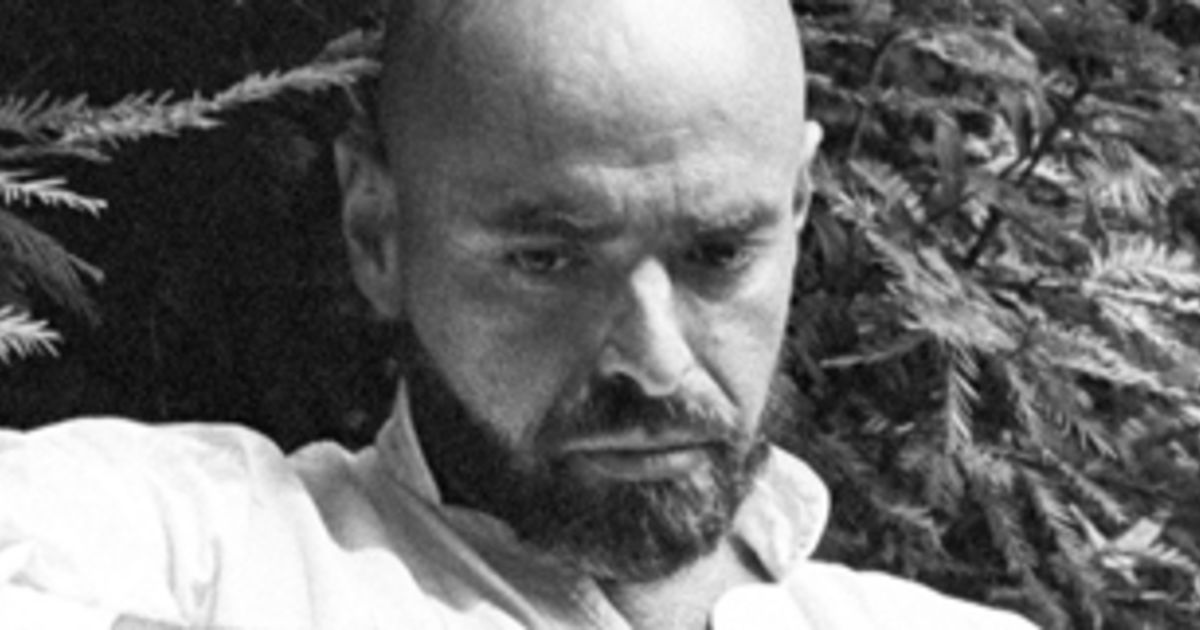
Shel SilversteinLooking at the writings of Shel Silverstein, you can see what a wonderful life he had.  It was a life that surely wasn’t touched by tragedy.  The Giving Tree, A Light in the Attic, all of these stories that are deep, yet light and happy.  Let’s contrast that with the person who wrote A Boy Named Sue and 25 Minutes to Go – a song about a man who wants to kill the father who abandoned him has a boy and a song about a man on death row with 25 minutes to go before he’s taken to the gallows.  The person who wrote these songs must have experienced some tragedy or deep moments in his life and indeed he did. 

The mother of his daughter died the day before his daughter’s fifth birthday.  Six years later, that same daughter would die suddenly at the age of 11 of a cerebral aneurism.  In addition to music, he loved to write and draw.  As a child, he was ridiculed by his father for his love of the arts.  He would tell him that he would never make anything of himself because he was only focused on junk that would never lead him to success.  He once left some cartoons at Playboy to be considered for publication.  He never heard back and so he went to the Playboy offices to pick up his illustrations when he was met by Hugh Hefner himself.  Hugh said that the man’s work was great and gave him a check on the spot.  He went home, threw the check down on the kitchen table in front of his dad and said, “There.  I did what you told me was impossible.  Now I’m out of here.”

That man who went on to write numerous soundtracks, songs, cartoons, poems, books, and plays, who wrote music for Johnny Cash, Kris Kristofferson, Waylon Jennings, Belinda Carlisle, and many others is the same man who wrote The Giving Tree and A Light in the Attic.  Shel Silverstein knew tragedy and had plenty of obstacles, but he was determined to succeed and did.  In order to succeed, however, he had to draw from the dark parts to create work that was shared in the light.  This is Shel’s story, this is our story, and this is the story of the Hebrew people. 

The Hebrew people were stuck in Egypt.  God sent Moses to free them.  The pharaoh would not budge until God sent numerous plagues to convince him that God was not messing around.  Finally, the pharaoh accedes, but then changes his mind at the last minute as the Hebrews are heading out of Egypt.  He sends soldiers on chariots to track them down and kill them.  The sound of hooves beating against the ground gets louder and louder and the Hebrews go into a panic as they run faster and faster but many can’t keep up.  It’s bad enough that they can’t seem to put any distance on the Egyptian army chasing after them, but then there it is.  They come up over the hill and there before them is the Red Sea.  It’s done.  It’s all over.  There is no where to go and just when they thought they were finally free they are going to be slaughtered like sheep here on this seashore.  Everyone is yelling at Moses because he brought them here.  Moses is mad, confused, and feels betrayed. “Why did you send me to save these people when we are just going to get killed!?”  Then God says, “Then do something about it.”  Moses raises his hand and the Red Sea is opened and a path is made with a wall of water on either side.  “Go!” Moses yells and the people run through the sea, not believing their eyes. 

There’s something to remember here.  The Hebrew people had been in Egypt for 430 years.  This generation knew nothing of the God of Abraham, Isaac, and Jacob.  This God was completely new to them and they had no idea what that God could do or what they could do with the help of that God.  They were slaves in Egypt and were perfectly content to remain so until Moses went to them and reminded them of who they were and whose they were. 

They ran out to the other side and the sea collapsed on the Egyptians running through the water.  The people celebrated and sang and danced as they rejoiced that God had defeated their enemies.  This makes up a great story.  It has all the elements – the beginning, the rising action, the climax, the resolution, and the conclusion.  Well done!  Except, this wasn’t a complete story and never is.  It was only a minute fraction of a story that existed long before them and will continue to exist long after us.  We can’t forget that there was a lot of complaining, anger, and disgust before Moses could convince the Hebrew people to leave Egypt.  You would think they would have been ecstatic about leaving, but they weren’t.  They wanted to stay.  Then, soon after they sing this song about how badly God kicked the Egyptian’s butts, they start to complain and fear and want to go back to Egypt. 

Once they came out of the water and made it safely to the shore – once the celebrating and revelry was winding down and the sun started to come up – they could now see that they had nothing in front of them but desert.  They would wander in that desert for 40 years making no progress and only longing to be slaves again back where things were familiar and oddly felt safe.  As they wandered, they would have to keep returning to that water because we need water to live.  The very thing that they thought would be the death of them, the very thing that they feared, they very thing that they rejoiced for having come through, they had to go back to because they needed it.

Today I’m not beating my usual drum of social justice and good works for others.  Yes, we still need those, but sometimes we have to take care of ourselves.  Hurt people hurt people.  Think about that.  If we’re not taking care of ourselves and not making progress where we need to, then what good are we to others?  Sometimes when we feel that we can stick with status quo and that things are just good enough where we are, we have to refuse to be good enough.  Good enough is complacency and we will never get where we are supposed to be and never become who we were meant to be if we stay where we are.  Yes, we will fail.  We will fall on our faces.  But we have to keep going where it is risky and dangerous and transform our surroundings into something that is life-giving instead of life-sapping. 

Dan Cherry was an F-4 pilot in the Vietnam conflict.  He was in numerous dogfights and it was usually impersonal because the entire plane that he shot down would go down in flames.  One time, however, he shot down a MiG-21 and the pilot managed to eject before the plane went down.  He could see the pilot with both arms broken as he parachuted down through the canopy below.  Decades later, Dan was visiting VFW posts and he came to one in the Midwest.  He could hardly believe what he saw.  In the yard of the VFW, there it was – the very same F-4 that he used to fly.  It reminded him of the man he had shot down over the jungles of Vietnam and started to wonder what became of him.  He decided that he would find out.  In 2008, Nguyen Hong My and Dan Cherry had a reunion in Ho Chi Minh City.  They ate together at Nguyen’s house where Dan met his family and even held Nguyen’s one year-old grandson.  By going back to his place of fear and trepidation, Dan was able to redeem it and make it a place of progress.

I am always in favor of being content where we are geographically.  I believe that the grass is rarely greener on the other side, but I don’t believe in complacency either.  We would do well to take Mark Twain’s words to heart:

Twenty years from now you will be more disappointed by the things you didn’t do than by the ones you did.  So throw off the bowlines.  Sail away from the safe harbor.  Catch the trade winds in your sails.  Explore.  Dream.  Discover.

Remember that even though God gave the power, Moses had to lift his hand to part the sea.  The Hebrews had to move their own feet and cross the sea.  If we want to make progress, if we want to go where we were made to go and be who we were made to be, then we always have to tell ourselves, “I refuse to be good enough” and take the actions to get there.


This Is Water

Posted in Uncategorized on September 4, 2014 by thecrossingchicago

My buddy Tak was kind enough to share this video with me.  It’s worth watching more than once.  David Foster Wallace tells it like it is in this Kenyon College commencement speech.  Wallace says that the point of a liberal arts education “isn’t really about the capacity to think, but rather about the choice of what to think about.”  He warns students that their lives will be filled with “banal platitudes,” but that these moments are not all meaningless.  How we view and interpret events can have dire consequences for the outcomes in our lives.  According to Wallace, we are all hardwired from birth with a default setting that tells us that we are the center of the universe.  We view everything from the standpoint of how it affects us and not from the viewpoint of others.

There are many mundane aspects to life: standing in the grocery store line, driving from home to work, waiting on hold when trying to call an account rep that we really don’t want to talk to.  These are all things that get us worked up and make us want to hurry up and get on to the next thing.  What if we were to practice awareness in these moments instead of mulling on how much we hate being there?  What if we were to notice the child in the cart in front of us smiling or the mother who is frazzled because her Link card is not going through?

A large part of education is building intellect.  We learn how and what to think, but not so much how to think for ourselves.  The more intellect we develop, it seems, the less able we are to practice awareness and see things as they really are.  If I am taught that people need to do for themselves and that everyone is given an equal opportunity to succeed, then whenI see that woman with five little kids running around at the store, I am going to think that she needs to stop producing children and start producing economic contributions to the rest of society.  What I won’t be able to see, however, is that her husband of 10 years who never let her finish her education and find a job decided to walk away and has not paid a penny of child support.  How we interpret what we see will have a huge impact on how we perceive the world to be.

This principle also applies to theology.  If we develop a theology that becomes cemented into our brain with the intellectual understanding that God is a certain way and that, as a result, the cosmos works a certain way, then we will only be able to see what goes on around us through a very small lens.  I am 100% in favor of intellectual endeavors and furthering our capacity to cognate.  However, I think we also need to let people be people and let God be God without us putting our labels on them.  Enjoy the video and I hope that it will open all of our eyes to a new awareness of the world around us.

What Are You Going to Do About It?

Posted in Uncategorized on August 30, 2014 by thecrossingchicago

What do you want?  Is there something that you want to be?  Is there something that you want to achieve?  You can, but chances are it won’t be easy.  Chances are even better that you will give up.  I give up a hundred times a day until I remind myself of the “what if” that got me started in the first place.  It’s much easier to tell myself that I can’t achieve something and throw in the towel than it is to keep failing.  Unless, of course, I’m not failing.

I’ve never been a huge fan of self help mumbo jumbo, nor am I a fan of the “God will bless you with immense riches and happiness” prosperity gospel.  I have typically been more in favor of changing your mindset and mental/spiritual transformation through meditation and self-discipline.  Interestingly though, the people that I have often thought of as a bit cooky, e.g. Esther Hicks and Louise Hay, espouse beliefs similar to my own with a difference in semantics.  Yes, I think the whole non-physical being Abraham stuff is a bit spooky, but I do believe that there is something within us that guides us and gives us wisdom, drive, and direction.  I just choose to call it God or self.  At any rate, there are sometimes worthwhile words that encourage us to press on.  I thank my buddy JWB for sending me this video which is helpful in giving a new perspective on attaining our goals.

We are creatures that are constantly in pursuit of instant gratification.   I want it all and I want it now.  I want to be a successful writer and every time I submit a story that I think is good, but don’t get it published I throw in the towel.  For some reason though, I pick it right back up and go at it again.  Just like Richardson says in this video, if I give 100% each time I fall a little short, then I am not really failing.  Each time I sit down at this computer and start typing, I must be getting a little better at writing.  So, if I give 100% each time I come to the keyboard, then that 100% will be better than the previous day’s 100%  If I keep writing every day, I can’t help but get better and after 365 days of regular practice, well, who knows what will happen?  The same goes for you.  Got something you want to achieve?  Got a goal for your life?  Is something calling you from within to become or do something?  Well, what are you going to do about it?

The Dogma Files – Part 2: Atonement

Posted in Uncategorized on August 25, 2014 by thecrossingchicago

Atonement-of-Jesus-Christ-featureThis is probably the biggest sticking point for Christians.  In my last post, I talked about salvation, but we are left with the question of the methodology of salvation and the resulting effect.  There are many theories of atonement and most Christians subscribe to one theory or another.  So strict are folks on their insistence on a particular theory, in fact, that one’s atonement theory is usually considered “the gospel.”  John 3:16 says that “God so loved the world that he gave his only begotten son and whosever believes in him shall not perish, but have everlasting life.”  Yeah, ok, I knew you knew that already.

I won’t get too much into “gospel” because that will be for another day, but many hang their hats on this verse seeing it as a proof text for God giving the world Jesus as a sacrifice.  This leads us to the meaning of atonement.  We will discuss sin more in depth later, but the general idea is that we are all sinners (whether a habitual type of learning or something that is original from birth – more on this later) and are in need of reconciliation with God.  To say that we are in need of atonement generally assumes that God cannot stand us otherwise.  In conservative evangelicalism, there are many cliched coin phrases and one of the most prevalent is: “God is perfect and therefore cannot stand to look upon sin.  This is why God needed a sacrifice to make good for our sins so that he could forgive us and reconcile us to him.”  Ever heard that before?  Thought so.

The earliest theory of atonement stated that a ransom had to be paid (Ransom Theory) in order for sinful humankind to be reconciled to God.  Thus, it was necessary for Jesus to die on the cross so that our sins could be paid for.  This begs the question of whom this debt is to be paid to.  It was assumed that Satan was the eternal punisher once humans were turned over by God post-judgment and so the debt was paid to Satan.  This is rather troublesome to me as it was for many in the early church, but is still one of the prevalent theories today.  How one could assume that God has to pay Satan (assuming the existence of Satan or that Satan is what we have redefined it to be – again, more on this in a later post) and that there is no other way.

Next, is the Recapitulation Theory.  This originated in the second century with Irenaeus and said simply that where Adam had failed, Jesus had succeeded.  That is, based on Paul’s description of Jesus in Romans as “the new Adam,” Adam was disobedient and caused the Fall of Humankind, but Jesus was obedient all the way to the cross, thus reversing the effects of Adam’s sin.  Again, this doesn’t sit well because it assumes that something cosmic had to be done to reverse the effects of sin and this “something” was killing someone on a cross.

Then, we have the Satisfaction Theory.  This one has Jesus heading up Golgotha to the cross singing “I can’t get no . . . satisfaction . . . .”  Ok, not really, but kind of.  This theory was developed by Anselm in the 11th century and was a response to the crusades.  Anselm was deeply disturbed that so many young men were going off to die in the name of God when there was no “good” atonement theory to insure that their deaths were not meaningless.  He therefore developed a theory that said that Jesus offered himself up as a debt payment to God on behalf of sinful humankind.  This was the beginning of the “by faith alone” theology that would develop in post-Reformation Protestantism.  Having faith that Jesus “died for our sins” was sufficient to reap the benefits and obtain eternal life and forgiveness.  An important factor in this theory is that Jesus had to be a God-man in order for the sacrifice to fulfill the debt.

11th century theologian Peter Abelard disagreed with Anselm’s position and came up with his own theory.  He did not like the idea that somebody needed to die to appease God’s wrath, so he came up with the Moral-Example theory.  He opined that Jesus was a moral example for humankind that, by allowing himself to be tortured by the Roman authorities because of his subversive acts of love and compassion, he softened the hearts of people and led them to changing their lives and minds (repentance).  Thus, Jesus did not die to affect God’s judgment or mood, but rather to change the hearts of humans.  If I had to subscribe to any of these theories, it would be this one.  I still, however, think there are other options beyond these.

All of these theories are problematic for me because they are all violent.  They all assume that Jesus had to die and some assume that he had to be God in order to do so.  So many areas of theology lead to a cop-out that says “God works in mysterious ways” or “Who can understand God?”  I agree that God is mysterious and we can NEVER fully comprehend the Divine, but this definitely does not mean that we should not continue our pursuit of the Divine presence and some semblance of understanding.  If we wonder how God could kill God-self (which is necessary if God needs appeasing, but the sacrifice also has to be God) then we should engage this and consider other options.  (This led to the development of the Trinity which we will discuss in a later post) God did not decree one option.  We have to keep in mind that ALL atonement theories are just that – theories that were developed over time by human beings to ease their discomfort over existing theories.

I would propose another way to consider atonement.  Some have called atonement an “at-one-ment” with God.  I like this idea.  I believe atonement has nothing to do with killing anybody, not even Jesus.  Jesus dying on a cross was the natural result of opposing the Roman authorities.  Too often we think of Jesus (and maybe the two thieves with him) as being the only one who was ever killed on a cross.  The cross was the device of the times for the death penalty.  It was no different from a gallows, an electric chair, a guillotine, or being burned at the stake.  It was the method of capital punishment employed by the Romans.  Instead of appeasing a wrathful child-abuser in the sky who can find no other way to calm down than to kill his own kid, how about we see atonement as BOTH God and us moving closer together?  God is seeking us just as we are seeking God.  By shedding our illusions, distractions, and attachments, we can be more aware of the presence of God.  By “listening” to the Divine within us and becoming one with it, we experience an at-one-ment.  In this, we can experience full reconciliation with God and in co-creation and relationship with God work to redeem the world and the systems of violence and oppression that have subverted it.

The Dogma Files – Part 1: Salvation

Posted in Uncategorized on August 19, 2014 by thecrossingchicago

salvation_intro_at_the_crossOk, so here we go.  This will be the first installment of a series of posts on the core tenets of the Christian faith.  I do not claim to hold the keys to “absolute truth” and I am definitely not saying it’s my way or the highway.  I am merely positing my own conjectures as it relates to these tenets.  In my personal journey of Christian faith, I have found that many of the things that I was taught in a conservative college or church do not hold water for me.  Fortunately or unfortunately my intellect got in the way of me swallowing dogmatic teachings whole-cloth without engaging them for myself.  I would encourage anyone reading these posts to do the same.  Theological dialogue and cognition are extremely healthy and, I think, lead us to a more sustainable image of and experience/relationship with God.  This post will be on salvation where the topic of atonement theory (how we are saved) will be kept for another post.

Say this prayer with me: “I am a terrible sinner and have a great propensity for doing evil things because of the fall through Adam and Eve.  Through the blood of Jesus who died on a cross, sent by God to take away my sins and the sins of the world, I can be saved and escape the fires of eternal damnation. . . . ”  Blah.  Blah. Blah.  If you were actually praying along, STOP!  The idea that God could not redeem humankind and all of creation without killing his own son is a terrible insult to the hugeness of God.

Salvation has typically been described as a one-time event often precipitated by an altar call and much self-flagellation and tears.  It is generally described as an individual deal with God to ensure eternal bliss in the after-life and avoid the punishment that we rightfully deserve.  What if, however, salvation was NOT an individual thing, but a communal one?  What if it didn’t mean saying a magic mantra and putting on a WWJD bracelet (lest we slip up and risk losing our salvation), but was a way of life and redemption in relationship with one another right here on THIS earth?  

Before I start to sound too trite (too late?) let me say that I do believe in sin.  We will get into this in a later post, but there is no doubt that we humans do really crappy things to one another and cause a lot of pain.  The evidence of this is never far.  How, though, can cutting a deal with God to save my own rear end regardless of what I do during my time here on this spinning rock going to make manifest the kin-dom of God that Jesus spoke of? (More on this later)  If salvation is merely an individual transaction without redemption at the communal level, I would opine that it’s a sign of extreme selfishness.

Now that I’ve rallied about what I think salvation isn’t or shouldn’t be, let me say what I think it is and ought to be.  Salvation should be a means of ending oppression and injustice in the same systemic way that they come about.  By teaching youth that anger and violence is not the only way, by showing adults and children that there are wise ways to handle money in which all can have their needs met, by demonstrating love and compassion for those in need around us and lifting up the downtrodden and weak – in these things salvation can become a reality.  Step-by-step, person-by-person we can can “save” ourselves and one another by living lives true to ourselves and to the God that indwells us.  Might this be what Jesus meant when he spoke of the gospel and the kin-dom of God?  More on these two themes soon.

The Dogma Files: Tenets of the Faith

Posted in Uncategorized on August 12, 2014 by thecrossingchicago

dogmaIf we were to ask 10 people what it means to be a Christian, you will likely get 10 different answers.  As adherents to the Christian faith, there are a number of tenets that tend to define our religion and comprise our theology.   While it is good to have these tenets to help us define what it is that we believe and what the core meaning of our faith is, it is also true that dogma can become a stumbling block that causes people to throw the baby out with the bathwater.  In other words, Christianity is typically comprised of theological themes such as salvation, atonement, sin, redemption, forgiveness, the Kingdom of God, the divinity of Jesus, crucifixion, resurrection, etc.  Many folks tend to have one definition for each of these themes.

Unfortunately, if people are opposed to the definition (or perceived reality) of the theme, they disassociate themselves with Christianity.  I feel that this is unnecessary as there are actually numerous ways to approach these tenets and it is even possible to do away with some of them.  Rather than giving up on the system, I would rather that we dialogue and engage in a process together of redefinition.  Indeed, discussions have been taking place over the past two millennia, but have been reserved for the academics.  I believe it is time that we become theologically conversant and discuss these tenets in the mainstream.  It is time that we realize that Christianity as we know it is merely the result of theological decisions made hundreds of years ago.  They do not necessarily represent truth, but rather we have allowed ourselves to be beholden to the definitions that others laid out.  Therefore, I am going to start a series on this blog engaging these themes starting with salvation.  Stay tuned!

God in Search of Man

Posted in Uncategorized on August 3, 2014 by thecrossingchicago

God in Search of ManMost of the time we feel like we do not have enough faith.  We think that if we had more faith God would do more for us.  I don’t think a lack of faith is our problem, though.  I think we have too much faith. We have faith that everything that we think about God is right.  We have faith that God will work when we aren’t willing to.  We believe that we do not have to seek God out because God will be God and there is nothing that we can do about it anyway.  We have entirely too much faith.  We need to assume that what we think about God is wrong.  We need to embrace doubt and bask in mystery.   Instead, we tend to pretend and not state the obvious.  We act like nothing is wrong and that we are perfectly sure about ourselves when it comes to God. 

Peter Rollins tells the story that, on a British military base in Northern Ireland, it was tradition for officers to go to the local pub and poke fun at the Irish.  One day, when a new battalion came in, one of the leaders said to the others, “Watch this.”  He took out a crumpled up five pound note and a shiny new one pound coin and sought out the drunkest of the Irishmen at the pub.  When he found him he asked him which of the two that he wanted – the old wrinkled bill or the shiny new coin.  The man took the coin, bit it, and put it in his pocket.  After he walked away the leaders said, “See?  These people are fools!  We can have fun with them all night and they never figure it out.”  And so the new personnel to the group began taking out their money and doing the same.  Meanwhile, a tourist was in the pub watching and couldn’t believe her eyes.  She watched Irishman after Irishman fall for the same obvious prank.  Finally, after the soldiers had left, she went up to one of the old men and said, “Could you really not figure out which was the better deal!?  It was so obvious!  Why did you keep taking the coins?”  To which the old man replied, “Of course we knew which was the better deal.  But the first time one of us would have taken the five pound note the idiots would have stopped the game.”

Sometimes it’s beneficial to just play along and play dumb.  The church is notorious for this.  God is right here, but yet God is everywhere.  God is completely in control, and yet somehow really bad things happen anyway.  God is three, but yet there is only one God.  God created everything as good and there is nothing that God didn’t create, but yet somehow there is evil in the world.  Any and all of these should get our stomach and knots and most likely do, but yet we act like they all make perfect sense.  What would be different if we actually engaged God instead of pretending that we already have a perfect understanding and that we’re perfectly ok with it?

I’m reading a book by Diana Butler Bass.  She is one of the foremost scholars on church history and she did a study of over 50 mainline protestant churches that were flourishing and wrote a book called Christianity for the Rest of Us: How the Neighborhood Church is Transforming the Faith.  It’s an exceptionally interesting book and she narrows down the common denominators among these churches.  As you could imagine, social justice and doing acts of love and compassion was one of the top factors of these growing and flourishing churches.  Being welcoming and having a great sense of community as the title connotes was also vital.  After all, you can’t be a neighborhood church with out that.  These churches served the people right around them and became the go-to place for the local people.  But, there was something much more important, something so obvious that we often miss it.  That is, God.  That’s right.  We tend to view our society as a godless one with no interest in the Divine, but that’s not true.  Yes, it is true that many are not interested in the Christianity of Christendom or the traditional theology that we all learned in Sunday School.  But, they are all deeply interested in and on a search for the Divine. 

Mainline protestant churches tend to be more liberal and in so doing we get a bad rap for watering down the faith.  Indeed we do.  We focus on social justice (which is a good thing), but we tend to forego spirituality.  All of the churches in Diana’s study realized that God must be at the center of anything that the church does.  These churches had services that tended to be more contemplative in nature and they practiced spiritual disciplines regularly.  If we are to put God at the center, and as a church that’s what we must do, then we are going to have to intentionally and actively engage the God that called us to be the church – even if it hurts.

Jacob found out the hard way that God is not something to be studied from afar.  Jacob found out that in as much as we pursue God, God pursues us even more.  God is in search of humankind as much as we are in search of God.  We have this view that God is always in control and can do anything with us or without us, but that’s not necessarily true.  God came to Jacob when Jacob was scared to death.  His brother, whom Jacob thought was rightly upset with him, was moving toward him with an army of men.  Jacob was afraid that his family, himself, and all that he possessed was going to be slaughtered and he was scared for his life.  Jacob did cry out to God, but God came to Jacob and wrestled with him.  God is not an idea or a concept to be understood.  God is something to be experienced.  We have to engage God and wrestle with God, but we also have to realize that God seeks us out and initiates the wrestling.  God works through us and just like a fluid which is always seeking a space to fill, God is constantly in search of humans who are willing to be a conduit for God. 

Let’s think about this.  We have all been broke at one time or another or had some other pressing issue that we were desperate about and cried out to God for help.  Imagine that the electricity is going to be shut off if we don’t pay the bill by tomorrow and we pray for a miracle.  Then, we check the mail and there is a check there for the amount we need.  Is that from God?  YES!  BUT, if the person who wrote the check and put it in your mailbox when prompted by God said, “No, I’m just imagining this feeling.  It’s not real.”  Or if they said, “Heck no.  Their bills aren’t my problem.  Why should I do anything about it?  They should work harder so that they don’t get into such a financial mess and it will teach them a lesson” then NOTHING WOULD HAPPEN!  God needs us to wrestle back and to experience God and then to act.  Jacob got his hip put out of socket and we should expect some pain along the way, too, but in the end we will be blessed immensely. 

When the angel of God told Jacob to let him go, Jacob refused and said “Not until you bless me.”  That is what we need to do.  We will have difficult times.  We will have things about God that bother us to the core of our being.  We will have questions that trouble us greatly.  Instead of ignoring them and pretending like everything is ok, we need to embrace them.  We need to hold them even when it hurts and refuse to let go until we are blessed by them because I promise that we will be.  Then, after seeing the face of God, just like Jacob we need to go act.  You can’t encounter God and then not feel moved to action.

This is what Jesus taught the disciples and the people who were fed at the feeding of the 5000.  The disciples wanted Jesus to send everyone home because it was getting late.  Jesus had plenty of reason to pack it in.  He was tired and extremely sad because he had just heard that his cousin and friend, John the Baptist, had been beheaded.  But instead, he set an example.  He told the disciples you feed them.  In the Greek, the “you” is already implied, so it was unnecessary to say it.  For emphasis, though, just to make it clear Jesus said you give them food.  They didn’t have much, but God was able to take that little bit and turn it into enough to feed all of the people there so that none went hungry.  We experience (not understand) God, then we act, then we watch the miracle unfold.

What Jesus did was not a bandaid.  This experience was about a lot more than food.  He didn’t just provide for people in that moment of need and this is something important that we need to learn from.  After our encounter with God,  after we have wrestled with God and even had God engage us, we cannot merely give food to someone who is hungry or drink to someone who is thirsty.  We have to address the systemic problems that lead to the cause of such situations.  We have to be willing to be conduits for God to teach that such things do not need to exist.  Jesus taught those people on the lakeshore that day that, if they would just share and not be selfish, that none would go hungry.  He didn’t just give them food.  He changed their mindset.  Having their eyes opened like that to realize the cause of their malaise must have been painful.  It never feels good to realize that we’re wrong or to undergo a huge change of mindset.  But, even though it hurt, when they did agree to be molded by God, they were blessed immensely. 

Wrestle with God.  Let God wrestle with you.  But even though it hurts, don’t let go until you’re blessed.

Deus ex Machina and Other Fallacies

Posted in Uncategorized on July 24, 2014 by thecrossingchicago

DeusexmachinaHorace, in his Ars Poetica, said that a playwright or poet should never resort to “God from a machine” (Deus ex machina) “unless a difficulty worthy of a god’s unraveling should happen.”  In Greek tragedies, the protagonist would often find him- or herself in such an unredeemable situation that there could not possibly be a positive outcome, when suddenly a person playing a god would be raised up from the floor or lowered from the ceiling by a machine to save the day.  This is where we get this term.  Horace’s words rang true over 2000 years ago and they still ring true today.

I have been reading Insurrection: To Believe is Human, To Doubt, Divine by Peter Rollins – just one of my favorite Irish-folk.  In this book, he makes many great points on how we view God and how we live in ways that are often antithetical to our views.  It got me thinking about how our faith has evolved over the years.  In today’s post-Christendom culture, there are few who would subscribe fully to a 1950s version of traditional theology.  Congregants, non-church goers, and even pastors have become more progressive in their thinking when it comes to things of God – but do we act like it?

As a pastor, I write liturgy, choose hymns, and craft sermons for every Sunday.  I realize that much of what I create is geared toward my audience and it’s never a good idea to piss off those who pay your bills.  BUT, how are any of us doing when it comes to our words and actions in relation to our understanding of the workings of the cosmos and the nature of God?  When I pick hymns, I often have to stick with old favorites to appease folks, but is it really healthy to sing hymns about a royal deity much removed from creation when our thoughts actually tend toward the panentheistic?  Is it ok to pray that God heal Mrs. Jones when we’re not so sure that’s how God works?  What about throwing out cliches to comfort someone during loss when we’re pretty convinced that we’re not going to be gathering at the river when this horse and pony show is done?

So, most of these are inconsequential examples, but I would also argue that they have large ramifications.  Something that isn’t inconsequential, however, is how we live our lives.  When we have moved far beyond a belief system that assures us that God will some day send Jesus back and make everything alright after kicking the “bad guys'” butts, why do we act like we still adhere to it?  If our theology tells us that the God that works ex machina is a long-dead construct, then how are we doing in light of our evolved theology that informs us that WE have work to do because God works through US?

When it all comes down to it, we are all living our lives as if we still adhere to a theology that we wrestled with, tasted the bitterness of cognitive dissonance, and finally freed ourselves from.  Why do we bother?  What if our actions and our beliefs were aligned in a way that we actually put our money where our faith is, so to speak?  Random acts of love and kindness, intentional work to bring hope to the downtrodden, freeing the oppressed with words and actions – it all takes guts and embracing the idea that nobody will do it for us.  As a pastor, I guess it’s my job to set the example and call on other clergy to set the example for their congregations to live as they believe.  Man, why do I always have to do all the work!?  Life would be so much easier if Horace were wrong and the conservatives were right . . . .

I Deserve to Be Happy!

Posted in Uncategorized on July 5, 2014 by thecrossingchicago

happyRomans 7:15-25a

Matthew 11:16-19, 25-30

I deserve to be happy.  I appreciate those around me, but sometimes I just need to do things for me.  It’s not that I am saying “to heck with everyone else,” but sometimes I have to get pretty close to it.  If people are going to be insensitive enough to keep me from being happy, then that’s just how it needs to be.  I have the God-given right to be happy and if others don’t like it, then they are just plain wrong.  Lot’s of people understand this, not the least of which was Michael.

Michael was troubled.  He couldn’t figure out what it took to make him happy.  Video games, watching YouTube on his iPhone, new clothes – nothing seemed to work.  The more he tried to be happy, the more angry he became because it almost seemed like people were getting in the way of his happiness.  If his parents didn’t buy him what he wanted, they were of course intentionally trying to keep him from enjoying life.  He deserved to be happy and who was anyone to say what he could or could not do to attain it?  So, he started acting out more and would seek attention from his peers, but it would usually end up in fights when nobody was paying him the attention that he so deserved.  So, he got negative attention instead.  He got mad at himself when he did foolish things, but it was usually someone else’s fault for making him mad.  He knew that he had to stand his ground, though, because happiness was his right and nobody should be allowed to deprive him of it.

This pattern continued and Michael quickly became labeled as a trouble-maker.  He always had a poor attitude and alienated people along the way in his search.  One day, during his sophomore year, he overheard the kids behind him on the bus talking about the girl with cerebral palsy that had her wheelchair strapped down in the back of the bus.  The girl, Lillian, never smiled and always looked sad until her mother came to the bus to help get her off at her home stop.  The kids were making fun of her and Michael was in the regular practice of spiting people, so he went back and sat in the seat across from her and said hi.  She seemed to be struggling with a piece of clothing, so he reached over and straightened it for her and took her hand.  He began talking to her and for the first time, he saw her smile.  Lillian’s mom was amazed when the bus got to her stop and her daughter was beaming.  The cerebral palsy made it nearly impossible for them to communicate, but somehow they figured it out and Lillian and Michael were laughing when the bus pulled up to her stop.  

Michael couldn’t believe it.  He couldn’t remember ever feeling so happy and it came not from seeking things that pleased him, but in doing something for someone else.  Something changed in him that day and he began volunteering with special needs children.  Lillian’s mom quickly developed a great appreciation for Michael and they continue to be friends.  Along with Michael’s great joy came an added bonus.  The school bus camera had recorded the initial encounter and Michael’s name was put in for an award for acts of kindness at a local TV station.  He was recognized on TV and tens of thousands of people were able to see what true and unmistakable joy looks like.  They were able to see that sometimes, what we’re looking for isn’t really what we’re looking for.

I recently heard on a podcast a philosopher and a mathematician.  They noted tongue-in-cheek that a philosopher is like a blind person looking for a black hat in a dark room; a mathematician is one who calculates the probability of finding it; and a theologian is one who is assured that he/she has found the hat.  I kept thinking about that all week and, at first, felt like I was trying to put a square peg in a round hole by using it in this sermon.  While I am probably most like the theologian (go figure), I would posit that there is a person who is missing from this illustration: the wise person.  Like Jesus speaking in Matthew 11, I think some people have the courage and sense to admit that perhaps it is not actually the hat that we are looking for.

In Romans 7, Paul is in a tizzy about what he keeps doing although he knows that there is a guide within him that, should he choose to follow it, would give him peace.  Unfortunately he seems unable to do this and drives himself crazy chasing something that seems beyond his grasp.  Even though it is attributed as spoken about 50 years before Paul penned his letter to the church at Rome, it is as if Jesus is answering him.  Who will save this wretch?  Jesus to the rescue!

Jesus appears to be telling his audience that they are like a bunch of attention-seeking kids.  These people think that they are wise and intelligent, but they are actually no wiser than babies when it comes to realizing what they need.  An infant doesn’t ask for toys or to watch particular TV shows.  An infant just needs its mother’s breast, attention from both parents, the touch of human skin, and the love of it’s parents to survive.  Children are raised to want stuff and develop a sense of entitlement that grows until there is so much junk that nothing could possibly satiate the need for whatever it is we think we need.  As adults, it is often the case that we aren’t any wiser than children.  Rather, we are just better at acting like kids because we’ve had more practice.  

Feel-good preachers will tell us on TV that prosperity is our right and all we have to do is claim it.  We can have our “Best Life Now” if we just trust that everything is going to be alright and maybe throw a few bucks in the kitty for good measure.  Maybe I’m missing something here (wouldn’t be the first time), but it seems to me like Jesus is telling us that, if we’re tired of running around chasing elusive dreams that aren’t ours to begin with and experiencing excruciating cognitive dissonance like Paul was, then we just need to sit, relax, and be.  Look at what Jesus did and do likewise and we will find God.  Our burden will be lightened, our souls will find rest, and in that being, we will experience the peace that surpasses all understanding.

We Didn’t Start the Fire

Posted in Uncategorized on June 20, 2014 by thecrossingchicago

We Didn't Start the FireDoes your spouse believe different from you?  Have you got a brother or sister who just can’t open their hearts and accept Jesus?  What about your parents or kids?  Jesus’ words are difficult, but very clear: If you don’t let go of those who impede your relationship with Jesus, then you are not worthy of the love of God and you will be cut off and lose any hope of salvation.  It’s not an easy message at all, but we must accept it.  If you have a spouse who doesn’t share your firm beliefs about Jesus, you need to save yourself and divorce him or her.  If your own children can’t understand how important it is to believe in Christ, then you need to disown them.  Hopefully they will figure it out soon enough and then you can let them back into your home.  Friends?  Who needs them if they don’t get it?  Family?  To heck with them if they are only going to drag us into hell.

Jesus is full of difficult discourses and this in Matthew 10 is one of the most unsettling.  Far too many people take this passage literally without any regard for the context.  It grinds me when people prooftext and don’t even bother to search for the contextual meaning of Jesus’ words.  If he’s important enough to call your “savior” then one would think that it’s important to understand him.  How many people have we seen that would sell their own families down the river because they disagree with their interpretations of scripture?  How many progressive people have been kicked out of conservative homes?  How many LGBTQ children have been sent off into oblivion because their parents’ God will have none of that?  It makes me so mad to think about it.  I hope you guys aren’t too sensitive and if you are you might want to cover your ears because I’m about to drop the f-bomb.  These people are completely and utterly so fu – – – – ndamentalist that it drives me nuts!  

Fundamentalism sprang up as an answer to the enlightenment.  When people were dismissing faith for empirical data and evidence wrapped up in logical thinking, some dug in their heels and held to a literal, factual interpretation of scripture.  In doing so they lost the desire and effort to bother studying Jesus or any other part of scripture for its intended meaning.  The Bible is the inerrant, spirit-breathed word of God and every word in it is 100% factually literal and anyone who believes otherwise should be pitied for the kind of hell that awaits them.  After all, the Bible was written in English, wasn’t it?  So, when we come to a passage like this one in Matthew 10, we need to see that there are the right people (us, of course) and the wrong people (anyone who doesn’t see things as we do) and the wrong people need to be cut off because they just can’t listen to reason and we won’t let them bring us down.

Let’s pretend for a minute that Jesus (or Matthew who puts the words in his mouth) was speaking to a particular audience at a particular time for a particular reason.  So, let’s see, Jesus is speaking to a group of Jews from the synagogue (this is Matthew’s context as well) and tells them that there will be discord between them and their loved ones.  Why would this be?  Perhaps it could be that many Jews (as we have seen in other passages) were kowtowing to the Roman authorities and giving up on their faith heritage.  They still went through the motions, but they didn’t dare speak up against those powers that oppressed them.  It was easier to just sit back and keep their mouths shut when they experienced and witnessed injustice because it was a much safer way to be.  So, Jesus is warning those who would listen that, if they chose to respond to the spirit of God that was tugging at their hearts telling them that something was terribly wrong and it needed to be addressed, they should expect some serious backlash from those who did not want any negative attention brought to their families.  As long as nobody sticks out or speaks up, everybody will be safe.  

This mindset was the common wisdom of the day.  Jesus was explaining that God wasn’t about common wisdom, but would keep pushing us and pushing us until we were ready to explode if we didn’t do something about what we knew was wrong.  This was the special divine wisdom that rests within all of us and that Jesus so fully embodied.  Take a look at Proverbs 8 (and also the Message version) and tell me if that sounds familiar?  Tell me if that couldn’t be something that Jesus was paraphrasing and espousing.  

Jesus wasn’t the only one or even the first one to notice that we all have an inherent fire burning within us to speak out against injustice and do that which is wise, just, and godly.  Look at Jeremiah 20:7-13.  He was ridiculed, derided, disowned by his friends, and left in a pit for dead.  He cries out to God and says. “Why do I even bother!?  Why do you have to do this to me?  I would have been better off not having been born!  Everyone mocks me and I am a laughing stock!  Any time that I try to say or do what’s right or even recognize that there is anything wrong, I get attacked.  I don’t want to do this anymore, but I can’t not do it!  There is a fire that burns with in me that knows what’s right and intuits what needs to be done and if I ignore it, it will burn me up and I will be consumed!”

We didn’t start the fire.  It was always burning since the world’s been turning.  Jeremiah knew it, Jesus knew it, Martin Luther King, Gandhi, Medger Evers, Billy Joel, and the list goes on.  We know it.  We can feel it and sometimes even become pretty good at ignoring it because we also know what Jesus and the rest of them knew – when we try to speak out, when we denounce injustice and cry out like Lady Wisdom for those who have no voice, we WILL be castigated.  This is what happens when we choose to follow divine wisdom instead of the common wisdom that just sits back and keeps its mouth shut.  No, we didn’t start the fire, but we don’t have to let it consume us.