Archive for the Uncategorized Category

For a Time Such as This

Posted in Uncategorized on January 18, 2015 by thecrossingchicago

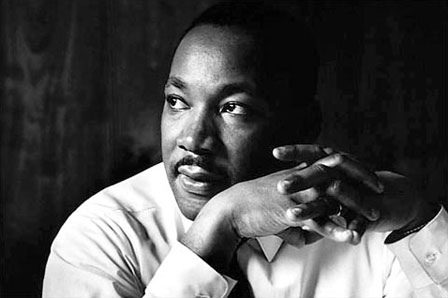
Martin Luther King JrAn American investment banker was at the pier of a small coastal Mexican village when a small boat with just one fisherman docked.  Inside the small boat were several large yellowfin tuna.  The American complimented the Mexican on the quality of his fish and asked how long it took to catch them.

The Mexican replied, “only a little while. The American then asked why didn’t he stay out longer and catch more fish? The Mexican said he had enough to support his family’s immediate needs. The American then asked, “but what do you do with the rest of your time?”

The Mexican fisherman said, “I sleep late, fish a little, play with my children, take siestas with my wife, Maria, stroll into the village each evening where I sip wine, and play guitar with my amigos.  I have a full and busy life.” The American scoffed, “I am a Harvard MBA and could help you. You should spend more time fishing and with the proceeds, buy a bigger boat. With the proceeds from the bigger boat, you could buy several boats, eventually you would have a fleet of fishing boats. Instead of selling your catch to a middleman you would sell directly to the processor, eventually opening your own cannery. You would control the product, processing, and distribution. You would need to leave this small coastal fishing village and move to Mexico City, then LA and eventually New York City, where you will run your expanding enterprise.”

The Mexican fisherman asked, “But, how long will this all take?”

To which the American replied, “15 – 20 years.”

“But what then?” Asked the Mexican.

The American laughed and said, “That’s the best part.  When the time is right you would announce an IPO and sell your company stock to the public and become very rich, you would make millions!”

“Millions – then what?”

The American said, “Then you would retire.  Move to a small coastal fishing village where you would sleep late, fish a little, play with your kids, take siestas with your wife, stroll to the village in the evenings where you could sip wine and play your guitar with your amigos.”   http://bemorewithless.com/the-story-of-the-mexican-fisherman/

We are all on some sort of a journey.  We’re looking for something and often do not realize that it’s ourselves that we are in search of.  We are trying to hear the voice of God so that we can have some idea of our purpose on this earth and where God is calling us to go, who God is calling us to be.  Almost always, though, the answers are with us all the while.  It would be nice if we could get a loud obvious voice pointing us in the right direction saying, “I have made you for a time such as this!”  But that voice rarely comes for it is as Rumi said, “Silence is the language of God, all else is poor translation.”

Eli was no longer able to hear the voice of God.  He had let himself get caught up in things that he shouldn’t have been involved in and it took its toll on his ability to hear that voice within the silence.  Samuel, however, was young and open to hearing that which he needed to hear.  He could hear the voice of God in the night piercing the silence and all of the events in his young life to that point came crashing together.  And so this 13 year-old boy became the last judge in the land of Israel and the first prophet.  A transition happened through one person.  An old era passed away and a new one was ushered in because a young man would listen.  Because he would open himself to hearing the voice of God, in one person the vision of God was revealed among the people.  For a time such as this, Samuel heard and answered the call.

Although Michael’s father was a pastor, Michael wanted nothing to do with it.  His father was very strict and wouldn’t allow drinking or smoking or swearing or any of those things and that’s likely why Michael engaged in all three in his rebellious youth.  Michael had more interest in intellectual things than in things of the spirit.  He went to college, went to seminary, and did his PhD – all before he was 25.  He pretty much makes me feel like a slacker. 

While he was troubled by the racial injustice and the social climate around him, he likely didn’t have much to do with it directly.  He struggled with who God was in light of the things that were happening around him and what he could do about the systemic oppression of African Americans, but often chose to do nothing.  It was while doing his PhD that he had a mentor who would be a theological “hero” of the UCC – Reinhold Niebuhr.  Niebuhr taught Michael that there was another way that existed in between sitting on your hands and doing nothing and resorting to violence.  He showed Michael that there was a way to protest and affect change in a very powerful and meaningful way that didn’t mean giving in to the practices of the oppressor, nor lying down and being complicit.  It was at this point that a social prophet was born.

Michael, who struggled with religion and philosophy realized that he couldn’t just sit back and let things continue the way they had been.  He was a young man who finally opened himself up to the voice of God and heard and in hearing became transformed.  It’s fitting then, that when his father, Michael King Sr., changed his name to Martin Luther, that junior followed suit.  Martin graduated and headed to Montgomery to pastor a church.

Martin was called to be a pastor.  But that wasn’t the full story.  God continued to speak and Martin continued to listen.  This modern day Samuel began to see that God was at work and things were unfolding before his very eyes.  When a 15 year-old girl was arrested for not moving and allowing a white man to sit on the bus, tensions started to build.  But when it happened again soon thereafter and Rosa Parks refused to move from the “colored” section of the bus because all the white seats were filled and was arrested for it, religious leaders in Montgomery decided it was time to do something.  The religious leaders knew there was something special about Martin.  They could see that he was a social prophet.  They could see that there was something special about this man just like Nathanael and Jesus saw it in each other.  When it came time to organize a bus strike in Montgomery and choose someone to be the voice of justice and humanity, they knew Martin was their man.  Martin had been prepared and called for a time such as this. 

You know how the rest of the story goes.  In some ways breathtakingly beautiful, in others tragically heart-breaking.  The story still continues to a great degree, but here we stand in a time when young men and sometimes even women are killing each other on the streets of Chicago and around the country for reasons that they don’t even comprehend.  We live in an era where small children are strapped with bombs and sent into crowded markets with false promises and abruptly halted dreams to take lives in the name of ideology.  We see children beating and cursing and hurting one another because of their socioeconomic class, their gender identity, or just because they are a convenient scapegoat in an unstable internal power struggle among children with no self esteem.  Kids are driving each other to suicide because they can’t even manage to look at one another as human beings who are, as the Psalmist says, “fearfully and wonderfully made.”  We live in the midst of such a time and God is still speaking.  Are we listening?  Are we willing to hear what God has to say?  Can we be brave enough to stand up and say that we have a dream and that we will not stop until we see “justice roll down like waters and righteousness like a mighty stream”?  Will we be silent or stand up until little boys and little girls are not judged by one another for their religion or their sexual orientation or gender identity or their socioeconomic status, but by the “content of their character”?  As we wander and seek and strain our ears to hear the voice of God to give us direction, might we stop and consider that God has already spoken in the silence and that we were fearfully and wonderfully made to be called for a time such as this?

John Wayne Buddha

Posted in Uncategorized on January 13, 2015 by thecrossingchicago

This is a microfiction (1000 words or less) piece that I did for a contest a few months ago.  I’m putting it up here for a week or so and then will remove it for publication.

John Wayne Buddha

Sam had always been tired of being busy all of the time.  Running here, rushing there.  Trying to make sure that everyone was satisfied and doing his best to feel important in the process.  Now he had nothing to do.  No demands, nobody asking him for anything.  He just had to sit there, relax, and die.

Sam had wished for as long as he could remember to be able to get away and have some quiet time.  He had a great love for the mountains and the calming effect that they always had on him.  He always considered himself an extrovert, but the older he got, it seemed like the scales were tipping more and more toward introversion.  He still liked people, but the quiet alone time grew in necessity as the years unfolded into each other.

And so it was that he decided to get out of the city and go for a long-overdue hike in the mountains that weren’t so far, but distant enough to make one feel secluded.  No phone, no emails, no bickering voices trying to suck up what little Sam-time he had.  Just him, his camping gear, enough rations for the week, and the wide-open sky imposing even over the massive 10,000 foot rock that he was trekking across.  It was finally time that he took off from his librarian job and started living all of the adventures that he had only read about.

One false step off the beaten path and a broken leg leads to almost certain death in a place where no one treads and the nights are long and cold.  Such was Sam’s lot.  After finally mustering up the courage to do something different, to get out of his shell and actually live, the cosmos batted him down like a housefly in January.  Trying to get a better view of the valley and the city below, Sam had stepped onto unsure ground near the edge and slid to his final resting place.    

There’s something about dying that makes one an instant philosopher.  Past loves.  The coulda, shoulda, woulda, but didn’ts.  Was there even any meaning to life?  For what purpose had he spent these 52 years on this spinning mess of a boulder?  Living a life that doesn’t even seem like one’s own as we do and do for others only leading to a false sense of identity while the “real” you becomes more and more buried in the lie.  All of the things that I tried to be for somebody else’s sake and never even figured myself out, he thought.    

His backpack hung about 100 feet up toward where he had taken his ill-fated last step.  Inside the backpack was a book (along with the food that he needed, but couldn’t reach) that had been sitting collecting dust on his book shelf.  Rereading it was something that he said long ago that he would get to and never did, just like everything else.  It was a book of short stories by Ernest Hemingway and it included The Snows of Kilimanjaro.  Sam laughed to himself despite his unfortunate situation realizing how much he and good ‘ole Harry had in common right now.  Sam laughed until he was delirious, or maybe it was just shock.

He tried to focus on something other than the pain in his leg with the bone protruding from the skin to keep him from fainting.  He saw a light pivoting and sweeping across the city.  Flashing red lights above it alerted helicopters where the landing pad was atop the hospital.  How ironic.  A flood of thoughts and emotions washed over him as he drew his hands deeper into the sleeves of his coat that would be inadequate for the night that was quickly approaching.  He could hear music and knew that had to be delirium.  Rachmaninoff’s Piano Concerto Number Two fading into Moonlight Sonata which gave way to Vitali’s Chaconne until they were all playing in his head at the same time in cacophonous beauty.  Sam realized that he had closed his eyes and jerked them open, sitting up straight so as not to fall unconscious.  He focused his eyes once again on the flashing beacon and counted the pulses to stay awake as his mind began to drift. 

Half a million people down there.  Not one of them knows that I’m up here and probably not one who would care if they did.  People are too self-absorbed to care about anyone but themselves.  All of the writing I never did.  The trips I never took.  Doing for others and never for myself.  Wasting my time trying to be someone for the sake of others and never even figuring out who the hell I really am.  Look at me.  Now I’m just a regular contemplative.  Maybe I’ll attain enlightenment here under this pine tree and take my place among the great mystics.  God knows I’ve had my share of Helens.  Liked them well enough, but wasn’t really in love with them.  Or is that just what I always told myself because I knew my Helen would hurt me in the end?  The last one had sworn that she loved him more than life itself and then had been seen sucking face with another guy at the local watering hole.  Had to keep that persona that kept women at arm’s length and the vulnerability that comes with love a mile away.  Kind of like John Wayne.  That’s it!  I’ll call myself John Wayne Buddha for what little time I have left.  A contemplative cowboy who’s too damn tough to feel emotions.  Got it all except for the six iron on my hip.  He laughed until he passed out.  It was better that way.  The pain of dying and the tortuous mind that accompanies it are rarely forgiving.

The Four Rs

Posted in Uncategorized on January 11, 2015 by thecrossingchicago

Three RsMarx had a good idea – in principle.  A utopian society where human beings would be equals and each individual would have what he or she needs to live.  Oppression and power struggles would not be a way of life.  Yes, I have perhaps oversimplified the Marxian ideal, but this ideal is one that we have longed for since our species first saw the light of day.

Governments have tried to legislate equality through welfare reform, the Civil Rights Act, communism, socialism, and other acts of bureaucracy.  Although communism and socialism proved to be unsustainable forms of government in their purest forms (perhaps because of the human hunger for power), they were noble answers to severe forms of dictatorship.  The problem is that history has proven that change has to come from the individual in a “bottom-up” approach instead of “top-down.”  In other words, compassion cannot be legislated.

With our need for instant gratification and quick fixes, it is no wonder that we have tried to use a macro approach to problems of the heart.  Merely being told that we must be compassionate and humane and putting in place systems and structures to enforce this mindset is not effective.  If individual actions and perceptions are the root cause of our inability to have a society of peace and equality, then we must start with the individual when seeking a solution.

When we are hungry, we have numerous choices, assuming we have the means to meet our needs.  We can go to the drive thru of the nearest fast food chain and have our hunger satiated immediately.  We can go to a sit-down restaurant and, after a short wait, have our bellies filled.  We can also take the more patient approach of buying groceries and preparing a meal by ourselves.  This is the least expedient of the three options, but is undoubtedly the most healthy.  But, there is yet another option.  As human beings who have been around the block a few times and lived in our own skin for a while, we know that we will get hungry.  It happens at least three times a day, every day, without fail.  We know that there is a “cost” for convenience, so we could also take the approach of planting seeds in a garden, nourishing them, and watching them grow.  We can then harvest that produce and use it as ingredients for our meals as we prepare them.  This is the approach that we need to take with humankind.

In schools, our youth are taught the “three Rs”: reading, writing, and ‘rithmetic.  I would propose that we teach a fourth R: radical compassion.  Yes, it is true that you cannot force individuals to emote a certain feeling such as compassion, but we can teach them, through mindfulness, the mindset that leads to being a humane human being.  In Ohio and other states mindfulness is being taught in elementary schools to reduce bullying and increase respect and empathy.  Mindfulness leads to awareness.  Awareness of one another and our interconnectedness in relationship leads to the ability to feel not only sympathy, but also empathy for one another.  As a natural byproduct,  feelings of compassion will arise that lead to kind words and action followed by the eradication of bullying, selfishness, and violence.

This all may sound well and good albeit laden with extreme idealism, but I believe it is possible.  We teach our youth subjects in school so that they can get jobs and become contributors to society.  We hope for them to have successful careers and make us proud.  Why shouldn’t we teach them to love one another and build a society whose God is not money, but love?  We used to teach morals and ethics in our schools, but these were done away with as being deemed “too religious.”  Ethics and morals are good, but they seem to be tied more to “thou shalt not” than “because I love you.”  Mindfulness is not and should not be tied to religion.  It supersedes religion and dogma and leads to a true “kind-dom,” a veritable utopia.  Instead of teaching dogma and scaring our young into doing what’s right, we should go deeper and let what’s right become second nature.

During a recent hospital orientation, one of the speakers was a man who started at the hospital 40 years ago as a teenager washing “dishes” in the lab.  He is now the director of consumer relations and it is no wonder as his passion for his job is catching.  He said that he believes firmly in, not the golden rule of doing unto others as you would have done to yourself, but doing unto others as if you were them.  If we follow the traditional golden rule we end up imposing our values on others.  If we have empathy and compassion, we love them where they are at and act accordingly.

We are hungry for peace.  We long for a world where love is the rule and injustice is unconceivable.  We want the serenity of knowing that our youth will grow to an old age and do right by one another.  I’m confident that such a world is possible.  I’m hopeful that such a hunger can be satiated.  But, I’m sure that it will not be found at the drive thru of government legislation nor the sit-down restaurant of religious dogma.  Instead it will be reaped from the garden of mindfulness and humaneness.  Perhaps this is the real Garden of Eden where humans are born to their full potential.  Planting season is at hand and the seeds are in the storehouse.  It will take time and generations so planting needs to begin now.  In the words of Whitney Houston: Let us teach our children well and let them lead the way.

Passing of the Way

Posted in Uncategorized on January 7, 2015 by thecrossingchicago

Native AmericanAn acquaintance from the gym that I work out at saw the reading material that I tend to consume while doing my cardio and leant me a book called The Wisdom of the Native Americans.  It is a rather short book with compiled sayings from different Native Americans over the centuries.  A couple of the quotes that really caught me were:

We are afraid if we part with any more of our lands the white people will not let us keep as much as will be sufficient to bury our dead.  –  Doublehead (Creek Chief)

The white man leaves his fathers’ graves, and his children’s birthright is forgotten.  –  Chief Seattle

Old age was simply a delightful time, when the old people sat on the sunny doorsteps, playing in the sun with the children, until they fell asleep.  At last, they failed to wake up.  – James Paytiamo (Acoma Pueblo)

I have attended dinners among white people.  Their ways are not our ways.  We eat in silence, quietly smoke a pipe, and depart.  Thus is our host honored.  This is not the way of the white man.  After his food has been eaten, one is expected to say foolish things.  Then the host feels honored.  – Four Guns (Oglala Sioux)

I couldn’t even begin to capture all of the quotes that struck me as I was on the elliptical.  It reminded me of a truth that I am often reminded of: we are constantly looking forward and upward for progress and innovation, but rarely focused backward and inward for introspection and a return to our roots.  There are many great practices that we have forgotten.  As the Native Americans would say, we have forgotten the face of our fathers.  To our own detriment, our European (and elsewhere) ancestors came to this land and completely overlooked the beautiful culture and ways that preexisted them.  Ways of silence, respect, and dignity were plowed over to make way for success and manifest destiny.  Looking down over the mighty Mississippi or the muddy waters of the Missouri, we are reminded that it was not our trailblazing pioneers that gave them their name.

I was recently talking with JW and she was telling me how funerals were conducted in her native Ireland.  She mentioned the way that the body would be brought home because where you lived is where you should be in death.  Folks would gather from the community to pay their respects at the deceased’s home and then the body would be carried through the estate (neighborhood) on the shoulders of the local men so that all could bid their final farewell.  Finally, the men would make their way to the cemetery while the women waited at home until the next day.  The men represented their families as they sent off their loved one.  (Let me know if I got any of this wrong, JW!)

Our conversation reminded me of the way we do funerals in Japan with many similarities.  Friends and family pay their respects as the body lies in state in his or her home.  After a few days, everyone gathers at the crematorium and pushes the body of the deceased into the “oven.”  While the body is being cremated, everyone gathers and eats, drinks, and tells stories of the one who has passed.  Then, after about 45 minutes, everyone gathers where the remains have been scattered on a high table made of stone and steel and partner up to put the bones into an urn with long chopsticks called saibashi.

The conversation also reminded me of how my in-laws reminded me that I was the family representative when I went to the Buddhist temple to hear the dharma talks.  I went to temple quite often thinking of it as an individual endeavor that I was doing for my own learning.  When they said that I represented the family and ancestors when I went to the temple I was hit with a huge sense of responsibility and honor.  It makes me aware how easily we “forget the faces of our fathers.”

In our own cultures and in those around us, there are practices that had great meaning which now have gone away with the passing of generations.  It is right and good for us to make progress and to seek our own enlightenment.  But it would behoove us to remember the faces of our fathers – to return to the practices of our ancestors and to experience the appreciation for the land that our predecessors once possessed.  To rediscover the practices is to rediscover the meaning behind them.  Once we reclaim them, we can carry on the legacy of a flame that was lit long ago and teach our young a new appreciation for life and wisdom.

Atheist in a Foxhole

Posted in Uncategorized on December 3, 2014 by thecrossingchicago

As my buddy JL and I were recently discussing, I have always held that atheists have more faith than I and most “religious” folk do.  Ironically, philosophers (like David Ronnegard in his second sentence) will claim that they have no faith.  The atheist is convinced that there is no God, but when it comes down to it, the rest of us are just agnostics as we do not have the answers (although some are not shy about claiming that they do).  Some would try to convince atheists that there is, in fact, some sort of deity, but I feel no need to do so.  I believe that the term “God” (big or small “g”) is a matter of semantics.  In their attempt to convert atheists to theism (usually a particular brand of theism, e.g. Christianity) they will claim that there are no atheists in a foxhole.  That is, if one is faced with death or the awareness of his or her mortality, that person will certainly begin a deeper search and reach out to God for help.  A read of the article linked below will show that this is not necessarily true.

https://philosophynow.org/issues/105/Atheist_In_A_Foxhole

Ronnegard embraces his atheism in the face of impending death.  Having been diagnosed with terminal lung cancer at age 37, he is still able to be at peace with the idea that there is nothing beyond this life and nothing out there guiding our destiny.  Ronnegard says that “the terminality of life helps us see” the value of life.  Ultimately, he argues that faith in an afterlife makes us deny that life ends and leads to less of an appreciation of what we have though limited it may be.  I think we can learn a lot from this atheist.

I do believe, however, that semantics are still at play here.  Philosophers and theologians, humanists and theists argue about the meaning of life, the existence of God, and many things that appear to divide them, but at closer look actually unite them.  I, for one, am not concerned about a physical realm called heaven after my physical life here on earth.  I am very concerned, however, about the legacy that I leave behind for my kids and those around me.  What are the lessons that I have taught?  What kind of environment have I created?  Ronnegard says as much in his article.  So, what’s the deal?  Am I actually a closet atheist or is Ronnegard actually a theist?  Neither.  We are letting words get in the way of saying the same thing.

Ronnegard embraces the impermanence of life.  This is something that we all can stand to learn.  We never know when our time will be up, but we do know that it will be up.  In the end, like the tattoo on his nurse’s arm says, we should “live life like you will die today, love like you will live forever.”  All we can do is do our living the best that we can and ask ourselves along the way if this is really what we want to leave behind.

Curiosity Saved the Cat

Posted in Uncategorized on November 12, 2014 by thecrossingchicago

Indiana JonesThe basic instruction is to make friends with yourself – to be honest with yourself and kind.  This begins with the willingness to stay present whenever you experience uneasiness.  As these feeling arise, rather than running away, you lean into them.  Instead of trying to get rid of thoughts and feelings, you become curious about them.  – Pema Chodron

The unanswered questions are not nearly as dangerous as the unquestioned answers.  – David Hayward

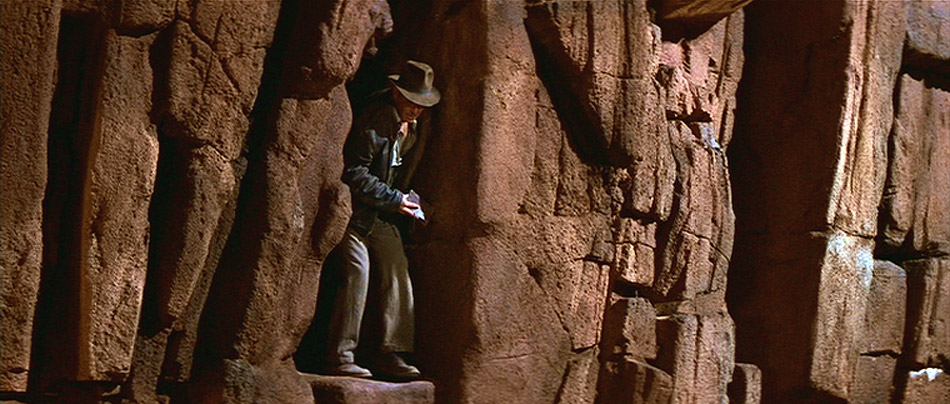
Faith.  What does it mean?  Is it closing our eyes as we come to the edge of the cliff with an Indian Jones-like assurance that something will prevent us from meeting our doom beyond the precipice?  Is it throwing out the age-old adage that “God works in mysterious ways” when we come across something that we can’t wrap our minds around or reconcile with what makes sense?  This is the way that many people would define faith, but I’ll put my chips elsewhere.

I prefer to look at faith as something that gives reassurance despite the fact that something seems amiss.  It is not an assurance that we are always right and therefore have no need to question our convictions or the foundations that they rest upon.  Faith, then, is not the antithesis of curiosity, but rather the guiding principle.  That is, if we have a genuine faith, then it is a faith in something much bigger than us.  Something that guides all of the principles of the universe and that we can sometimes be wrong about.  This is why we evolve as human beings.  As Chodron says above, it’s necessary to look at our beliefs and worldview and test them.  Sometimes things don’t seem right and at those times, instead of shoving the cognitive dissonance under the existential rug to keep whispering at you like the tell-tale heart, tear up the rug and see what’s underneath.

We can live our lives in a way that is “safe” because we have everything figured out.  As long as everything works within the framework of our understanding, we will be at ease and have our beliefs reinforced.  If something seems amiss, however, we generally lash out and blame those who upset the applecart dismissing them as heretics or anarchists.  Real life, I think, should work the other way around.  Instead of being uneasy when our cosmological understanding is challenged, let’s be concerned when we think we have it all right.  Don’t be afraid when something seems amiss and there is more to process.  Robert Browning was right when he said, “Ah, but a man’s reach should exceed his grasp, or what’s a heaven for?”  If you think you have it all figured out, however, well, be afraid . . . be very afraid.


I Am, Therefore I Am

Posted in Uncategorized on October 17, 2014 by thecrossingchicago

thinking1Cogito, ergo sum. These were the famous words uttered by Rene Descartes when he was contemplating the ontological question of how to know anything with certainty. I think, therefore I am. I think, therefore I exist. Descartes struggled with the nature of existence and truth and finally had the lightbulb moment when he realized that the only thing he could be certain of was the fact that he was thinking. To him, this became the only proof that he actually existed and that reality (including his own) was not somehow dreamed up.

Descartes’s logic held up for a long time from his 1637 realization, but instead of stopping at thinking as a proof for his existence, he went a bit further to posit that thinking was existence. That is, cognition is the root of all being. Theologians and philosophers alike have wrestled with existential questions since the beginning of time and Descartes was no exception. Neither was Jean Paul Sartre.

Almost 300 years after Descartes’s famous utterance, Sartre was struck with a new idea: The consciousness that says “I am” is not the consciousness that thinks. In other words, if we are aware of our thinking, then there is a higher level of consciousness at work to have the awareness of our thinking. If all we are is the sum of our thoughts, then we would not even be aware of our thinking because that is at the core of our being. Yes, this all sounds like a bunch of philosophical mumbo jumbo that comes only from too many pints in an Irish Pub (and who knows, Sartre may not have been far from the French version) but Sartre was on to something: We create “realities” through thoughts and perception, but these realities are not real. There is something much bigger and more mysterious at the core of being – something that is beyond our full comprehension.

When Moses came down from the mountain and saw that the people had made a golden calf to worship, he was fed up. He went to God and and essentially made God make a commitment. If Moses was going to go on with this business of leading the Israelites, he needed some reassurance that God would stay with them and make things go as smoothly as could be. He also requested something very gutsy – he said he wanted God to reveal God’s presence (glory). God agreed to all of these things, but warned Moses that he could not see God’s face because one could not see God’s face and live. So, God put Moses in a safe place and passed by showing Moses only God’s back. How could our human minds possibly contain all the answers of the universe? Every matter of quantum physics that is discoverable but as of yet unknown, how the human mind works, the intricacies of string theory, etc, etc. How could one mind contain all that there is to know? This is why we come to the table with our own areas of expertise to share with those who have other gifts and knowledge.

As we live our lives, we develop opinions and perceptions which tint the way we see the world. As events unfold around us and people speak and act, we look upon these things with a certain self-imposed worldview that informs us about whether these things are good or bad, fair or unfair, just or unjust. We make judgment calls based upon the reality that we have created for ourselves and then juxtapose what we view against or own version of reality. This creates experience and when added together is the summation of our lives. Put another way, not so much unlike Descartes, we live by the philosophy, “I think so, therefore it is.”

Our perceptions are not merely projected on the world, but also on God. When God passed by Moses, he could not comprehend what he was seeing. We like to think that there was a personage like some kind of giant walking past the mountain, but that’s not what it says. When God first “appeared” to Moses in a burning bush, God said “I am who I am.” When Elijah was running from Jezebel, God’s presence passed by (likely the same mountain Moses was on) and although there was a fire, and a whirlwind, and an earthquake, God was not in any of these. There was then a “sound of sheer silence” and that is where God was. We cannot comprehend what God is because we cannot be inside a thought and outside of it at the same time. We are created in the image of God and in many ways we are God and God is us.

This sounds terribly sacrilegious to many, I’m sure, but if we are one in God and God is one in us, then we are completely in God and God is in and beyond us. This is the ancient mystery of transcendence and immanence. God’s presence is everywhere, yet beyond. It appears to me that as humans, we are too focused on the transcendence of God and that’s why instead of the ever-present “I am,” humans made God into the Great and Powerful Oz, the Lord of Hosts and King of Kings who stands above and defeats our enemies. Moses struggled greatly with this because he couldn’t understand why God wasn’t always making life easy if the Egyptians could be defeated so easily. Moses was of course missing the point. God empowers us to do what is needed from within, but it is ultimately up to us to choose to exercise that power.

We do not create reality. We would like to, but our creation usually only leads to suffering because it’s not an accurate reflection of what really is. There is a God at the center of everything that is the essence of all reality. When we want power, understanding, patience, strength, whatever it is, we need only to reach as near as our own soul to find what we need. When we do so, however, we need to be prepared to see the world as it really is. This isn’t an easy thing. Just ask Moses. In the end God is who God will be and I am not much different. Ultimately it is not that “I think, therefore I am”, nor is it “I think so, therefore it is”, instead it is “I am, therefore I am.”

The Dogma Files Part 3 – Evil

Posted in Uncategorized on October 6, 2014 by thecrossingchicago

Good_vs_evilMy son and I went last Sunday to see The Boxtrolls at the theater. I hope I’m not spoiling it for anyone, but it did have a rather deep message. As I watched this animated film I could see a number of societal roles that emerged among the characters. Without giving away the entire story, here is the dime version of the synopsis.

Archibald Snatcher is an exterminator who covets power. Members of society are divided into classes with hats that designate their power and status. The White Hats are the aristocrats who lead (using the term loosely) with special meetings of good old boys eating cheese around a table. Snatcher is a Red Hat, presumably representing the working class. The White Hats want nothing to do with Snatcher and there is nothing that he can do as part of a proper process to ascend to White Hat status. So, he uses the Boxtrolls – a subterranean species of peaceable trash collectors who wear boxes in which they sleep in and hide when they are scared. Snatcher concocts a story that he tells Lord Portley-Rind (head of the White Hats who constantly ignores his daughter, Winnie, when she tries to warn him about Snatcher) that the Boxtrolls have been kidnapping and eating people and must be exterminated before the townsfolk are attacked and eaten in grizzly fashion. He tells Portley-Rind that he will gladly dispose of the Boxtrolls in exchange for making him a White Hat. After much reticence, Portley-Rind agrees.

For the sake of brevity, I will give a very abbreviated account of the rest of the details. The townsfolk become afraid of the Boxtrolls and want nothing more than to have every last one of them exterminated. Snatcher uses any means necessary to achieve his goal of getting his White Hat – even vilifying and killing the innocent Boxtrolls who refuse to fight back and hide in their boxes when attacked. Snatcher has three accomplices – Mr. Pickles, Mr. Trout, and Mr. Gristle – whom he has convinced that the Boxtrolls are evil and uses them to achieve his goal. Throughout the movie, Mr. Trout and Mr. Pickles begin to have doubts that they are actually the “good guys.” They ask many existential questions and even wonder out loud whether or not the Boxtrolls “have any awareness of the duality of good and evil.” Mr. Gristle is completely irrational and seems to do things that no sane person would do. Ultimately, Snatcher gets his White Hat and sits at the table with the aristocrats doing the only thing that they seem capable of doing – eating cheese. The problem is, Snatcher is severely allergic to cheese and dies soon after joining the group.

On the way home from the movie, I asked my son what he thought the movie meant. I believe he said that it was something along the lines of not making assumptions and things not being what they seem to be. I told him about the Holocaust and the Jews being a scapegoated people who hid in walls and attics to avoid being captured and sent to the ovens. I explained how Hitler essentially paved the way to his own demise while on his quest for power. We talked about how otherwise good German people watched and did nothing as friends and neighbors were rounded up and placed on trains without a return ticket.

Hitler. Stalin. Mao. Pol Pot. Kim Jong Il. So many others. Individuals who convinced the masses that a particular people group – Jews, Gypsis, Hmong – were the cause of the ills of those masses. This works best in times of economic crisis, because we always need someone to blame. Sometimes, like Snatcher, irrational fear is instilled where there is no real crisis. The false anticipation of a catastrophe and the resulting fear lead people to do irrational things. We would like to think that these are antiquated mindsets perpetuated in bygone days before humans became suddenly enlightened after WWII and the Cold War. If only that were true.

Evil lurks behind every corner and in the darkest hiding spaces of every soul. Those things that we think are unconscionable happen every day and sometimes we are the perpetrators. Being silent in the face of injustice, systemically oppressing others so that we can gain status, imagining that there is a clear dichotomy between our worldview (the right/good way) and that of others (the wrong/evil way). We even go as far as to attribute atrocities to being the work of a malevolent being who was cast out of heaven before the existence of humankind. Perhaps Satan is not lurking in Hades waiting to capture our immortal souls, or trying to convince good people to commit heinous acts, but is our own anthropomorphized capability for evil. Maybe we are too afraid to admit that we at any given time can be that which we fear most. It’s unsettling to think that we are capable of intentional malevolence and/or complete disregard for those who suffer needlessly at the hands of others.

Good and evil do not exist within the comfortably delineated duality to which we have assigned them. Instead, there is a vast grey area where we all reside. But what about Satan, Lucifer, The Accuser? Isn’t the Bible clear that such a being exists? What about Isaiah’s description of the Son of the Morning Star, Job’s Accuser, or John the Revelator’s beast? Each of these allegorical personages represented specific people and was understood as such by their intended audiences. The Son of the Morning Star was King Nebuchadnezzar, the Babylonian King responsible for the exile of the Israelites and the destruction of the Jerusalem temple. Job’s accuser or “devil’s advocate” represented the Ancient Near Eastern beliefs of the time. Surrounding cultures believed in a council of gods who created the Earth and made decisions together. In Job, the person who we usually assume is the devil, was actually appointed by God to check up on humankind and make sure they were doing what was commanded. The Jews had no concept of a place called hell, nor a being who waited there, in their theology. Finally, the beast in Revelation was the emperor Nero and the Roman Empire. The seven heads of the beast represented the seven hills of Rome.

Evil exists as a result of choices. We choose to commit harmful acts against fellow human beings. We choose to turn our heads when these acts are perpetrated against those around us. As there is much more literature on Satan-Lucifer -Devil and the subject of evil, this post does not even scratch the surface. My primary hope in composing this post is the awareness that attributing evil to a personage with horns and a forked tongue who “makes” people perpetrate horrible acts is a dangerous practice. It is this type of projection and shirking of responsibility that leads to Holocausts and genocide. Attributing evil to an external source allows us to hide and shrug our shoulders as if it can not be helped. Instead, we need to take a good hard look at ourselves and take responsibility for our own actions so that light may be shined in the dark recesses of our own hearts. Without a decision to become complicit, or at the least ignoring the problem, the Holocaust never could have happened.

(Kant, Kierkegaard, Augustine, and many others have written extensively about the problem and nature of evil. For a nerdy, yet very cool read, try Marjorie Suchocki’s The End of Evil: Process Eschatology in Historical Context.)

All That Is

Posted in Uncategorized on September 22, 2014 by thecrossingchicago

creation of lightAlthough not nearly often enough, I will many days sit and meditate on an old cushion that was passed down to me from a Zen priest who used it in Japan since WWII.  Sometimes nothing happens, but I always enjoy the solace that comes from just being silent.  Many times I will light a candle and stare at the flame until it’s image is imprinted on my vision.  Then, I close my eyes and see the negative image of what I just saw – instead of the flame being lighter than it’s surroundings, the shape of the flame is black against the orange of the light making its way in through my eyelids.  The flame will have an effect of falling if I don’t focus too directly on it and seems to be absorbed into something deep like a dark pool of water.  When this happens, I am at a very deep state of rest.  This is my typical meditation experience, but the other day it was much more eventful.

I was sitting in my usual place before my makeshift altar with eyes closed watching the image from the flame descend into the black pool when suddenly my senses were heightened.  It was as if I could see individual atoms lit up and flowing from the pool.  Iridescent brilliance radiated from the pool and flickers of light seemed to dance upon the waters.  It was the tehom that existed since the beginning from which creation was formed.  These dark waters seemed not so much chaotic as a tranquil deep rife with possibility. 

I was aware of my interconnectedness with the rest of the universe and for what seemed like aeons, but was probably just seconds, I was completely at one with all of existence.  The tree outside me window, the air that filled my lungs and surrounded my body, the very ground that I sat upon – they were me and I was them.  We were one.  There was no distinction between atom and quark, photon and quasar.  Matter, gas, solids were one in the same.  There was no existence other than All That Is and all created order was a part of it.    

During this experience I had a vision, an epiphany.  I did not audibly hear a voice, but I had this great sense of “knowing.”  As if by being connected to all that is, was, and can be, I was able for just that moment to possess all knowledge and understanding of and about the universe.  Somewhat like taking a blank hard drive and uploading terabyte upon terabyte of information onto it, I was made full of a great knowledge that far surpassed anything I could have ever imagined.  In the receiving of this knowledge came the understanding of a great responsibility akin to that of a prophet to guide humankind back to their true essence and to the source of all being.

This is the testament of what I have seen and the divine knowledge that has been imparted to me.  I share this as a part of my calling to rescue humans from their attachments and separation from the great All That Is so that all may be reconciled.  I hereby attest that all things written here are true.

As the universe evolved from infancy and subatomic particles were attracted to one another and joined over aeons, heavenly bodies were formed.  The energy that was created and released by the forming of these bodies gathered and also evolved.  As the energy evolved it developed into a great consciousness, a complete Other that was separate, transcendent, yet interwoven and at one with the rest of existence.  This All That Is possessed awareness and was able to influence in a persuasive manner all that was, is, and shall be.  From this great consciousness was emitted energy that became the consciousness of lesser beings – all interconnected with one another and with the Source of Being.

These beings had a great awareness of their source and one another.  Through their interconnection, they could intuit feelings and glean a great sense of events and time.  This sense existed beyond our primary five senses and allowed them to be gods unto themselves.  The same power of persuasion that existed and emanated from the Source of Being was possessed by these beings to a lesser extent.  Through this power of persuasion, they could affect the created order and were unable to do harm to one another.    

Over time, the consciousness of each sentient being became clouded by attachments and ill-begotten aims.  As the spiritual became more muddled, the physical began to develop.  Once-spiritual beings developed bodies that restricted their movement and location.  Bodies of energy that could be anywhere and everywhere at any given time with no concept of mortality developed flesh and bone and became limited by these bodies in location, ability, and even death.  Awareness of the All That Is was greatly diminished and the sixth sense was all but gone.  Humans developed the capacity to do violence to one another and as their awareness of All That Is became fainter, the evil that was perpetrated grew by degree.  In order to preserve and protect life that still flowed in perpetuity, a place was created for humans to evolve into what they had chosen for themselves where they could not do harm to the rest of the created order.  That place is the planet Earth.

This testament will be continued and will explain the way back to the the great All That Is so that we may once again exist in our true forms and be safe from the chaos that we have created.  He who does not heed these words does so at his own peril for he relegates himself to an existence of suffering and meaninglessness.  As I have been chosen to bring this message of life and reconciliation to all humankind, ask of me freely for understanding and wisdom shall be imparted to you.    

Life in the Fast Lane

Posted in Uncategorized on September 22, 2014 by thecrossingchicago

life in the fast laneThe first shall be last and the last shall be first.  This is what we are told.  It sounds like a message about socioeconomic justice or just a plain and simple fact that rich folks will not be found in heaven.  Maybe it means that those who bust their hump to make it to the top of the ladder will be yanked down to a foreboding place where the worms and moths eat every last thing of material worth.  I would be willing to say that there is something to this mindset, but that it isn’t the whole story.

Interpreting scripture texts to mean that some are “in” and some are “out” and that Jesus’ parables are some type of road map or guest book for heaven is, I think, an erroneous interpretation at best and intentionally malicious at worst.  Any time a person uses scripture (of any religion) for the purpose of exclusivity and legitimizing power, it is a recipe for disaster.  It is not only a detriment to those who are being marginalized, but also to those who are making up the rules as they go along.  In the end, you see, we don’t make the rules – the rules have preceded us since long ago.  It is our choice to play by the rules or not, but pretending they are not there will not make them go away.

A good portion of our lives is made up of decisions resulting from environmental influences such as the homes we grew up in, the education we received, and what the “norm” is perceived to be.  The rest of our lives is comprised of our own ambitions and desires and what we see as necessary in order to achieve our goals.  Put the two together and we have a “self.”  One can certainly argue whether nature or nurture exercises the biggest influence over our character development and the people we become, but in the end, we are the culmination of our choices.  This aspect is often lost in the industry of distraction and we tend to see ourselves as victims of circumstances beyond our control with nothing left to do but shrug our shoulders and say “Oh well.” 

Some may say the opposite of this complacent mindset is a “go-getter” attitude.  I certainly admire those who have clear goals and do what they have set out to do.  I do question sometimes, however, how wisely we make our choices of which goals are important and which ones are merely inconsequential.  For whose sake have I made my goals?  To what end have I created this life plan (assuming there is one)?  Am I living my life to please others or am I being true to who I really am?  These are all questions that we need to ask ourselves and be honest about when we answer.  How often do we sit in silence and ask ourselves these questions to make sure that we are truly authentic and not creating something ephemeral that could cave at any moment like a house of cards?  Are we building our own ethereal dream that will blow away like fog in the wind leaving us utterly and completely despairing when we realize that none of it was real? 

We were all made for something.  We have gifts, talents, abilities, passions, and so much more that are with us from the beginning and are an integral part of who we are.  Perhaps we should take the time to ask ourselves why those things exist within us.  If we are living lives trying to be people who we are not, then we are building skyscrapers on foundations of quicksand.  It may look nice on paper or in our imagination, but just when we think we have it all put together, it will collapse in a heap of dust. 

So, in case you didn’t catch it the first time – we are a product of our choices.  Regardless of where we come from, regardless of where we think we should be going, it is our choices that ultimately create our path.  We can choose to live life in the fast lane and chase after illusory things that never were ours to begin with, our we can take time to “rest on the seventh day” and sit in silence with ourselves.  Getting to know ourselves for our own sake and not for what we think others want us to be is incredibly healthy and liberating.  This is the true meaning of the first shall be last and the last shall be first.  Finding our true selves may mean that we have to give something up and that we won’t be incredibly rich or famous, but we will experience great peace in being honest with ourselves.  In this peace we will find ourselves and we will find God.  If life in the fast lane will “surely make you lose your mind” as the Eagles say, then who wants it anyway?  Sit.  Be.  Discover.  Then make the choices that lead to a life that is true to yourself.