Get Out of the Water

Posted in Uncategorized on February 22, 2015 by thecrossingchicago

coming out of the waterI am the world’s worst swimmer.  I can’t even tread water.  I sink like a rock and it’s utterly pitiful to watch me flail.  Sometimes there are people that they say aren’t savable if they’re drowning because they flap their arms around too much – that’s me.  Don’t get me wrong, I can swim from A to B, assuming that the distance from A to B is less than 100 feet or so.  But my motion is so inefficient that I’m tired after only a short distance. 

I can remember a time when I went with friends to Oak Street Beach and as everyone was jumping in to the water, I got a running start and then hit the brakes at the edge.  I peered over the edge into the water having no idea how deep it was.  Despite much derision and laughter, I took the later down.  So, if God ever decided to be a jerk and flood the earth again I’d be SOL. 

Yes, I said jerk.  That’s exactly what God was in the eyes of the one who wrote this text.  When we talk or think about God we usually have such a reverence (read “fear”) that we are terrified of saying anything bad about God or calling God out.  Well, it’s ok.  People used to do it all the time.  That’s why it’s so important to understand these stories as what they are: stories.  The flood account that we find in Genesis is taken, just like the creation account, from Babylonian and other Ancient Near Eastern flood myths.  The council of gods became upset with all of the noise and raucous that humans were making and decided to wipe them out except for one man, his family, and some animals.  Humans didn’t think it was very nice at all and said as much because back then, humans and the gods had it out all the time.  This is the context in which we find our first testament flood story.  For a good picture of direct and candid conversation with God, check out Bernstein’s Kaddish.  It’s long, but it’s well worth the read.  http://www.milkenarchive.org/works/lyrics/511

So is that it?  Is this just some ancient lore that should be dismissed as the fiction that it is?  Not so fast.  All of the stories in the Bible and especially in the Old Testament have significant meaning for the life and plight of humankind.  This particular story tells us that the gods we create, i.e. our version of God, will always let us down and we will always let “him” down.  We have to form an intentional covenant with the real and mysterious God to let God be God and let us be transformed by the pursuit of the divine and the embracing of the mystery.  When we do this, we will eventually come out of the waters of the great flood and see the promise of life once again.

Water can be purifying.  Water can be cleansing.  This symbolism is no greater than in that of baptism.  But we know that water can also be detrimental and destroying.  Just ask those who experienced the tsunamis of Japan and Thailand, just to name a couple.  Jesus was baptized and God affirmed his baptism by telling him how pleased he was with him.  The beauty wasn’t in going into the water though.  It’s the fact that Jesus came out of the water and what he did afterward that makes it all beautiful. 

Baptism and Lent are about transformation.  But this transformation goes well beyond the individual.  Everything wasn’t perfect when Jesus came out of the water.  Just as soon as he had been affirmed by God and community, he had to wander in the wilderness for 40 days.  This wasn’t a trial or a test.  Rather it was a formative part of his journey and ours.  We commit, but we also have to wander and let the transformation take hold as we become who we are called to be.  But it doesn’t stop there.  As Jesus showed so well, when we are transformed along the journey, those who are around us become transformed and then they have an impact on the wider circle that they are in relationship with and before you know it, the entire world is transformed.  Don’t be fooled into thinking that this is anything less than a revolution and that we are capable of anything less than changing the world.  We are powerful beyond measure with the ability to turn a world of me and I and my into a world of we and us and ours.

But we don’t.  Even though we know that we’ll drown if we stay in the water too long, we refuse to come up for air because we’re afraid of the wilderness that lies ahead.  We’re afraid to try because we just might fail, or better yet, succeed at finding ways that life doesn’t work for us.  These instances of holding our breath for longer than we should humanly be capable are all around us.  There are so many ways in which we hold on to that which is with the complete knowledge that it isn’t good enough because we are afraid of the mystery and darkness that awaits in the wilderness, even though we have a promise to be made into our realized selves if we only but choose to take the journey.

I have been attending a number of conferences lately about church revitalization, preaching, church in the 21st century, theology, self-improvement, etc and I think this is good and healthy.  I will continue to attend such events to better myself both for my own well-being and that of the people whom God has called me to serve.  But while that quest for knowledge must always continue, I realized something else.  I should be writing books and I should be giving lectures.  Not because I am wiser than those I have heard or read, but because I have different and valuable knowledge to share with them and the wider audience.  This isn’t a pride issue.  It’s a matter of realizing that we all have areas that we hold a lot of wisdom and knowledge in and need to share it while we’re in the process of gaining new wisdom and knowledge.

Even though we know that there are skills and talents that we possess that can change the world if only we would share them, we stay under the water and wait while we drown.  It could only be fear that keeps us there.  But why are we afraid?  What are we afraid of?  Is it really our failures that keep us under water?  Marianne Williamson said it beautifully when she said

“Our deepest fear is not that we are inadequate. Our deepest fear is that we are powerful beyond measure. It is our light, not our darkness that most frightens us. We ask ourselves, ‘Who am I to be brilliant, gorgeous, talented, fabulous?’ Actually, who are you not to be? You are a child of God. Your playing small does not serve the world. There is nothing enlightened about shrinking so that other people won’t feel insecure around you. We are all meant to shine, as children do. We were born to make manifest the glory of God that is within us. It’s not just in some of us; it’s in everyone. And as we let our own light shine, we unconsciously give other people permission to do the same. As we are liberated from our own fear, our presence automatically liberates others.”

Being in the water will transform us one way or the other, it will either kill us or make us whole, but it’s our choice.  The water can purify us, but the real transformation comes from getting out of the water and taking that first step toward the wilderness.  When God said “I am well pleased,” God was talking to all of us.  Don’t be afraid of being amazing, because you were made for nothing less than greatness.


It’s No Wonder

Posted in Uncategorized on February 19, 2015 by thecrossingchicago

IMG_0091Let me start off by saying that this is not a rant against evangelicals, conservatives, the Christian right, fundies, whatever.  When I first saw this pin I was admittedly furious.  Yes, it’s a fake story that never happened for a feel-good Jesus-is-my-buddy effect, but it wasn’t so bad.  In some ways it was a cute little story.  But when I got to the end and the “God is watching you so you better share this little work of fiction” admonition I wanted to hurl.  Instead of a rant, let’s call this encouragement.

“66% of you won’t post this.”  Of course not.  That’s rather encouraging, actually.  66% see it for the act of coercion that it is.  66% chose to use their God-given intellect instead of riding a wave of emotion to social media.  66% were turned off by the threat that the indignant temper-tantrum throwing deity in the clouds would send them to eternal torture if they didn’t share something that we all know isn’t true.  Nice.  The sad thing is that the 66% is much more silent than the 34% and that’s a problem.

So, now for the encouragement.  My friends – whomever would post such a thing as this – I want to give you the benefit of the doubt.  I want to assume that you are trying to share the fact that Jesus is radically loving and that his way is a comforting and compassionate one.  I am going to venture that you want to show that God goes with us to get through even the most difficult of times and that no matter what troubles we find ourselves afflicted with that God will never leave us nor forsake us.  Great!  Then please say that.

I have a proposal.  Those of us in the 66% (with all of the various beliefs and ideologies that exist even within this group) want to partner with you to show the world the same things that you want to show them.  Let’s do it via another way, though.  Let’s show the world that God’s love is amazing and that we don’t have to make up feel-good stories to experience it, but that we can instead experience it in the love we receive from one another.  Let’s do for “the least of these” and invite everyone into communion at the table that God set for us.  Let’s do what Jesus did and live the example that he lived instead of putting words in his mouth that he never uttered.  Can we do this together?

To the 66%: Let’s stop being so damn quiet.  Let’s start writing our own feel-good stories, but let’s make ours true accounts of great works and deeds that we have done in the name of the one who taught us to do them.  Let’s write more books for the mainstream reader.  Let’s have more theological discussions.  Let’s get on the radio and on the TV and out on the street corners and invite people to get their hands dirty and their eyes wet as we work together to free a world that is weighed down by systemic oppression and extremist ideologies.  Let’s partner with our brothers and sisters on the other side of the aisle and agree to disagree on theology, but never compromise the mission.  Let’s show the world that the church isn’t a sinking ship that is merely trying to bring the passengers down with it, but that we are a living, vibrant, Spirit-filled base camp for mission that still has the power to change the world should we choose to do it.  Are you in?

Sacred Ground

Posted in Uncategorized on February 16, 2015 by thecrossingchicago

KaylaMuellerNorm Smith was not a cuddly, warm-fuzzy kind of guy.  He had a long braided pony tail down to his waist, wore a bandana, smoked a few packs of cigarettes a day, and drank a bottle of Red Eye every day starting at the crack of dawn.  He cussed like a sailor and customized Harleys in his machine shop across the street from our house.  He was one of my grandfather’s best friends.

My grandfather played the role of father to me and when I would find myself in the principal’s office at school (which was a weekly ritual at the least), more fear-inducing that being yelled at by a muscle-bound principal was the threat that he would tell my grandpa about my latest bone-headed feat.  Grandpa died when I was 12 and as tough as Norm was it was all the more surprising when he came up to me at the visitation with tears in his eyes and said, “Boy, you’re going to have to grow up now.”  I wanted to kick him for such a seemingly insensitive comment while my grandpa lay in a box behind me, but today it makes more sense.

When Elijah was preparing to be taken away in 2 Kings 2, Elisha keeps getting reminded that his master will be taken from him that day.  Elisha told the people that he already knew that and told them to be quiet.  Numerous times Elijah told Elisha that he could wait behind while Elijah went on ahead of him to do the work that needed to be done.  In his wisdom, Elisha refused to stay behind and said that he would stay with his master.  Finally, apparently satisfied by his mentee’s dedication, Elijah asked Elisha what he could leave with him.  Elisha requested a double portion of his master’s spirit.  In essence, he said, “I want to be twice the man that you have been.”  Elijah told him that if he was watching when Elijah was taken up into the clouds, he would receive what he asked for – but ONLY if he paid attention.  When the moment came, Elisha was there and watched his master being taken away by chariots of fire into a whirlwind.  All of the people kept reminding Elisha that he would have a lot of responsibility when his teacher left this earth, much like Norm reminded me that I would have to shoulder a lot of responsibility because nobody was left to do things for me or to save me from my childish ways.

Elijah didn’t completely disappear from the scene, however.  Elisha lived out his legacy, for one, and Elijah and Moses appeared to Peter, James, and John on the mountain top at the Transfiguration.  Peter wanted to build shelters to keep the three great prophets around and to commemorate the moment.  Once again, though, Peter proved that he was completely missing the point.  Jesus warned them not to tell anyone of this event until he was resurrected and this, I think, sheds light on what would happen next.  Jesus seems to keep them quiet until they are able to comprehend what had just happened, but such a thing was not possible until after the resurrection.

When Jesus and the disciples came back down from the mountain, a man was waiting to ask Jesus to heal his son because the disciples who had been left behind were incapable of doing it.  Jesus got upset with them and basically asked how long he would have to stay around and wipe their butts for them.  They apparently didn’t understand that Jesus had already taught them how to do for themselves.  When Jesus died the disciples finally realized that they had work to do.  They realized they had been standing on holy ground every time Jesus taught them by example what they were supposed to do for one another.  This is one way to experience resurrection – when the legacy of the one who has gone is lived on by those left behind.

Another way to experience resurrection is to make the decision to live.  Being alive is one thing, but making the intentional decision to actually live is wholly another.  Just ask Nikki.  So many times before I go to into a hospital room to see a patient, I will look at their chart and see what their diagnosis is.  39 year old female.  Breast cancer metastasized to other parts of the body.  Not good.  This poor gal will probably be a wreck – fearful, sad, despondent.  Not Nikki though.  When I entered her room, I found a lively, smiling, vivacious woman who was anything but despondent.  She explained that, after the diagnosis, she made the decision to get the most out of life.  She decided to do comedy of all things.  She wrote a funny article to Latina Magazine and soon thereafter was getting booked solid with stand-up comedy shows.  She started her own radio show on Intellectual Radio and hasn’t looked back since.  She understands her own mortality, but refuses to dwell on it.  I was supposed to cheer her up, but she cracked me up.  I knew in that room that I was standing on holy ground.

ISIS in all of its tyranny has claimed the lives of many good people.  Kayla Mueller is merely one of a number of folks whose lives were snuffed out way too soon.  10 days before her 25th birthday in 2013 Kayla was captured by ISIS while coming out of a Spanish hospital in Syria that was staffed by Doctors Without Borders.  Two weeks ago she was killed by her captors.  Anybody would have been scared and felt hopeless in her situation, but Kayla refused to let her situation make her life any less meaningful.  Some letters that she wrote home to her parents reflect the amazing heart that this young lady had:

‘I will always seek God. Some people find God in church. Some people find God in nature. Some people find God in love; I find God in suffering. I’ve known for some time what my life’s work is, using my hands as tools to relieve suffering.’ ‘I find God in the suffering eyes reflected in mine. If this is how you are revealed to me, this is how I will forever seek you.’”
Read more: http://www.patheos.com/blogs/femmevangelical/2015/02/kayla-meullers-vision-of-god/#ixzz3RxBS5gZU

“If you could say I have ‘suffered’ at all throughout this whole experience it is only in knowing how much suffering I have put you all through.”

“I have a lot of fight left inside of me. I am not breaking down + I will not give in no matter how long it takes.  I know you would want me to remain strong. That is exactly what I am doing. Do not fear for me, continue to pray as will I + by God’s will we will be together soon.”…

I remember mom always telling me that all in all in the end the only one you really have is God. I have come to a place in experience where, in every sense of the word, I have surrendered myself to our creator b/c literally there was no else…. + by God + by your prayers I have felt tenderly cradled in freefall.

I have been shown in darkness, light + have learned that even in prison, one can be free. I am grateful. I have come to see that there is good in every situation, sometimes we just have to look for it. I pray each each day that if nothing else, you have felt a certain closeness + surrender to God as well + have formed a bond of love + support amongst one another…”

Read more: http://www.patheos.com/blogs/christophers/2015/02/i-find-god-in-suffering-the-fate-and-faith-of-isis-captive-kayla-mueller/#ixzz3RxBy4lI1

We do not need to go to the mountaintop to have a sacred experience.  We do not have to seek out the big bright-light-in-the-sky moments to feel the presence of God.  We see resurrection every time somebody makes the conscious decision to live life to the best of their ability and teaches others how to live in the process.  When we are in the presence of such a person, when we make this decision ourselves, we are standing on holy ground.  Thank you Nikki, thank you Kayla, thank you Jesus for showing us the way.

Beautiful Imperfection

Posted in Uncategorized on February 4, 2015 by thecrossingchicago
Broken VesselWounded.  Broken.  Imperfect.  Hopeful.  Empowered.  That is who and what we are on any given day at any given moment.  We know that there is work to be done within and without.  Both in our own hearts and minds and outside for the good of humanity.  But we feel stuck, immovable because we aren’t quite “there” yet.  We’re too messed up to be of any good to anybody else.  When we get better we can finally do what we need to, but for now we rest.  Self care is important and rest is a part of that, but we also have to remember that our transformation and healing comes in community – with God and with one another.
If you are feeling like you are too down and out or too imperfect to do any good right now, then chances are you aren’t as bad as you think you are.  None of us is perfect.  None of us is “good enough,” but yet we are.  God creates through broken vessels and brings order to the chaos.  It is not out of nothingness that God brings new life and and continuous change, but out of the swirling chaos of uncertainty and imperfection.  This is where we find God: in the mundanely not-so-good places where we can look at that which wasn’t and see that which is.
Don’t be too hard on yourself.  God isn’t.

He Ain’t Evil, He’s My Brother

Posted in Uncategorized with tags , , , , on February 3, 2015 by thecrossingchicago

IMG_4466Danny knew he was going to get himself into trouble.  He was a pastor in the very conservative Southern Baptist Conference who made it very clear that homosexuality was a sin and would not be tolerated in their denomination.  Danny had been doing conversion therapy for the church helping folks see that homosexuality was simply a bad habit or addiction like alcoholism that could be “fixed.”  But Danny had met a lot of very nice LGBTQ folks and he suddenly found himself unable to discriminate against people who, like himself, had been made in God’s image.

Things especially changed for Danny when he was having coffee with a lesbian woman whom he was trying to convert into being straight when she pointed at a man sitting in the cafe and told Danny that she wanted him to develop feelings of physical attraction for the man.  Danny told her that such a thing was impossible and she pointed out that it was precisely that which he was asking her to do.  Nobody could develop an attraction for those whom it was unnatural for them to be attracted to. 

After this event, it became increasingly more difficult for him to look at these people and think of them as sinners who were any worse than he was.  So, he began to have intentional dialogue with those in the LGBTQ community.  He heard their stories, broke bread with them, shared coffee with them and walked away realizing that it was wrong to be discriminating against people on the basis of their orientation. 

As he continued to mull over how to pass the message along to his congregation without stirring the pot too much, Danny was driving his son home from school when a song about gay love came on the radio.  Danny turned the radio up and when the song was over, he turned to his son and said, “I kind of like that song.  What do you think about the whole ‘gay thing’?”  His 15 year-old son looked at him and said, “Dad, I’m gay.  I just never thought it was safe to tell you.”  That statement started a more intentional journey of love and inclusiveness for Danny.

Danny began to preach a message of acceptance to his congregation and told his church that he wanted to welcome LGBTQ people.  This earned him some quick backlash from both his congregation and his denomination.  The church eventually held a vote and the church split over the issue.  He was then summoned to Nashville to meet with the grand poobahs of the SBC.  As he sat across the table from the men who would revoke his credentials and the church’s status as an SBC church, he told them that he would never hate them nor talk poorly about them for what he knew they were about to do.

Jesus stood in the synagogue before a group of people who were amazed at his poise, his presence, the power that he exuded.  He spoke with authority and wisdom.  He didn’t talk down to people and give them demands; it wasn’t the type of authority that is dictatorial.  Instead it was a natural and confident message spoken from a place of knowing what is right and being passionate about it.  Just as the crowd was getting fired up, somebody in the back shouted, “What are you trying to do!?  Are you trying to get us killed?”  Jesus rebuked the unclean spirit within the man and it came out.

Was this a supernatural event?  Was the man possessed by a demon that hated Jesus?  That’s how we typically look at this story at the end of Mark 1 and that’s fine.  But, how about another way?  The key to this event is why the man became upset.  Jesus must have been saying something that got the man going.  Luke 4 sheds some light on the message that Jesus spoke in the synagogue as he quoted from the scroll of Isaiah: “The Spirit of the Lord is upon me, for he has anointed me to bring good news to the poor.  He has sent me to proclaim that captives will be released, that the blind will see, that the oppressed will be set free, and that the time of the Lord’s favor has come” (Luke 4:18-19).

In a congregation of Jews who had “an understanding” with the Roman government that if they behaved themselves and did what they were told, there would be no trouble.  No heroics.  No subversion.  Just sit quiet and you won’t get picked on.  Jesus was fully aware of this and so when the man heard that Jesus’s primary focus as a social prophet was to undo the oppression that the Romans were inflicting on a complacent and compliant people, the man knew there would be trouble.  “Have you come to destroy us!?  Why can’t you leave well enough alone?”  The kicker in this discourse is when the man says, “I know who you are, the Holy One of God” (Mark 1:21-28).  The man was fully aware who Jesus was and what he came to do, or what he came to show us to do.

Jesus could have easily had a debate with this man and perhaps he did.  The beautiful thing is that he doesn’t attack the man for his beliefs.  Jesus, through some act of persuasion that was apparently loving and understanding, convinced the man to change his mindset.  It wasn’t easy.  His spirit of dissension went kicking and screaming, but he finally changed his mind.  The gospel should be uncomfortable.  “God has anointed me to bring good news” – the gospel.  It’s no coincidence that John the Baptist and Jesus kept saying, “Repent!  Repent!” and the literal definition of repent is metanoia or to change one’s mind.  When the people saw that Jesus could even convince such a strongly opinionated man as this, “They were all amazed, and they kept on asking one another, ‘What is this? A new teaching – with authority!  He commands even the unclean spirits, and they obey him.’”

Jesus was gentle with the man.  He was a gentle healer.  He didn’t attack the man.  He didn’t tell him he was a stupid hate monger.  He loved the man and, in a loving way, helped the man to see the light.  Our job is not to tell folks how wrong and bad they are.  Our job is to love anyway, despite our disagreement, even in the face of obvious injustice. 

Did Danny force his church to become Open and Affirming and tell all the people who wanted to keep hating homosexuals that they can get out of his church and go to hell?  Nope.  In fact, when faced with the option of declaring his church Open and Affirming, he refused.  He even threatened to quit if the church went that way.  He said that his job was not only to love the oppressed, but even the oppressor.  Danny thought it would be hypocritical of him if he were to preach a message of inclusiveness and then exclude some because their own views were less than inclusive.  Instead of force, he chose love.

As much as we want to change the world to open its eyes to see things the way we see them, the way we think Jesus saw them, we need to love even those we have deemed to be the haters.  Amazing things can happen when understanding and acceptance is the message sent to those who would consider themselves our enemies.

When I was in Phoenix this past week, one of the speakers was Glennon Doyle Melton, a lady who has a blog called Momastery.  She was explaining that there was a woman named Debbie that posted a comment on her blog that seemed to be rather “right-wing” as Glennon is pretty liberal in both her politics and her religion.  After all, her motto is, “Jesus loves me, this I know, for he gave me Lexapro!”  The comment related to communion and basically said that those who do not see eye to eye on all of the church’s doctrines should be denied communion.   When Glennon read the comment, she about flipped and sat down to her computer to respond to Debbie that she should be ashamed of herself for being so closed minded and exclusive.  But before hitting “post” she took a deep breath, sat back, and waited.  She thought of her mantra: WWMVJD – What Would My Version of Jesus Do?  She realized that we all have our own version of Jesus and think that our ideas are correct.  Delete.  Delete. Delete.  She instead posted something along the lines of, “Although we disagree on many things, you are my sister.  I may not agree with your opinion, but I respect it and love you above opinions and ideologies.”  Debbie responded that she was sorry for being so harsh and asked if she could bake the bread for Glennon’s church’s communion that next Sunday.  The picture posted here is of one of the hundreds of cookies that Debbie baked to send along with Glennon to the conference because she knew she would be sharing their story.  Such is the kin-dom of God.  It is not that we all agree on everything, but rather that we live and love in kinship together despite our differences.

RIP, My Friend

Posted in Uncategorized on January 28, 2015 by thecrossingchicago

Roman ChurchRelationships are strange.  People come and go from our lives.  Loves grow cold and cease because of a lack of intentional kindling of the fire and sometimes simply because the partners are incompatible.  On occasion, the purpose of the relationship comes to its fruition and the need passes.   Other times, one of the partners becomes ill and dies much to the dismay of the other.  The surviving partner mourns (healthily, we hope) and carries on the legacy and hopes of the deceased.  And so it is with you, my friend, as I watch you in your hospice while you gently and quietly fade away.  It pains me to see you go, but isn’t this what resurrection requires after all?  That one go to the tomb so that a new beginning may be had?

We have had a long history, yours extending back much farther than my own.  Your beginnings were noble and the intentions of those who shouldered you were admirable.  As with most people, though, you sought power and prestige and your goodness began to be covered with the dust of fallen empires and the shards of broken dreams.  Your lust for greatness grew deeper than your desire to help the least of these and your heart became dark and emotionless.  You defended dogma over the rights of the community and your raison d’etre became clouded.  Now I watch you as you lie there, mostly motionless, occasionally twitching in your memories of days when goodness and mercy were your quest.  Irrelevance has overtaken you and your monitor sings with only the faintest of a pulse.

Some will judge you harshly and will say that you did more harm than good.  But I will remember your beginnings when your hands and feet moved to feed the hungry and give drink to those who thirsted.  I will recall a time when your words were spoken in the poetic beauty of a liturgy that freed the oppressed from the shackles of injustice.  I will remember you well, oh friend, and I will work with those whom you have hurt and those whom you have healed – not to resuscitate you, but to resurrect you.  Because I still have faith in the ideals upon which you were born so many years ago and in the godly prophet who summoned you from the hearts of humans.  Your ways may be of a past long since faded into the twilight, but rest assured your successor will do even greater things for your brothers and sisters – those who shunned you and those who loved you.

Your time is coming to an end, but I can still see the glimmer of hope in your eyes.  You can no longer speak, but I feel you going quietly into the night as I hold your hand in mine.  Fear not the vastness of the unknown for there are greater things to come.  We will hope together in this moment.

Requiescat in pace, ecclesia.

Farewell . . . . church.  Rest in peace.

For a Time Such as This

Posted in Uncategorized on January 18, 2015 by thecrossingchicago

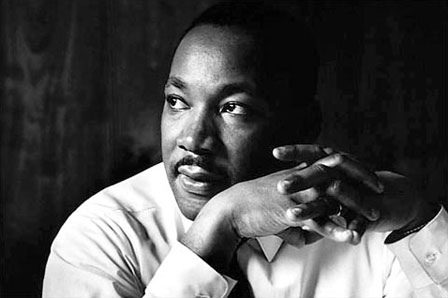
Martin Luther King JrAn American investment banker was at the pier of a small coastal Mexican village when a small boat with just one fisherman docked.  Inside the small boat were several large yellowfin tuna.  The American complimented the Mexican on the quality of his fish and asked how long it took to catch them.

The Mexican replied, “only a little while. The American then asked why didn’t he stay out longer and catch more fish? The Mexican said he had enough to support his family’s immediate needs. The American then asked, “but what do you do with the rest of your time?”

The Mexican fisherman said, “I sleep late, fish a little, play with my children, take siestas with my wife, Maria, stroll into the village each evening where I sip wine, and play guitar with my amigos.  I have a full and busy life.” The American scoffed, “I am a Harvard MBA and could help you. You should spend more time fishing and with the proceeds, buy a bigger boat. With the proceeds from the bigger boat, you could buy several boats, eventually you would have a fleet of fishing boats. Instead of selling your catch to a middleman you would sell directly to the processor, eventually opening your own cannery. You would control the product, processing, and distribution. You would need to leave this small coastal fishing village and move to Mexico City, then LA and eventually New York City, where you will run your expanding enterprise.”

The Mexican fisherman asked, “But, how long will this all take?”

To which the American replied, “15 – 20 years.”

“But what then?” Asked the Mexican.

The American laughed and said, “That’s the best part.  When the time is right you would announce an IPO and sell your company stock to the public and become very rich, you would make millions!”

“Millions – then what?”

The American said, “Then you would retire.  Move to a small coastal fishing village where you would sleep late, fish a little, play with your kids, take siestas with your wife, stroll to the village in the evenings where you could sip wine and play your guitar with your amigos.”   http://bemorewithless.com/the-story-of-the-mexican-fisherman/

We are all on some sort of a journey.  We’re looking for something and often do not realize that it’s ourselves that we are in search of.  We are trying to hear the voice of God so that we can have some idea of our purpose on this earth and where God is calling us to go, who God is calling us to be.  Almost always, though, the answers are with us all the while.  It would be nice if we could get a loud obvious voice pointing us in the right direction saying, “I have made you for a time such as this!”  But that voice rarely comes for it is as Rumi said, “Silence is the language of God, all else is poor translation.”

Eli was no longer able to hear the voice of God.  He had let himself get caught up in things that he shouldn’t have been involved in and it took its toll on his ability to hear that voice within the silence.  Samuel, however, was young and open to hearing that which he needed to hear.  He could hear the voice of God in the night piercing the silence and all of the events in his young life to that point came crashing together.  And so this 13 year-old boy became the last judge in the land of Israel and the first prophet.  A transition happened through one person.  An old era passed away and a new one was ushered in because a young man would listen.  Because he would open himself to hearing the voice of God, in one person the vision of God was revealed among the people.  For a time such as this, Samuel heard and answered the call.

Although Michael’s father was a pastor, Michael wanted nothing to do with it.  His father was very strict and wouldn’t allow drinking or smoking or swearing or any of those things and that’s likely why Michael engaged in all three in his rebellious youth.  Michael had more interest in intellectual things than in things of the spirit.  He went to college, went to seminary, and did his PhD – all before he was 25.  He pretty much makes me feel like a slacker. 

While he was troubled by the racial injustice and the social climate around him, he likely didn’t have much to do with it directly.  He struggled with who God was in light of the things that were happening around him and what he could do about the systemic oppression of African Americans, but often chose to do nothing.  It was while doing his PhD that he had a mentor who would be a theological “hero” of the UCC – Reinhold Niebuhr.  Niebuhr taught Michael that there was another way that existed in between sitting on your hands and doing nothing and resorting to violence.  He showed Michael that there was a way to protest and affect change in a very powerful and meaningful way that didn’t mean giving in to the practices of the oppressor, nor lying down and being complicit.  It was at this point that a social prophet was born.

Michael, who struggled with religion and philosophy realized that he couldn’t just sit back and let things continue the way they had been.  He was a young man who finally opened himself up to the voice of God and heard and in hearing became transformed.  It’s fitting then, that when his father, Michael King Sr., changed his name to Martin Luther, that junior followed suit.  Martin graduated and headed to Montgomery to pastor a church.

Martin was called to be a pastor.  But that wasn’t the full story.  God continued to speak and Martin continued to listen.  This modern day Samuel began to see that God was at work and things were unfolding before his very eyes.  When a 15 year-old girl was arrested for not moving and allowing a white man to sit on the bus, tensions started to build.  But when it happened again soon thereafter and Rosa Parks refused to move from the “colored” section of the bus because all the white seats were filled and was arrested for it, religious leaders in Montgomery decided it was time to do something.  The religious leaders knew there was something special about Martin.  They could see that he was a social prophet.  They could see that there was something special about this man just like Nathanael and Jesus saw it in each other.  When it came time to organize a bus strike in Montgomery and choose someone to be the voice of justice and humanity, they knew Martin was their man.  Martin had been prepared and called for a time such as this. 

You know how the rest of the story goes.  In some ways breathtakingly beautiful, in others tragically heart-breaking.  The story still continues to a great degree, but here we stand in a time when young men and sometimes even women are killing each other on the streets of Chicago and around the country for reasons that they don’t even comprehend.  We live in an era where small children are strapped with bombs and sent into crowded markets with false promises and abruptly halted dreams to take lives in the name of ideology.  We see children beating and cursing and hurting one another because of their socioeconomic class, their gender identity, or just because they are a convenient scapegoat in an unstable internal power struggle among children with no self esteem.  Kids are driving each other to suicide because they can’t even manage to look at one another as human beings who are, as the Psalmist says, “fearfully and wonderfully made.”  We live in the midst of such a time and God is still speaking.  Are we listening?  Are we willing to hear what God has to say?  Can we be brave enough to stand up and say that we have a dream and that we will not stop until we see “justice roll down like waters and righteousness like a mighty stream”?  Will we be silent or stand up until little boys and little girls are not judged by one another for their religion or their sexual orientation or gender identity or their socioeconomic status, but by the “content of their character”?  As we wander and seek and strain our ears to hear the voice of God to give us direction, might we stop and consider that God has already spoken in the silence and that we were fearfully and wonderfully made to be called for a time such as this?

John Wayne Buddha

Posted in Uncategorized on January 13, 2015 by thecrossingchicago

This is a microfiction (1000 words or less) piece that I did for a contest a few months ago.  I’m putting it up here for a week or so and then will remove it for publication.

John Wayne Buddha

Sam had always been tired of being busy all of the time.  Running here, rushing there.  Trying to make sure that everyone was satisfied and doing his best to feel important in the process.  Now he had nothing to do.  No demands, nobody asking him for anything.  He just had to sit there, relax, and die.

Sam had wished for as long as he could remember to be able to get away and have some quiet time.  He had a great love for the mountains and the calming effect that they always had on him.  He always considered himself an extrovert, but the older he got, it seemed like the scales were tipping more and more toward introversion.  He still liked people, but the quiet alone time grew in necessity as the years unfolded into each other.

And so it was that he decided to get out of the city and go for a long-overdue hike in the mountains that weren’t so far, but distant enough to make one feel secluded.  No phone, no emails, no bickering voices trying to suck up what little Sam-time he had.  Just him, his camping gear, enough rations for the week, and the wide-open sky imposing even over the massive 10,000 foot rock that he was trekking across.  It was finally time that he took off from his librarian job and started living all of the adventures that he had only read about.

One false step off the beaten path and a broken leg leads to almost certain death in a place where no one treads and the nights are long and cold.  Such was Sam’s lot.  After finally mustering up the courage to do something different, to get out of his shell and actually live, the cosmos batted him down like a housefly in January.  Trying to get a better view of the valley and the city below, Sam had stepped onto unsure ground near the edge and slid to his final resting place.    

There’s something about dying that makes one an instant philosopher.  Past loves.  The coulda, shoulda, woulda, but didn’ts.  Was there even any meaning to life?  For what purpose had he spent these 52 years on this spinning mess of a boulder?  Living a life that doesn’t even seem like one’s own as we do and do for others only leading to a false sense of identity while the “real” you becomes more and more buried in the lie.  All of the things that I tried to be for somebody else’s sake and never even figured myself out, he thought.    

His backpack hung about 100 feet up toward where he had taken his ill-fated last step.  Inside the backpack was a book (along with the food that he needed, but couldn’t reach) that had been sitting collecting dust on his book shelf.  Rereading it was something that he said long ago that he would get to and never did, just like everything else.  It was a book of short stories by Ernest Hemingway and it included The Snows of Kilimanjaro.  Sam laughed to himself despite his unfortunate situation realizing how much he and good ‘ole Harry had in common right now.  Sam laughed until he was delirious, or maybe it was just shock.

He tried to focus on something other than the pain in his leg with the bone protruding from the skin to keep him from fainting.  He saw a light pivoting and sweeping across the city.  Flashing red lights above it alerted helicopters where the landing pad was atop the hospital.  How ironic.  A flood of thoughts and emotions washed over him as he drew his hands deeper into the sleeves of his coat that would be inadequate for the night that was quickly approaching.  He could hear music and knew that had to be delirium.  Rachmaninoff’s Piano Concerto Number Two fading into Moonlight Sonata which gave way to Vitali’s Chaconne until they were all playing in his head at the same time in cacophonous beauty.  Sam realized that he had closed his eyes and jerked them open, sitting up straight so as not to fall unconscious.  He focused his eyes once again on the flashing beacon and counted the pulses to stay awake as his mind began to drift. 

Half a million people down there.  Not one of them knows that I’m up here and probably not one who would care if they did.  People are too self-absorbed to care about anyone but themselves.  All of the writing I never did.  The trips I never took.  Doing for others and never for myself.  Wasting my time trying to be someone for the sake of others and never even figuring out who the hell I really am.  Look at me.  Now I’m just a regular contemplative.  Maybe I’ll attain enlightenment here under this pine tree and take my place among the great mystics.  God knows I’ve had my share of Helens.  Liked them well enough, but wasn’t really in love with them.  Or is that just what I always told myself because I knew my Helen would hurt me in the end?  The last one had sworn that she loved him more than life itself and then had been seen sucking face with another guy at the local watering hole.  Had to keep that persona that kept women at arm’s length and the vulnerability that comes with love a mile away.  Kind of like John Wayne.  That’s it!  I’ll call myself John Wayne Buddha for what little time I have left.  A contemplative cowboy who’s too damn tough to feel emotions.  Got it all except for the six iron on my hip.  He laughed until he passed out.  It was better that way.  The pain of dying and the tortuous mind that accompanies it are rarely forgiving.

The Four Rs

Posted in Uncategorized on January 11, 2015 by thecrossingchicago

Three RsMarx had a good idea – in principle.  A utopian society where human beings would be equals and each individual would have what he or she needs to live.  Oppression and power struggles would not be a way of life.  Yes, I have perhaps oversimplified the Marxian ideal, but this ideal is one that we have longed for since our species first saw the light of day.

Governments have tried to legislate equality through welfare reform, the Civil Rights Act, communism, socialism, and other acts of bureaucracy.  Although communism and socialism proved to be unsustainable forms of government in their purest forms (perhaps because of the human hunger for power), they were noble answers to severe forms of dictatorship.  The problem is that history has proven that change has to come from the individual in a “bottom-up” approach instead of “top-down.”  In other words, compassion cannot be legislated.

With our need for instant gratification and quick fixes, it is no wonder that we have tried to use a macro approach to problems of the heart.  Merely being told that we must be compassionate and humane and putting in place systems and structures to enforce this mindset is not effective.  If individual actions and perceptions are the root cause of our inability to have a society of peace and equality, then we must start with the individual when seeking a solution.

When we are hungry, we have numerous choices, assuming we have the means to meet our needs.  We can go to the drive thru of the nearest fast food chain and have our hunger satiated immediately.  We can go to a sit-down restaurant and, after a short wait, have our bellies filled.  We can also take the more patient approach of buying groceries and preparing a meal by ourselves.  This is the least expedient of the three options, but is undoubtedly the most healthy.  But, there is yet another option.  As human beings who have been around the block a few times and lived in our own skin for a while, we know that we will get hungry.  It happens at least three times a day, every day, without fail.  We know that there is a “cost” for convenience, so we could also take the approach of planting seeds in a garden, nourishing them, and watching them grow.  We can then harvest that produce and use it as ingredients for our meals as we prepare them.  This is the approach that we need to take with humankind.

In schools, our youth are taught the “three Rs”: reading, writing, and ‘rithmetic.  I would propose that we teach a fourth R: radical compassion.  Yes, it is true that you cannot force individuals to emote a certain feeling such as compassion, but we can teach them, through mindfulness, the mindset that leads to being a humane human being.  In Ohio and other states mindfulness is being taught in elementary schools to reduce bullying and increase respect and empathy.  Mindfulness leads to awareness.  Awareness of one another and our interconnectedness in relationship leads to the ability to feel not only sympathy, but also empathy for one another.  As a natural byproduct,  feelings of compassion will arise that lead to kind words and action followed by the eradication of bullying, selfishness, and violence.

This all may sound well and good albeit laden with extreme idealism, but I believe it is possible.  We teach our youth subjects in school so that they can get jobs and become contributors to society.  We hope for them to have successful careers and make us proud.  Why shouldn’t we teach them to love one another and build a society whose God is not money, but love?  We used to teach morals and ethics in our schools, but these were done away with as being deemed “too religious.”  Ethics and morals are good, but they seem to be tied more to “thou shalt not” than “because I love you.”  Mindfulness is not and should not be tied to religion.  It supersedes religion and dogma and leads to a true “kind-dom,” a veritable utopia.  Instead of teaching dogma and scaring our young into doing what’s right, we should go deeper and let what’s right become second nature.

During a recent hospital orientation, one of the speakers was a man who started at the hospital 40 years ago as a teenager washing “dishes” in the lab.  He is now the director of consumer relations and it is no wonder as his passion for his job is catching.  He said that he believes firmly in, not the golden rule of doing unto others as you would have done to yourself, but doing unto others as if you were them.  If we follow the traditional golden rule we end up imposing our values on others.  If we have empathy and compassion, we love them where they are at and act accordingly.

We are hungry for peace.  We long for a world where love is the rule and injustice is unconceivable.  We want the serenity of knowing that our youth will grow to an old age and do right by one another.  I’m confident that such a world is possible.  I’m hopeful that such a hunger can be satiated.  But, I’m sure that it will not be found at the drive thru of government legislation nor the sit-down restaurant of religious dogma.  Instead it will be reaped from the garden of mindfulness and humaneness.  Perhaps this is the real Garden of Eden where humans are born to their full potential.  Planting season is at hand and the seeds are in the storehouse.  It will take time and generations so planting needs to begin now.  In the words of Whitney Houston: Let us teach our children well and let them lead the way.

Passing of the Way

Posted in Uncategorized on January 7, 2015 by thecrossingchicago

Native AmericanAn acquaintance from the gym that I work out at saw the reading material that I tend to consume while doing my cardio and leant me a book called The Wisdom of the Native Americans.  It is a rather short book with compiled sayings from different Native Americans over the centuries.  A couple of the quotes that really caught me were:

We are afraid if we part with any more of our lands the white people will not let us keep as much as will be sufficient to bury our dead.  –  Doublehead (Creek Chief)

The white man leaves his fathers’ graves, and his children’s birthright is forgotten.  –  Chief Seattle

Old age was simply a delightful time, when the old people sat on the sunny doorsteps, playing in the sun with the children, until they fell asleep.  At last, they failed to wake up.  – James Paytiamo (Acoma Pueblo)

I have attended dinners among white people.  Their ways are not our ways.  We eat in silence, quietly smoke a pipe, and depart.  Thus is our host honored.  This is not the way of the white man.  After his food has been eaten, one is expected to say foolish things.  Then the host feels honored.  – Four Guns (Oglala Sioux)

I couldn’t even begin to capture all of the quotes that struck me as I was on the elliptical.  It reminded me of a truth that I am often reminded of: we are constantly looking forward and upward for progress and innovation, but rarely focused backward and inward for introspection and a return to our roots.  There are many great practices that we have forgotten.  As the Native Americans would say, we have forgotten the face of our fathers.  To our own detriment, our European (and elsewhere) ancestors came to this land and completely overlooked the beautiful culture and ways that preexisted them.  Ways of silence, respect, and dignity were plowed over to make way for success and manifest destiny.  Looking down over the mighty Mississippi or the muddy waters of the Missouri, we are reminded that it was not our trailblazing pioneers that gave them their name.

I was recently talking with JW and she was telling me how funerals were conducted in her native Ireland.  She mentioned the way that the body would be brought home because where you lived is where you should be in death.  Folks would gather from the community to pay their respects at the deceased’s home and then the body would be carried through the estate (neighborhood) on the shoulders of the local men so that all could bid their final farewell.  Finally, the men would make their way to the cemetery while the women waited at home until the next day.  The men represented their families as they sent off their loved one.  (Let me know if I got any of this wrong, JW!)

Our conversation reminded me of the way we do funerals in Japan with many similarities.  Friends and family pay their respects as the body lies in state in his or her home.  After a few days, everyone gathers at the crematorium and pushes the body of the deceased into the “oven.”  While the body is being cremated, everyone gathers and eats, drinks, and tells stories of the one who has passed.  Then, after about 45 minutes, everyone gathers where the remains have been scattered on a high table made of stone and steel and partner up to put the bones into an urn with long chopsticks called saibashi.

The conversation also reminded me of how my in-laws reminded me that I was the family representative when I went to the Buddhist temple to hear the dharma talks.  I went to temple quite often thinking of it as an individual endeavor that I was doing for my own learning.  When they said that I represented the family and ancestors when I went to the temple I was hit with a huge sense of responsibility and honor.  It makes me aware how easily we “forget the faces of our fathers.”

In our own cultures and in those around us, there are practices that had great meaning which now have gone away with the passing of generations.  It is right and good for us to make progress and to seek our own enlightenment.  But it would behoove us to remember the faces of our fathers – to return to the practices of our ancestors and to experience the appreciation for the land that our predecessors once possessed.  To rediscover the practices is to rediscover the meaning behind them.  Once we reclaim them, we can carry on the legacy of a flame that was lit long ago and teach our young a new appreciation for life and wisdom.