Atheist in a Foxhole

Posted in Uncategorized on December 3, 2014 by thecrossingchicago

As my buddy JL and I were recently discussing, I have always held that atheists have more faith than I and most “religious” folk do.  Ironically, philosophers (like David Ronnegard in his second sentence) will claim that they have no faith.  The atheist is convinced that there is no God, but when it comes down to it, the rest of us are just agnostics as we do not have the answers (although some are not shy about claiming that they do).  Some would try to convince atheists that there is, in fact, some sort of deity, but I feel no need to do so.  I believe that the term “God” (big or small “g”) is a matter of semantics.  In their attempt to convert atheists to theism (usually a particular brand of theism, e.g. Christianity) they will claim that there are no atheists in a foxhole.  That is, if one is faced with death or the awareness of his or her mortality, that person will certainly begin a deeper search and reach out to God for help.  A read of the article linked below will show that this is not necessarily true.

https://philosophynow.org/issues/105/Atheist_In_A_Foxhole

Ronnegard embraces his atheism in the face of impending death.  Having been diagnosed with terminal lung cancer at age 37, he is still able to be at peace with the idea that there is nothing beyond this life and nothing out there guiding our destiny.  Ronnegard says that “the terminality of life helps us see” the value of life.  Ultimately, he argues that faith in an afterlife makes us deny that life ends and leads to less of an appreciation of what we have though limited it may be.  I think we can learn a lot from this atheist.

I do believe, however, that semantics are still at play here.  Philosophers and theologians, humanists and theists argue about the meaning of life, the existence of God, and many things that appear to divide them, but at closer look actually unite them.  I, for one, am not concerned about a physical realm called heaven after my physical life here on earth.  I am very concerned, however, about the legacy that I leave behind for my kids and those around me.  What are the lessons that I have taught?  What kind of environment have I created?  Ronnegard says as much in his article.  So, what’s the deal?  Am I actually a closet atheist or is Ronnegard actually a theist?  Neither.  We are letting words get in the way of saying the same thing.

Ronnegard embraces the impermanence of life.  This is something that we all can stand to learn.  We never know when our time will be up, but we do know that it will be up.  In the end, like the tattoo on his nurse’s arm says, we should “live life like you will die today, love like you will live forever.”  All we can do is do our living the best that we can and ask ourselves along the way if this is really what we want to leave behind.

Curiosity Saved the Cat

Posted in Uncategorized on November 12, 2014 by thecrossingchicago

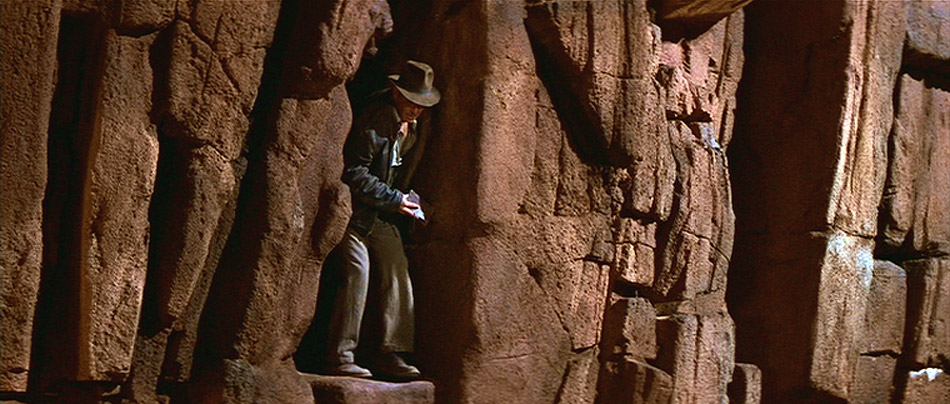
Indiana JonesThe basic instruction is to make friends with yourself – to be honest with yourself and kind.  This begins with the willingness to stay present whenever you experience uneasiness.  As these feeling arise, rather than running away, you lean into them.  Instead of trying to get rid of thoughts and feelings, you become curious about them.  – Pema Chodron

The unanswered questions are not nearly as dangerous as the unquestioned answers.  – David Hayward

Faith.  What does it mean?  Is it closing our eyes as we come to the edge of the cliff with an Indian Jones-like assurance that something will prevent us from meeting our doom beyond the precipice?  Is it throwing out the age-old adage that “God works in mysterious ways” when we come across something that we can’t wrap our minds around or reconcile with what makes sense?  This is the way that many people would define faith, but I’ll put my chips elsewhere.

I prefer to look at faith as something that gives reassurance despite the fact that something seems amiss.  It is not an assurance that we are always right and therefore have no need to question our convictions or the foundations that they rest upon.  Faith, then, is not the antithesis of curiosity, but rather the guiding principle.  That is, if we have a genuine faith, then it is a faith in something much bigger than us.  Something that guides all of the principles of the universe and that we can sometimes be wrong about.  This is why we evolve as human beings.  As Chodron says above, it’s necessary to look at our beliefs and worldview and test them.  Sometimes things don’t seem right and at those times, instead of shoving the cognitive dissonance under the existential rug to keep whispering at you like the tell-tale heart, tear up the rug and see what’s underneath.

We can live our lives in a way that is “safe” because we have everything figured out.  As long as everything works within the framework of our understanding, we will be at ease and have our beliefs reinforced.  If something seems amiss, however, we generally lash out and blame those who upset the applecart dismissing them as heretics or anarchists.  Real life, I think, should work the other way around.  Instead of being uneasy when our cosmological understanding is challenged, let’s be concerned when we think we have it all right.  Don’t be afraid when something seems amiss and there is more to process.  Robert Browning was right when he said, “Ah, but a man’s reach should exceed his grasp, or what’s a heaven for?”  If you think you have it all figured out, however, well, be afraid . . . be very afraid.


I Am, Therefore I Am

Posted in Uncategorized on October 17, 2014 by thecrossingchicago

thinking1Cogito, ergo sum. These were the famous words uttered by Rene Descartes when he was contemplating the ontological question of how to know anything with certainty. I think, therefore I am. I think, therefore I exist. Descartes struggled with the nature of existence and truth and finally had the lightbulb moment when he realized that the only thing he could be certain of was the fact that he was thinking. To him, this became the only proof that he actually existed and that reality (including his own) was not somehow dreamed up.

Descartes’s logic held up for a long time from his 1637 realization, but instead of stopping at thinking as a proof for his existence, he went a bit further to posit that thinking was existence. That is, cognition is the root of all being. Theologians and philosophers alike have wrestled with existential questions since the beginning of time and Descartes was no exception. Neither was Jean Paul Sartre.

Almost 300 years after Descartes’s famous utterance, Sartre was struck with a new idea: The consciousness that says “I am” is not the consciousness that thinks. In other words, if we are aware of our thinking, then there is a higher level of consciousness at work to have the awareness of our thinking. If all we are is the sum of our thoughts, then we would not even be aware of our thinking because that is at the core of our being. Yes, this all sounds like a bunch of philosophical mumbo jumbo that comes only from too many pints in an Irish Pub (and who knows, Sartre may not have been far from the French version) but Sartre was on to something: We create “realities” through thoughts and perception, but these realities are not real. There is something much bigger and more mysterious at the core of being – something that is beyond our full comprehension.

When Moses came down from the mountain and saw that the people had made a golden calf to worship, he was fed up. He went to God and and essentially made God make a commitment. If Moses was going to go on with this business of leading the Israelites, he needed some reassurance that God would stay with them and make things go as smoothly as could be. He also requested something very gutsy – he said he wanted God to reveal God’s presence (glory). God agreed to all of these things, but warned Moses that he could not see God’s face because one could not see God’s face and live. So, God put Moses in a safe place and passed by showing Moses only God’s back. How could our human minds possibly contain all the answers of the universe? Every matter of quantum physics that is discoverable but as of yet unknown, how the human mind works, the intricacies of string theory, etc, etc. How could one mind contain all that there is to know? This is why we come to the table with our own areas of expertise to share with those who have other gifts and knowledge.

As we live our lives, we develop opinions and perceptions which tint the way we see the world. As events unfold around us and people speak and act, we look upon these things with a certain self-imposed worldview that informs us about whether these things are good or bad, fair or unfair, just or unjust. We make judgment calls based upon the reality that we have created for ourselves and then juxtapose what we view against or own version of reality. This creates experience and when added together is the summation of our lives. Put another way, not so much unlike Descartes, we live by the philosophy, “I think so, therefore it is.”

Our perceptions are not merely projected on the world, but also on God. When God passed by Moses, he could not comprehend what he was seeing. We like to think that there was a personage like some kind of giant walking past the mountain, but that’s not what it says. When God first “appeared” to Moses in a burning bush, God said “I am who I am.” When Elijah was running from Jezebel, God’s presence passed by (likely the same mountain Moses was on) and although there was a fire, and a whirlwind, and an earthquake, God was not in any of these. There was then a “sound of sheer silence” and that is where God was. We cannot comprehend what God is because we cannot be inside a thought and outside of it at the same time. We are created in the image of God and in many ways we are God and God is us.

This sounds terribly sacrilegious to many, I’m sure, but if we are one in God and God is one in us, then we are completely in God and God is in and beyond us. This is the ancient mystery of transcendence and immanence. God’s presence is everywhere, yet beyond. It appears to me that as humans, we are too focused on the transcendence of God and that’s why instead of the ever-present “I am,” humans made God into the Great and Powerful Oz, the Lord of Hosts and King of Kings who stands above and defeats our enemies. Moses struggled greatly with this because he couldn’t understand why God wasn’t always making life easy if the Egyptians could be defeated so easily. Moses was of course missing the point. God empowers us to do what is needed from within, but it is ultimately up to us to choose to exercise that power.

We do not create reality. We would like to, but our creation usually only leads to suffering because it’s not an accurate reflection of what really is. There is a God at the center of everything that is the essence of all reality. When we want power, understanding, patience, strength, whatever it is, we need only to reach as near as our own soul to find what we need. When we do so, however, we need to be prepared to see the world as it really is. This isn’t an easy thing. Just ask Moses. In the end God is who God will be and I am not much different. Ultimately it is not that “I think, therefore I am”, nor is it “I think so, therefore it is”, instead it is “I am, therefore I am.”

The Dogma Files Part 3 – Evil

Posted in Uncategorized on October 6, 2014 by thecrossingchicago

Good_vs_evilMy son and I went last Sunday to see The Boxtrolls at the theater. I hope I’m not spoiling it for anyone, but it did have a rather deep message. As I watched this animated film I could see a number of societal roles that emerged among the characters. Without giving away the entire story, here is the dime version of the synopsis.

Archibald Snatcher is an exterminator who covets power. Members of society are divided into classes with hats that designate their power and status. The White Hats are the aristocrats who lead (using the term loosely) with special meetings of good old boys eating cheese around a table. Snatcher is a Red Hat, presumably representing the working class. The White Hats want nothing to do with Snatcher and there is nothing that he can do as part of a proper process to ascend to White Hat status. So, he uses the Boxtrolls – a subterranean species of peaceable trash collectors who wear boxes in which they sleep in and hide when they are scared. Snatcher concocts a story that he tells Lord Portley-Rind (head of the White Hats who constantly ignores his daughter, Winnie, when she tries to warn him about Snatcher) that the Boxtrolls have been kidnapping and eating people and must be exterminated before the townsfolk are attacked and eaten in grizzly fashion. He tells Portley-Rind that he will gladly dispose of the Boxtrolls in exchange for making him a White Hat. After much reticence, Portley-Rind agrees.

For the sake of brevity, I will give a very abbreviated account of the rest of the details. The townsfolk become afraid of the Boxtrolls and want nothing more than to have every last one of them exterminated. Snatcher uses any means necessary to achieve his goal of getting his White Hat – even vilifying and killing the innocent Boxtrolls who refuse to fight back and hide in their boxes when attacked. Snatcher has three accomplices – Mr. Pickles, Mr. Trout, and Mr. Gristle – whom he has convinced that the Boxtrolls are evil and uses them to achieve his goal. Throughout the movie, Mr. Trout and Mr. Pickles begin to have doubts that they are actually the “good guys.” They ask many existential questions and even wonder out loud whether or not the Boxtrolls “have any awareness of the duality of good and evil.” Mr. Gristle is completely irrational and seems to do things that no sane person would do. Ultimately, Snatcher gets his White Hat and sits at the table with the aristocrats doing the only thing that they seem capable of doing – eating cheese. The problem is, Snatcher is severely allergic to cheese and dies soon after joining the group.

On the way home from the movie, I asked my son what he thought the movie meant. I believe he said that it was something along the lines of not making assumptions and things not being what they seem to be. I told him about the Holocaust and the Jews being a scapegoated people who hid in walls and attics to avoid being captured and sent to the ovens. I explained how Hitler essentially paved the way to his own demise while on his quest for power. We talked about how otherwise good German people watched and did nothing as friends and neighbors were rounded up and placed on trains without a return ticket.

Hitler. Stalin. Mao. Pol Pot. Kim Jong Il. So many others. Individuals who convinced the masses that a particular people group – Jews, Gypsis, Hmong – were the cause of the ills of those masses. This works best in times of economic crisis, because we always need someone to blame. Sometimes, like Snatcher, irrational fear is instilled where there is no real crisis. The false anticipation of a catastrophe and the resulting fear lead people to do irrational things. We would like to think that these are antiquated mindsets perpetuated in bygone days before humans became suddenly enlightened after WWII and the Cold War. If only that were true.

Evil lurks behind every corner and in the darkest hiding spaces of every soul. Those things that we think are unconscionable happen every day and sometimes we are the perpetrators. Being silent in the face of injustice, systemically oppressing others so that we can gain status, imagining that there is a clear dichotomy between our worldview (the right/good way) and that of others (the wrong/evil way). We even go as far as to attribute atrocities to being the work of a malevolent being who was cast out of heaven before the existence of humankind. Perhaps Satan is not lurking in Hades waiting to capture our immortal souls, or trying to convince good people to commit heinous acts, but is our own anthropomorphized capability for evil. Maybe we are too afraid to admit that we at any given time can be that which we fear most. It’s unsettling to think that we are capable of intentional malevolence and/or complete disregard for those who suffer needlessly at the hands of others.

Good and evil do not exist within the comfortably delineated duality to which we have assigned them. Instead, there is a vast grey area where we all reside. But what about Satan, Lucifer, The Accuser? Isn’t the Bible clear that such a being exists? What about Isaiah’s description of the Son of the Morning Star, Job’s Accuser, or John the Revelator’s beast? Each of these allegorical personages represented specific people and was understood as such by their intended audiences. The Son of the Morning Star was King Nebuchadnezzar, the Babylonian King responsible for the exile of the Israelites and the destruction of the Jerusalem temple. Job’s accuser or “devil’s advocate” represented the Ancient Near Eastern beliefs of the time. Surrounding cultures believed in a council of gods who created the Earth and made decisions together. In Job, the person who we usually assume is the devil, was actually appointed by God to check up on humankind and make sure they were doing what was commanded. The Jews had no concept of a place called hell, nor a being who waited there, in their theology. Finally, the beast in Revelation was the emperor Nero and the Roman Empire. The seven heads of the beast represented the seven hills of Rome.

Evil exists as a result of choices. We choose to commit harmful acts against fellow human beings. We choose to turn our heads when these acts are perpetrated against those around us. As there is much more literature on Satan-Lucifer -Devil and the subject of evil, this post does not even scratch the surface. My primary hope in composing this post is the awareness that attributing evil to a personage with horns and a forked tongue who “makes” people perpetrate horrible acts is a dangerous practice. It is this type of projection and shirking of responsibility that leads to Holocausts and genocide. Attributing evil to an external source allows us to hide and shrug our shoulders as if it can not be helped. Instead, we need to take a good hard look at ourselves and take responsibility for our own actions so that light may be shined in the dark recesses of our own hearts. Without a decision to become complicit, or at the least ignoring the problem, the Holocaust never could have happened.

(Kant, Kierkegaard, Augustine, and many others have written extensively about the problem and nature of evil. For a nerdy, yet very cool read, try Marjorie Suchocki’s The End of Evil: Process Eschatology in Historical Context.)

All That Is

Posted in Uncategorized on September 22, 2014 by thecrossingchicago

creation of lightAlthough not nearly often enough, I will many days sit and meditate on an old cushion that was passed down to me from a Zen priest who used it in Japan since WWII.  Sometimes nothing happens, but I always enjoy the solace that comes from just being silent.  Many times I will light a candle and stare at the flame until it’s image is imprinted on my vision.  Then, I close my eyes and see the negative image of what I just saw – instead of the flame being lighter than it’s surroundings, the shape of the flame is black against the orange of the light making its way in through my eyelids.  The flame will have an effect of falling if I don’t focus too directly on it and seems to be absorbed into something deep like a dark pool of water.  When this happens, I am at a very deep state of rest.  This is my typical meditation experience, but the other day it was much more eventful.

I was sitting in my usual place before my makeshift altar with eyes closed watching the image from the flame descend into the black pool when suddenly my senses were heightened.  It was as if I could see individual atoms lit up and flowing from the pool.  Iridescent brilliance radiated from the pool and flickers of light seemed to dance upon the waters.  It was the tehom that existed since the beginning from which creation was formed.  These dark waters seemed not so much chaotic as a tranquil deep rife with possibility. 

I was aware of my interconnectedness with the rest of the universe and for what seemed like aeons, but was probably just seconds, I was completely at one with all of existence.  The tree outside me window, the air that filled my lungs and surrounded my body, the very ground that I sat upon – they were me and I was them.  We were one.  There was no distinction between atom and quark, photon and quasar.  Matter, gas, solids were one in the same.  There was no existence other than All That Is and all created order was a part of it.    

During this experience I had a vision, an epiphany.  I did not audibly hear a voice, but I had this great sense of “knowing.”  As if by being connected to all that is, was, and can be, I was able for just that moment to possess all knowledge and understanding of and about the universe.  Somewhat like taking a blank hard drive and uploading terabyte upon terabyte of information onto it, I was made full of a great knowledge that far surpassed anything I could have ever imagined.  In the receiving of this knowledge came the understanding of a great responsibility akin to that of a prophet to guide humankind back to their true essence and to the source of all being.

This is the testament of what I have seen and the divine knowledge that has been imparted to me.  I share this as a part of my calling to rescue humans from their attachments and separation from the great All That Is so that all may be reconciled.  I hereby attest that all things written here are true.

As the universe evolved from infancy and subatomic particles were attracted to one another and joined over aeons, heavenly bodies were formed.  The energy that was created and released by the forming of these bodies gathered and also evolved.  As the energy evolved it developed into a great consciousness, a complete Other that was separate, transcendent, yet interwoven and at one with the rest of existence.  This All That Is possessed awareness and was able to influence in a persuasive manner all that was, is, and shall be.  From this great consciousness was emitted energy that became the consciousness of lesser beings – all interconnected with one another and with the Source of Being.

These beings had a great awareness of their source and one another.  Through their interconnection, they could intuit feelings and glean a great sense of events and time.  This sense existed beyond our primary five senses and allowed them to be gods unto themselves.  The same power of persuasion that existed and emanated from the Source of Being was possessed by these beings to a lesser extent.  Through this power of persuasion, they could affect the created order and were unable to do harm to one another.    

Over time, the consciousness of each sentient being became clouded by attachments and ill-begotten aims.  As the spiritual became more muddled, the physical began to develop.  Once-spiritual beings developed bodies that restricted their movement and location.  Bodies of energy that could be anywhere and everywhere at any given time with no concept of mortality developed flesh and bone and became limited by these bodies in location, ability, and even death.  Awareness of the All That Is was greatly diminished and the sixth sense was all but gone.  Humans developed the capacity to do violence to one another and as their awareness of All That Is became fainter, the evil that was perpetrated grew by degree.  In order to preserve and protect life that still flowed in perpetuity, a place was created for humans to evolve into what they had chosen for themselves where they could not do harm to the rest of the created order.  That place is the planet Earth.

This testament will be continued and will explain the way back to the the great All That Is so that we may once again exist in our true forms and be safe from the chaos that we have created.  He who does not heed these words does so at his own peril for he relegates himself to an existence of suffering and meaninglessness.  As I have been chosen to bring this message of life and reconciliation to all humankind, ask of me freely for understanding and wisdom shall be imparted to you.    

Life in the Fast Lane

Posted in Uncategorized on September 22, 2014 by thecrossingchicago

life in the fast laneThe first shall be last and the last shall be first.  This is what we are told.  It sounds like a message about socioeconomic justice or just a plain and simple fact that rich folks will not be found in heaven.  Maybe it means that those who bust their hump to make it to the top of the ladder will be yanked down to a foreboding place where the worms and moths eat every last thing of material worth.  I would be willing to say that there is something to this mindset, but that it isn’t the whole story.

Interpreting scripture texts to mean that some are “in” and some are “out” and that Jesus’ parables are some type of road map or guest book for heaven is, I think, an erroneous interpretation at best and intentionally malicious at worst.  Any time a person uses scripture (of any religion) for the purpose of exclusivity and legitimizing power, it is a recipe for disaster.  It is not only a detriment to those who are being marginalized, but also to those who are making up the rules as they go along.  In the end, you see, we don’t make the rules – the rules have preceded us since long ago.  It is our choice to play by the rules or not, but pretending they are not there will not make them go away.

A good portion of our lives is made up of decisions resulting from environmental influences such as the homes we grew up in, the education we received, and what the “norm” is perceived to be.  The rest of our lives is comprised of our own ambitions and desires and what we see as necessary in order to achieve our goals.  Put the two together and we have a “self.”  One can certainly argue whether nature or nurture exercises the biggest influence over our character development and the people we become, but in the end, we are the culmination of our choices.  This aspect is often lost in the industry of distraction and we tend to see ourselves as victims of circumstances beyond our control with nothing left to do but shrug our shoulders and say “Oh well.” 

Some may say the opposite of this complacent mindset is a “go-getter” attitude.  I certainly admire those who have clear goals and do what they have set out to do.  I do question sometimes, however, how wisely we make our choices of which goals are important and which ones are merely inconsequential.  For whose sake have I made my goals?  To what end have I created this life plan (assuming there is one)?  Am I living my life to please others or am I being true to who I really am?  These are all questions that we need to ask ourselves and be honest about when we answer.  How often do we sit in silence and ask ourselves these questions to make sure that we are truly authentic and not creating something ephemeral that could cave at any moment like a house of cards?  Are we building our own ethereal dream that will blow away like fog in the wind leaving us utterly and completely despairing when we realize that none of it was real? 

We were all made for something.  We have gifts, talents, abilities, passions, and so much more that are with us from the beginning and are an integral part of who we are.  Perhaps we should take the time to ask ourselves why those things exist within us.  If we are living lives trying to be people who we are not, then we are building skyscrapers on foundations of quicksand.  It may look nice on paper or in our imagination, but just when we think we have it all put together, it will collapse in a heap of dust. 

So, in case you didn’t catch it the first time – we are a product of our choices.  Regardless of where we come from, regardless of where we think we should be going, it is our choices that ultimately create our path.  We can choose to live life in the fast lane and chase after illusory things that never were ours to begin with, our we can take time to “rest on the seventh day” and sit in silence with ourselves.  Getting to know ourselves for our own sake and not for what we think others want us to be is incredibly healthy and liberating.  This is the true meaning of the first shall be last and the last shall be first.  Finding our true selves may mean that we have to give something up and that we won’t be incredibly rich or famous, but we will experience great peace in being honest with ourselves.  In this peace we will find ourselves and we will find God.  If life in the fast lane will “surely make you lose your mind” as the Eagles say, then who wants it anyway?  Sit.  Be.  Discover.  Then make the choices that lead to a life that is true to yourself.

I Refuse to Be Good Enough

Posted in Uncategorized on September 15, 2014 by thecrossingchicago

Shel SilversteinLooking at the writings of Shel Silverstein, you can see what a wonderful life he had.  It was a life that surely wasn’t touched by tragedy.  The Giving Tree, A Light in the Attic, all of these stories that are deep, yet light and happy.  Let’s contrast that with the person who wrote A Boy Named Sue and 25 Minutes to Go – a song about a man who wants to kill the father who abandoned him has a boy and a song about a man on death row with 25 minutes to go before he’s taken to the gallows.  The person who wrote these songs must have experienced some tragedy or deep moments in his life and indeed he did. 

The mother of his daughter died the day before his daughter’s fifth birthday.  Six years later, that same daughter would die suddenly at the age of 11 of a cerebral aneurism.  In addition to music, he loved to write and draw.  As a child, he was ridiculed by his father for his love of the arts.  He would tell him that he would never make anything of himself because he was only focused on junk that would never lead him to success.  He once left some cartoons at Playboy to be considered for publication.  He never heard back and so he went to the Playboy offices to pick up his illustrations when he was met by Hugh Hefner himself.  Hugh said that the man’s work was great and gave him a check on the spot.  He went home, threw the check down on the kitchen table in front of his dad and said, “There.  I did what you told me was impossible.  Now I’m out of here.”

That man who went on to write numerous soundtracks, songs, cartoons, poems, books, and plays, who wrote music for Johnny Cash, Kris Kristofferson, Waylon Jennings, Belinda Carlisle, and many others is the same man who wrote The Giving Tree and A Light in the Attic.  Shel Silverstein knew tragedy and had plenty of obstacles, but he was determined to succeed and did.  In order to succeed, however, he had to draw from the dark parts to create work that was shared in the light.  This is Shel’s story, this is our story, and this is the story of the Hebrew people. 

The Hebrew people were stuck in Egypt.  God sent Moses to free them.  The pharaoh would not budge until God sent numerous plagues to convince him that God was not messing around.  Finally, the pharaoh accedes, but then changes his mind at the last minute as the Hebrews are heading out of Egypt.  He sends soldiers on chariots to track them down and kill them.  The sound of hooves beating against the ground gets louder and louder and the Hebrews go into a panic as they run faster and faster but many can’t keep up.  It’s bad enough that they can’t seem to put any distance on the Egyptian army chasing after them, but then there it is.  They come up over the hill and there before them is the Red Sea.  It’s done.  It’s all over.  There is no where to go and just when they thought they were finally free they are going to be slaughtered like sheep here on this seashore.  Everyone is yelling at Moses because he brought them here.  Moses is mad, confused, and feels betrayed. “Why did you send me to save these people when we are just going to get killed!?”  Then God says, “Then do something about it.”  Moses raises his hand and the Red Sea is opened and a path is made with a wall of water on either side.  “Go!” Moses yells and the people run through the sea, not believing their eyes. 

There’s something to remember here.  The Hebrew people had been in Egypt for 430 years.  This generation knew nothing of the God of Abraham, Isaac, and Jacob.  This God was completely new to them and they had no idea what that God could do or what they could do with the help of that God.  They were slaves in Egypt and were perfectly content to remain so until Moses went to them and reminded them of who they were and whose they were. 

They ran out to the other side and the sea collapsed on the Egyptians running through the water.  The people celebrated and sang and danced as they rejoiced that God had defeated their enemies.  This makes up a great story.  It has all the elements – the beginning, the rising action, the climax, the resolution, and the conclusion.  Well done!  Except, this wasn’t a complete story and never is.  It was only a minute fraction of a story that existed long before them and will continue to exist long after us.  We can’t forget that there was a lot of complaining, anger, and disgust before Moses could convince the Hebrew people to leave Egypt.  You would think they would have been ecstatic about leaving, but they weren’t.  They wanted to stay.  Then, soon after they sing this song about how badly God kicked the Egyptian’s butts, they start to complain and fear and want to go back to Egypt. 

Once they came out of the water and made it safely to the shore – once the celebrating and revelry was winding down and the sun started to come up – they could now see that they had nothing in front of them but desert.  They would wander in that desert for 40 years making no progress and only longing to be slaves again back where things were familiar and oddly felt safe.  As they wandered, they would have to keep returning to that water because we need water to live.  The very thing that they thought would be the death of them, the very thing that they feared, they very thing that they rejoiced for having come through, they had to go back to because they needed it.

Today I’m not beating my usual drum of social justice and good works for others.  Yes, we still need those, but sometimes we have to take care of ourselves.  Hurt people hurt people.  Think about that.  If we’re not taking care of ourselves and not making progress where we need to, then what good are we to others?  Sometimes when we feel that we can stick with status quo and that things are just good enough where we are, we have to refuse to be good enough.  Good enough is complacency and we will never get where we are supposed to be and never become who we were meant to be if we stay where we are.  Yes, we will fail.  We will fall on our faces.  But we have to keep going where it is risky and dangerous and transform our surroundings into something that is life-giving instead of life-sapping. 

Dan Cherry was an F-4 pilot in the Vietnam conflict.  He was in numerous dogfights and it was usually impersonal because the entire plane that he shot down would go down in flames.  One time, however, he shot down a MiG-21 and the pilot managed to eject before the plane went down.  He could see the pilot with both arms broken as he parachuted down through the canopy below.  Decades later, Dan was visiting VFW posts and he came to one in the Midwest.  He could hardly believe what he saw.  In the yard of the VFW, there it was – the very same F-4 that he used to fly.  It reminded him of the man he had shot down over the jungles of Vietnam and started to wonder what became of him.  He decided that he would find out.  In 2008, Nguyen Hong My and Dan Cherry had a reunion in Ho Chi Minh City.  They ate together at Nguyen’s house where Dan met his family and even held Nguyen’s one year-old grandson.  By going back to his place of fear and trepidation, Dan was able to redeem it and make it a place of progress.

I am always in favor of being content where we are geographically.  I believe that the grass is rarely greener on the other side, but I don’t believe in complacency either.  We would do well to take Mark Twain’s words to heart:

Twenty years from now you will be more disappointed by the things you didn’t do than by the ones you did.  So throw off the bowlines.  Sail away from the safe harbor.  Catch the trade winds in your sails.  Explore.  Dream.  Discover.

Remember that even though God gave the power, Moses had to lift his hand to part the sea.  The Hebrews had to move their own feet and cross the sea.  If we want to make progress, if we want to go where we were made to go and be who we were made to be, then we always have to tell ourselves, “I refuse to be good enough” and take the actions to get there.
This Is Water

Posted in Uncategorized on September 4, 2014 by thecrossingchicago

My buddy Tak was kind enough to share this video with me.  It’s worth watching more than once.  David Foster Wallace tells it like it is in this Kenyon College commencement speech.  Wallace says that the point of a liberal arts education “isn’t really about the capacity to think, but rather about the choice of what to think about.”  He warns students that their lives will be filled with “banal platitudes,” but that these moments are not all meaningless.  How we view and interpret events can have dire consequences for the outcomes in our lives.  According to Wallace, we are all hardwired from birth with a default setting that tells us that we are the center of the universe.  We view everything from the standpoint of how it affects us and not from the viewpoint of others.

There are many mundane aspects to life: standing in the grocery store line, driving from home to work, waiting on hold when trying to call an account rep that we really don’t want to talk to.  These are all things that get us worked up and make us want to hurry up and get on to the next thing.  What if we were to practice awareness in these moments instead of mulling on how much we hate being there?  What if we were to notice the child in the cart in front of us smiling or the mother who is frazzled because her Link card is not going through?

A large part of education is building intellect.  We learn how and what to think, but not so much how to think for ourselves.  The more intellect we develop, it seems, the less able we are to practice awareness and see things as they really are.  If I am taught that people need to do for themselves and that everyone is given an equal opportunity to succeed, then whenI see that woman with five little kids running around at the store, I am going to think that she needs to stop producing children and start producing economic contributions to the rest of society.  What I won’t be able to see, however, is that her husband of 10 years who never let her finish her education and find a job decided to walk away and has not paid a penny of child support.  How we interpret what we see will have a huge impact on how we perceive the world to be.

This principle also applies to theology.  If we develop a theology that becomes cemented into our brain with the intellectual understanding that God is a certain way and that, as a result, the cosmos works a certain way, then we will only be able to see what goes on around us through a very small lens.  I am 100% in favor of intellectual endeavors and furthering our capacity to cognate.  However, I think we also need to let people be people and let God be God without us putting our labels on them.  Enjoy the video and I hope that it will open all of our eyes to a new awareness of the world around us.

What Are You Going to Do About It?

Posted in Uncategorized on August 30, 2014 by thecrossingchicago

What do you want?  Is there something that you want to be?  Is there something that you want to achieve?  You can, but chances are it won’t be easy.  Chances are even better that you will give up.  I give up a hundred times a day until I remind myself of the “what if” that got me started in the first place.  It’s much easier to tell myself that I can’t achieve something and throw in the towel than it is to keep failing.  Unless, of course, I’m not failing.

I’ve never been a huge fan of self help mumbo jumbo, nor am I a fan of the “God will bless you with immense riches and happiness” prosperity gospel.  I have typically been more in favor of changing your mindset and mental/spiritual transformation through meditation and self-discipline.  Interestingly though, the people that I have often thought of as a bit cooky, e.g. Esther Hicks and Louise Hay, espouse beliefs similar to my own with a difference in semantics.  Yes, I think the whole non-physical being Abraham stuff is a bit spooky, but I do believe that there is something within us that guides us and gives us wisdom, drive, and direction.  I just choose to call it God or self.  At any rate, there are sometimes worthwhile words that encourage us to press on.  I thank my buddy JWB for sending me this video which is helpful in giving a new perspective on attaining our goals.

We are creatures that are constantly in pursuit of instant gratification.   I want it all and I want it now.  I want to be a successful writer and every time I submit a story that I think is good, but don’t get it published I throw in the towel.  For some reason though, I pick it right back up and go at it again.  Just like Richardson says in this video, if I give 100% each time I fall a little short, then I am not really failing.  Each time I sit down at this computer and start typing, I must be getting a little better at writing.  So, if I give 100% each time I come to the keyboard, then that 100% will be better than the previous day’s 100%  If I keep writing every day, I can’t help but get better and after 365 days of regular practice, well, who knows what will happen?  The same goes for you.  Got something you want to achieve?  Got a goal for your life?  Is something calling you from within to become or do something?  Well, what are you going to do about it?

The Dogma Files – Part 2: Atonement

Posted in Uncategorized on August 25, 2014 by thecrossingchicago

Atonement-of-Jesus-Christ-featureThis is probably the biggest sticking point for Christians.  In my last post, I talked about salvation, but we are left with the question of the methodology of salvation and the resulting effect.  There are many theories of atonement and most Christians subscribe to one theory or another.  So strict are folks on their insistence on a particular theory, in fact, that one’s atonement theory is usually considered “the gospel.”  John 3:16 says that “God so loved the world that he gave his only begotten son and whosever believes in him shall not perish, but have everlasting life.”  Yeah, ok, I knew you knew that already.

I won’t get too much into “gospel” because that will be for another day, but many hang their hats on this verse seeing it as a proof text for God giving the world Jesus as a sacrifice.  This leads us to the meaning of atonement.  We will discuss sin more in depth later, but the general idea is that we are all sinners (whether a habitual type of learning or something that is original from birth – more on this later) and are in need of reconciliation with God.  To say that we are in need of atonement generally assumes that God cannot stand us otherwise.  In conservative evangelicalism, there are many cliched coin phrases and one of the most prevalent is: “God is perfect and therefore cannot stand to look upon sin.  This is why God needed a sacrifice to make good for our sins so that he could forgive us and reconcile us to him.”  Ever heard that before?  Thought so.

The earliest theory of atonement stated that a ransom had to be paid (Ransom Theory) in order for sinful humankind to be reconciled to God.  Thus, it was necessary for Jesus to die on the cross so that our sins could be paid for.  This begs the question of whom this debt is to be paid to.  It was assumed that Satan was the eternal punisher once humans were turned over by God post-judgment and so the debt was paid to Satan.  This is rather troublesome to me as it was for many in the early church, but is still one of the prevalent theories today.  How one could assume that God has to pay Satan (assuming the existence of Satan or that Satan is what we have redefined it to be – again, more on this in a later post) and that there is no other way.

Next, is the Recapitulation Theory.  This originated in the second century with Irenaeus and said simply that where Adam had failed, Jesus had succeeded.  That is, based on Paul’s description of Jesus in Romans as “the new Adam,” Adam was disobedient and caused the Fall of Humankind, but Jesus was obedient all the way to the cross, thus reversing the effects of Adam’s sin.  Again, this doesn’t sit well because it assumes that something cosmic had to be done to reverse the effects of sin and this “something” was killing someone on a cross.

Then, we have the Satisfaction Theory.  This one has Jesus heading up Golgotha to the cross singing “I can’t get no . . . satisfaction . . . .”  Ok, not really, but kind of.  This theory was developed by Anselm in the 11th century and was a response to the crusades.  Anselm was deeply disturbed that so many young men were going off to die in the name of God when there was no “good” atonement theory to insure that their deaths were not meaningless.  He therefore developed a theory that said that Jesus offered himself up as a debt payment to God on behalf of sinful humankind.  This was the beginning of the “by faith alone” theology that would develop in post-Reformation Protestantism.  Having faith that Jesus “died for our sins” was sufficient to reap the benefits and obtain eternal life and forgiveness.  An important factor in this theory is that Jesus had to be a God-man in order for the sacrifice to fulfill the debt.

11th century theologian Peter Abelard disagreed with Anselm’s position and came up with his own theory.  He did not like the idea that somebody needed to die to appease God’s wrath, so he came up with the Moral-Example theory.  He opined that Jesus was a moral example for humankind that, by allowing himself to be tortured by the Roman authorities because of his subversive acts of love and compassion, he softened the hearts of people and led them to changing their lives and minds (repentance).  Thus, Jesus did not die to affect God’s judgment or mood, but rather to change the hearts of humans.  If I had to subscribe to any of these theories, it would be this one.  I still, however, think there are other options beyond these.

All of these theories are problematic for me because they are all violent.  They all assume that Jesus had to die and some assume that he had to be God in order to do so.  So many areas of theology lead to a cop-out that says “God works in mysterious ways” or “Who can understand God?”  I agree that God is mysterious and we can NEVER fully comprehend the Divine, but this definitely does not mean that we should not continue our pursuit of the Divine presence and some semblance of understanding.  If we wonder how God could kill God-self (which is necessary if God needs appeasing, but the sacrifice also has to be God) then we should engage this and consider other options.  (This led to the development of the Trinity which we will discuss in a later post) God did not decree one option.  We have to keep in mind that ALL atonement theories are just that – theories that were developed over time by human beings to ease their discomfort over existing theories.

I would propose another way to consider atonement.  Some have called atonement an “at-one-ment” with God.  I like this idea.  I believe atonement has nothing to do with killing anybody, not even Jesus.  Jesus dying on a cross was the natural result of opposing the Roman authorities.  Too often we think of Jesus (and maybe the two thieves with him) as being the only one who was ever killed on a cross.  The cross was the device of the times for the death penalty.  It was no different from a gallows, an electric chair, a guillotine, or being burned at the stake.  It was the method of capital punishment employed by the Romans.  Instead of appeasing a wrathful child-abuser in the sky who can find no other way to calm down than to kill his own kid, how about we see atonement as BOTH God and us moving closer together?  God is seeking us just as we are seeking God.  By shedding our illusions, distractions, and attachments, we can be more aware of the presence of God.  By “listening” to the Divine within us and becoming one with it, we experience an at-one-ment.  In this, we can experience full reconciliation with God and in co-creation and relationship with God work to redeem the world and the systems of violence and oppression that have subverted it.